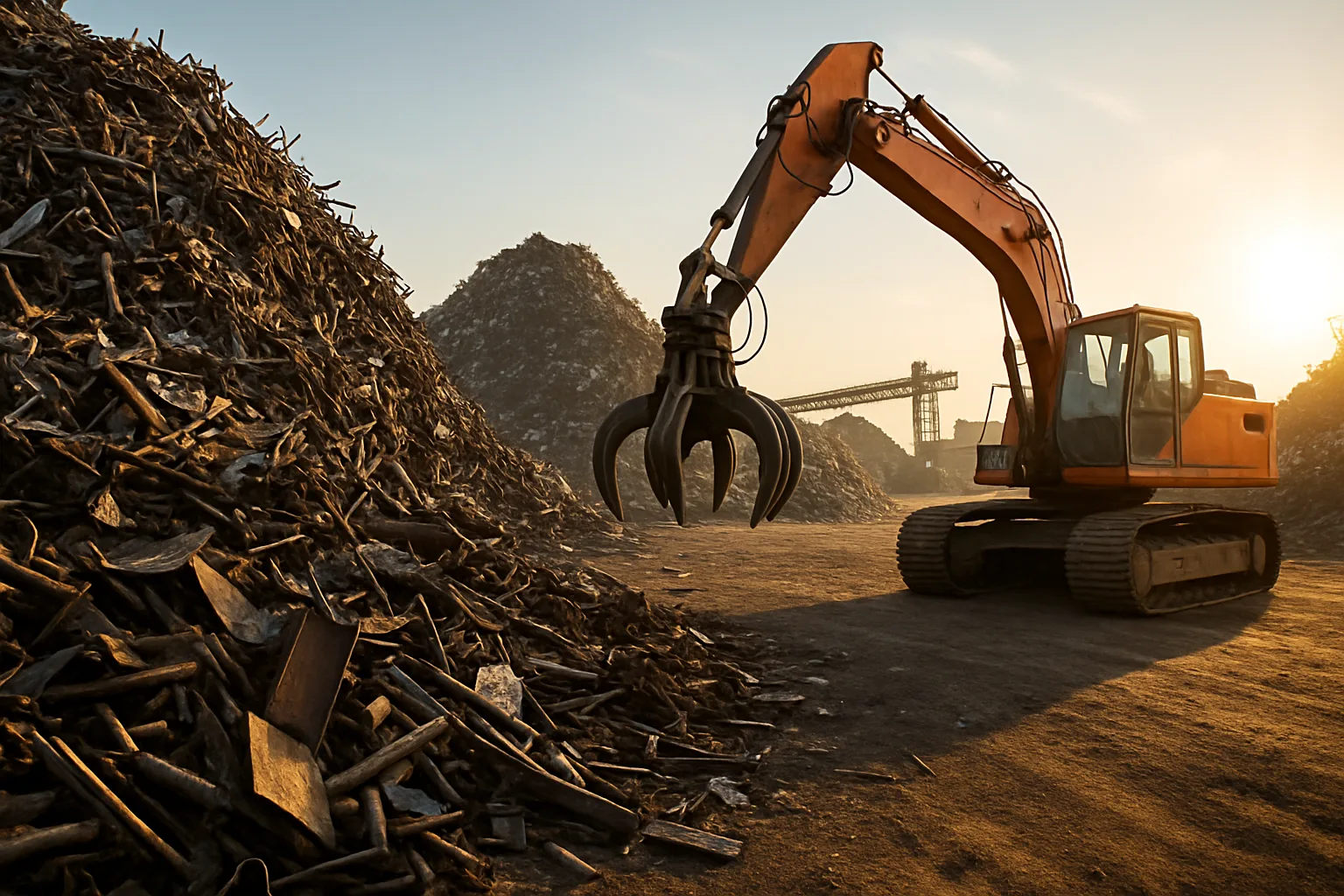
Why Small-Scale Scrap Collectors Leave Money on the Table — And How to Stop
Most small-scale scrap collectors are working harder than they need to for the money they're getting. You're loading the truck, making the run, dumping the load — and walking away with whatever the yard feels like offering that day. No comparison. No competition. No leverage. If you've ever wondered whether the steel scrap price today you were quoted is actually the market rate, you're asking the right question.
The difference between a casual collector and one who consistently earns more isn't luck. It's habits. It's organization. It's knowing what you have before you walk through the gate. This guide breaks down practical steps any small-scale collector can take to earn more per load — whether you're running a pickup truck in Savannah or hauling a trailer across Georgia.
Before you sort a single piece of metal, find the best scrap metal prices today so you know what the market actually looks like — not just what one buyer tells you.
Know Your Metal Before You Move It — Scrap Metal Prices Today Start With Sorting
The fastest way to leave money on the table is to dump a mixed load. Yards love mixed loads because they get to pay you the lowest-grade price for everything in the pile. A clean load of copper wire pays more than a pile of mystery metal. A sorted load of aluminum extrusion pays more than aluminum mixed with cast. The work of separating happens before the scale — not after.
Here's a basic sorting priority list for small collectors:
- Copper — bare bright, #1 copper, #2 copper, and copper-bearing material like motors and transformers all have different values. Know the difference.
- Aluminum — extrusion, cast, sheet, and breakage are not the same grade. Separate them whenever volume allows.
- Steel and iron — light iron, heavy melt, and prepared steel each have different price tiers. Mixed steel is the lowest tier.
- Stainless steel — always keep this separate. It gets significantly more per pound than carbon steel.
- Catalytic converters — never throw these in a ferrous pile. Even a single cat can be worth more than a hundred pounds of steel.
- E-scrap and wire — pull it out. Burnt wire pays less. Insulated wire has its own grade. Stripping isn't always worth it, but knowing the price spread helps you decide.
Sorting takes time up front. But it changes the conversation at the scale window. You're not guessing — you're presenting. That shift in posture alone tends to result in better transactions.
Track What You're Hauling — Scrap Metal Inventory Management Pays Off
This one sounds like extra work. It isn't. Even a basic log — metal type, estimated weight, date pulled, where it came from — gives you data that most small collectors never have. Over time, that data tells you which sources are most valuable, which grades move the market for you, and whether the prices you're getting are trending up or down.
Solid scrap metal inventory management doesn't require software. A notes app on your phone or a cheap notebook works. What matters is consistency. Log every load before you sell it. Record the price you were offered and the price you accepted. After a few months, patterns emerge.
If you want to step it up, platforms designed for the scrap industry handle this automatically. Find the best price for your scrap on SMASH — SMASH includes inventory tools, photo documentation, and serial tracking so your loads are documented, organized, and ready to go to market without the guesswork.
Good documentation also builds trust with buyers. When you can show what you have — weight estimates, photos, grade breakdown — buyers have more confidence in your loads. More confidence means better price discovery.
Shop Around — One Phone Call Is Not a Price
Here's a habit that costs collectors real money every week: calling one yard, getting a number, and treating that number as the market. It isn't. It's one buyer's offer on one day. The scrap metal prices today at one yard might be meaningfully different from what another yard pays — even in the same city.
In a market like Savannah, Georgia, you've got access to multiple buyers within a reasonable drive. Don't assume they're all paying the same rate. Call two or three. Ask specifically by grade. A yard that pays top dollar for copper might be weaker on aluminum. A yard strong on ferrous might be less competitive on non-ferrous. You don't know until you ask.
If you're searching scrap yard near me open or trying to find a scrap yard downtown, use that search to build a short list — not just to find the closest option. Proximity matters, but price difference matters more once you're hauling any real volume. Five cents per pound difference on a thousand pounds of aluminum is fifty dollars. That's real money for a small operator.
Auction-based platforms take this further. Instead of you calling around, multiple vetted buyers compete for your load. That's the model SMASH is built on — and it changes the dynamic entirely. You're not asking for a number. Buyers are competing to win your material.
Watch the Market — The Steel Scrap Price Today Changes Weekly
Scrap metal markets don't sit still. The steel scrap price today in June 2026 reflects global demand, domestic mill activity, freight costs, and currency movement — none of which a single yard buyer is necessarily going to explain to you. If you're not watching the market, you're at an information disadvantage every time you sell.
You don't need to become a commodity trader. You just need a baseline. Check published scrap prices weekly. Know whether ferrous markets are moving up or down. Understand when mill demand tends to pick up in your region. In the Southeast — including Georgia — steel demand from automotive and construction sectors has historically created seasonal price movement. Timing your larger loads around favorable conditions can improve your net return.
For current rates, read the latest scrap metal pricing guides to stay current on what copper, aluminum, steel, and catalytic converter prices are doing right now.
Disclaimer: Scrap metal prices fluctuate daily based on market conditions. Always check current rates before selling.
Build Better Source Relationships to Keep Material Coming In
The most consistent collectors aren't just good at selling — they're good at sourcing. If you want a steady stream of material without competing for every piece at the curb, build relationships with the people who generate scrap regularly.
Think about who produces scrap metal as a byproduct of their actual business:
- HVAC contractors replacing old units
- Plumbers pulling old copper and brass fittings
- Auto mechanics handling end-of-life parts and catalytic converters
- Construction crews with leftover steel, copper wire, and conduit
- Appliance repair shops with failed units
- Machine shops with aluminum and steel offcuts
In a city like Savannah — with active port operations, a growing logistics sector, and ongoing residential and commercial construction — there's no shortage of scrap-generating businesses. You don't need a formal contract. You need to show up consistently, pay fairly, and make the pickup easy. Most tradespeople would rather hand their scrap off to someone reliable than deal with a yard themselves.
When you start sourcing at volume, your loads get larger and more consistent. That increases your leverage when you go to sell — and it makes using a platform like SMASH even more valuable, because larger, documented loads tend to attract more buyer interest and stronger price discovery.
Document Everything — Photos, Weights, and Records Protect You
Small collectors often skip documentation because it feels like overhead. But documentation is actually protection — and it's leverage. A load with photos, estimated weights, and grade breakdowns is a completely different product than a truck full of mystery metal.
Make it simple: photograph your load before you cover it. Note the major grades. Weigh on your own scale if you have access to one — even a rough estimate helps. Keep copies of your weight tickets. Over time, you'll build a record of what your sources typically yield, which lets you make smarter decisions about where to spend your time.
If a weight ticket comes back looking wrong, you have a basis to question it. If a buyer disputes grade, you have photos. Documentation doesn't make you paranoid — it makes you professional. And professional sellers consistently check current scrap metal prices and present their loads in a way that commands competitive offers.
Frequently Asked Questions
Q: What is the steel scrap price today in Savannah, Georgia?
Steel scrap prices fluctuate daily based on mill demand, export activity, and regional market conditions. In Georgia, prices vary by grade — light iron, heavy melt, and prepared steel all carry different rates. Check with multiple buyers in the Savannah area and reference current published rates before selling. Prices listed here reflect general market context and are not guaranteed quotes.
Q: How do I find the best scrap metal prices near me?
Start by calling at least two or three buyers in your area and asking for specific prices by grade — not a general rate. Use online price trackers to establish a baseline, then compare what local yards are offering. Auction-based platforms like SMASH let multiple vetted buyers compete for your load, which can improve price discovery beyond what a single yard offers.
Q: Does sorting my scrap metal really make a difference in price?
Yes — significantly. Yards pay blended or lowest-grade rates for mixed loads. Separating copper grades, aluminum grades, and keeping stainless or catalytic converters out of ferrous piles can dramatically increase your per-pound return. The time invested in sorting before the sale almost always pays off.
Q: How often do scrap metal prices change?
Prices can shift daily, though most yards post or update rates weekly. Ferrous prices tend to track domestic mill activity and export markets. Non-ferrous metals like copper and aluminum follow commodity exchanges more closely. Watching trends over several weeks gives you a sense of whether to sell now or hold for a better window.
Q: Is it worth using an online platform to sell scrap metal as a small collector?
It depends on your volume and load type. For larger or more organized loads — sorted non-ferrous, documented catalytic converters, or regular ferrous volume — a platform like SMASH creates competitive pressure among buyers that a single cold call doesn't. No subscription fees, and competition can help reveal the true market value of your material.
If you're hauling scrap in Savannah or anywhere across Georgia and you're not sure whether you're getting a fair price — you probably aren't. The market is there. The buyers are there. What most small collectors are missing is the information and the process to access it properly. Start with better sorting, build a sourcing network, watch the market, and use platforms built for competition rather than convenience for one side. When you're ready to sell smarter, find the best price for your scrap on SMASH — and get the best scrap metal prices — check rates at best-scrap-prices.com.
Stay current on scrap metal market trends and pricing news by following SMASH on LinkedIn — regular updates on industry conditions, pricing movements, and what's driving the market right now.