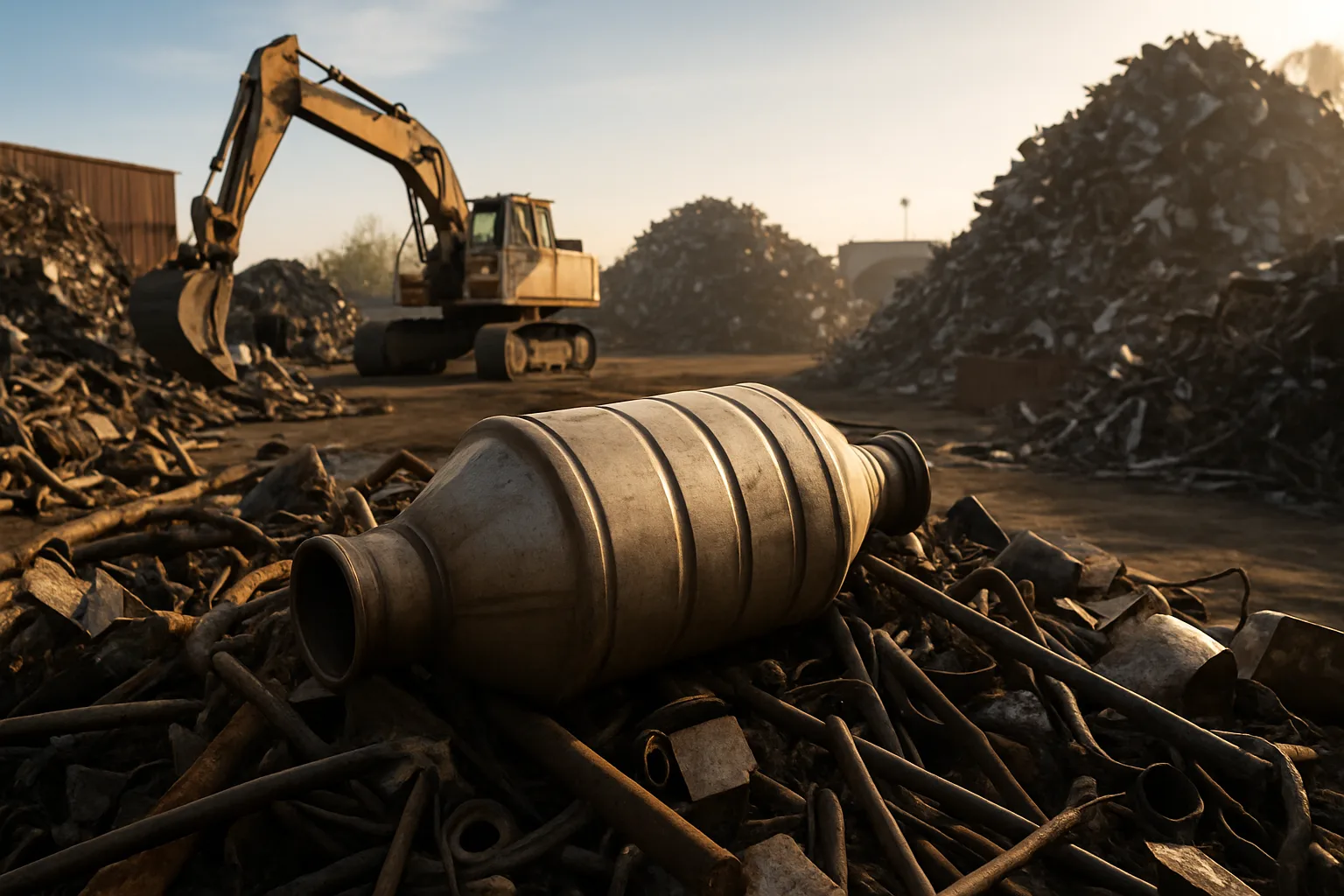
Why Your Catalytic Converter Is Worth More Than You Think — And How to Get Paid for It
Most scrap yards will hand you cash for a catalytic converter without explaining why it's worth what it's worth. That's a problem. When you don't understand the pricing, you can't tell a fair offer from a lowball one. And with cats, the spread between a bad deal and a good one can be hundreds of dollars on a single unit.
If you're in Worcester or anywhere across Massachusetts recycling cats from fleet vehicles, junkers, or shop inventory, this guide breaks down exactly how the process works — and how to make sure you're not leaving money on the table. Understanding scrap metal prices Worcester sellers face starts with understanding what's actually inside that converter.
What's Inside a Catalytic Converter That Makes It Valuable
A catalytic converter isn't valuable because of its steel shell. It's valuable because of what's packed inside: a ceramic or metallic substrate coated with platinum group metals — platinum, palladium, and rhodium, collectively called PGMs. These metals are among the most expensive materials traded on global commodity markets. The converter's job is to reduce harmful exhaust emissions, and PGMs are what make that chemistry happen.
The concentration of PGMs varies dramatically depending on the vehicle make, model, engine size, and year. A converter from a late-model Toyota Prius hybrid contains a different PGM loading than one pulled from a diesel F-350. That's not a small difference. It can translate to a price gap of $20 versus $400 or more on the same type of part, depending on the assay results.
- Platinum (Pt): Used in diesel converters and many gasoline units. Prices fluctuate with global industrial demand.
- Palladium (Pd): Found heavily in gasoline-engine converters. Has seen significant price swings over the past several years.
- Rhodium (Rh): The rarest of the three. Even small amounts drive significant value. Rhodium prices are notoriously volatile.
When a recycler quotes you a price on a cat, they're estimating the PGM content — often using a database of known converter types matched against current spot prices. The more accurately they can identify what they have, the more precisely they can price it. That's why serial numbers, vehicle VINs, and visual identification all matter in this business.
How Catalytic Converter Recycling Actually Works
From the moment a converter leaves a vehicle to the moment those PGMs are recovered, there's a multi-step process. Understanding it helps you know where value is added — and where it can be lost.
Step 1 — Collection and sorting. Converters come in from auto dismantlers, repair shops, scrap yards, and individual sellers. They get sorted by type: foreign (import), domestic, diesel, aftermarket, and foil (high-value). Aftermarket units — the cheap replacement converters — typically contain far less PGM loading than OEM parts and price accordingly. Don't expect the same number for an aftermarket unit that you'd get for an original equipment converter.
Step 2 — Decanning and processing. The steel shell gets cut away to extract the ceramic or metallic substrate inside. That substrate is the material that holds the PGMs. The shell itself gets recycled as stainless steel scrap — a secondary but real value stream.
Step 3 — Sampling and assay. The substrate material gets crushed, blended, and sampled. A representative sample goes to a smelter or refinery for chemical assay — a precise measurement of how much platinum, palladium, and rhodium is actually present. This is the number that drives final settlement for large-volume processors.
Step 4 — Smelting and refining. The processed material goes through a smelter to extract the PGMs. This is typically done by large refineries, often overseas, with final settlement paid weeks or months after delivery depending on the contract terms.
For individual sellers and small yards, you're not going through that full cycle. You're selling to a middleman — a converter buyer or recycler — who takes on that downstream process risk. Their margin is built into the price they offer you. The question is whether that margin is reasonable or excessive. That's where competition and price transparency become your best tools.
Why Catalytic Converter Prices Vary So Much — Even on the Same Day
You could call three different buyers in Massachusetts today and get three completely different quotes for the same converter. That's not a glitch. It's how this market works — and it works that way for several interconnected reasons.
PGM spot prices move daily. Platinum, palladium, and rhodium all trade on commodity markets. A shift in automotive production forecasts, mining supply disruptions, or currency fluctuations can move these metals meaningfully within a single trading session. A buyer who priced converters on Monday morning may quote differently by Wednesday afternoon. When you're looking at scrap metal prices for cats, you're looking at a live market, not a fixed schedule.
Converter identification matters enormously. The same physical size can mean wildly different PGM content. A buyer with a good database and experienced staff will price more accurately — and often more competitively — than a yard guessing based on visual inspection alone. Misidentification hurts both sides of the transaction.
Volume and relationship pricing. A shop sending 50 converters a month gets treated differently than someone walking in with two units. That's just market reality. If you're moving volume, it's worth negotiating or using a platform that gives you structured access to multiple buyers.
Buyer risk tolerance and inventory position. A buyer sitting on a lot of inventory may quote lower because they're not hungry for more. A buyer actively looking to fill a shipment to a refinery may quote higher to secure volume. The same converter, the same day, different buyers — different prices. This is exactly why a single-call approach to selling cats leaves money on the table.
Platforms like SMASH let you get competitive bids for your scrap metal — including cats — from multiple vetted buyers rather than locking in with whoever answers the phone first. That competition is how price discovery actually happens.
What Affects the Price You'll Actually Receive in Worcester
Local market conditions layer on top of the commodity fundamentals. If you're selling in Worcester, there are practical factors that influence what lands in your pocket.
Logistics and transport costs. Worcester sits in central Massachusetts, which is well-positioned relative to major recycling corridors in the Northeast. But if a buyer is factoring in freight to move material to a processor, that cost comes out of your price. Buyers closer to processing facilities sometimes quote better on volume. Understanding your logistics situation — whether you deliver or they pick up — affects net value.
State regulations on converter sales. Massachusetts has enacted rules around converter documentation to combat theft. As a seller, you'll typically need to provide identification, proof of vehicle ownership or business credentials, and documentation of where the converters originated. Legitimate buyers in Massachusetts require this — it's not optional. Clean documentation makes transactions smoother and builds the trust that earns you better long-term pricing relationships.
Market timing. There's no magic formula for timing the PGM market, but staying informed pays off. If rhodium prices are at a multi-month low and you can hold inventory safely, waiting for movement can improve your return. If the market is trending down, moving material faster makes sense. The sellers who pay attention to where the copper scrap price today and PGM pricing are heading make better decisions than those who sell on a fixed calendar regardless of conditions.
For broader pricing context across metals — including aluminum, copper, and steel — you can always check current scrap metal prices to benchmark what the market looks like before you sell.
How to Get a Better Price on Your Catalytic Converters
Good pricing doesn't happen by accident. Here's what actually moves the needle for sellers — whether you're a Worcester shop clearing out a bin of cats or a yard operator in Massachusetts moving volume regularly.
- Identify your converters accurately. Use VIN lookups and serial number databases to know what type of converter you have before you call a buyer. SMASH's inventory tools include serial tracking and photo documentation — both of which give buyers more confidence and support more accurate quotes.
- Get multiple bids. One call equals one price. Three calls gives you a range. An auction format with vetted buyers gives you actual competition. Competition reveals the market — that's not theory, that's basic supply and demand.
- Document everything. Photos, condition notes, vehicle source data. Buyers price uncertainty into their offers. Remove the uncertainty with documentation and you remove the discount they'd otherwise take for it.
- Separate your converters by type. Don't dump foil cats, domestic units, and aftermarket pieces into one pile. Sorted material gets sorted pricing. Unsorted material gets averaged down.
- Use the right channel for your volume. A scrap metal auction platform like SMASH is built for yards and businesses moving real volume. If you're recycling at scale, a single local buyer with a take-it-or-leave-it quote is not your best route.
To find the best scrap metal prices today, you need more than one data point. You need a process — identify accurately, document thoroughly, and introduce genuine buyer competition.
Scrap Metal Recycling in Massachusetts: The Bigger Picture
Catalytic converter recycling doesn't exist in isolation. It's part of a broader scrap metal recycling Massachusetts ecosystem that includes ferrous and non-ferrous metals, electronics, and end-of-life vehicle processing. Massachusetts has a dense network of licensed scrap facilities, and the regulatory environment continues to tighten around documentation and chain-of-custody requirements — particularly for high-value non-ferrous material like cats.
For sellers who want to stay ahead, that means treating your recycling operation less like a casual cash-out and more like a commodity business. Know your material. Know your market. Know your buyers. The yards and shops in Worcester and across Massachusetts that treat scrap as a managed revenue stream consistently outperform those who treat it as an afterthought.
Whether you're tracking aluminium scrap value per kg on a mixed load or trying to nail down the right price for a bin of converters, pricing intelligence is what separates average returns from strong ones. The best place to start is reading the latest scrap metal pricing guides to stay current on where the market is moving.
When you're ready to move material and want real buyer competition rather than a single take-it-or-leave-it offer, check your rates and options at best-scrap-prices.com — and let the market tell you what your load is actually worth.
Frequently Asked Questions
Q: Why do catalytic converter prices vary so much between scrap yards in Worcester?
PGM spot prices change daily, and each buyer prices converters based on their own identification database, current inventory position, and downstream refining contracts. Two yards in Worcester can quote very different prices for the same unit on the same day. Getting multiple bids is the only way to know whether an offer is competitive.
Q: What documents do I need to sell a catalytic converter in Massachusetts?
Massachusetts requires sellers to provide valid identification and documentation of the converter's origin — typically proof of vehicle ownership or a business license for commercial sellers. Licensed buyers in the state are required to record this information. Always sell to licensed facilities to stay compliant and build credible transaction records.
Q: How do I know if my catalytic converter is a high-value or low-value unit?
Converter value is primarily driven by PGM loading, which varies by vehicle make, model, engine, and whether the unit is OEM or aftermarket. Foreign (import) and certain hybrid vehicle converters typically carry higher PGM content. Using a VIN lookup or serial number database before you sell helps you understand what category your unit falls into.
Q: Is it worth sorting my catalytic converters before selling in Worcester?
Yes — sorting by type (domestic, foreign, diesel, aftermarket, foil) almost always results in better pricing than selling an unsorted mixed lot. Buyers average down on unsorted material to account for uncertainty. Sorted and documented loads give buyers confidence and typically earn stronger quotes.
Q: What's the best way to get competitive scrap metal prices near me in Worcester?
Don't rely on a single buyer or a single phone call. Use pricing resources like best-scrap-prices.com to benchmark current rates, and consider using a structured platform like SMASH that brings multiple vetted buyers into competition for your material. More buyers means better price discovery — that's true for cats and for scrap metal broadly.
Disclaimer: Scrap metal prices, including PGM-based pricing for catalytic converters, fluctuate daily based on commodity markets. Always verify current rates before selling.
Follow SMASH on LinkedIn for industry updates, market insights, and scrap metal pricing trends across North America.