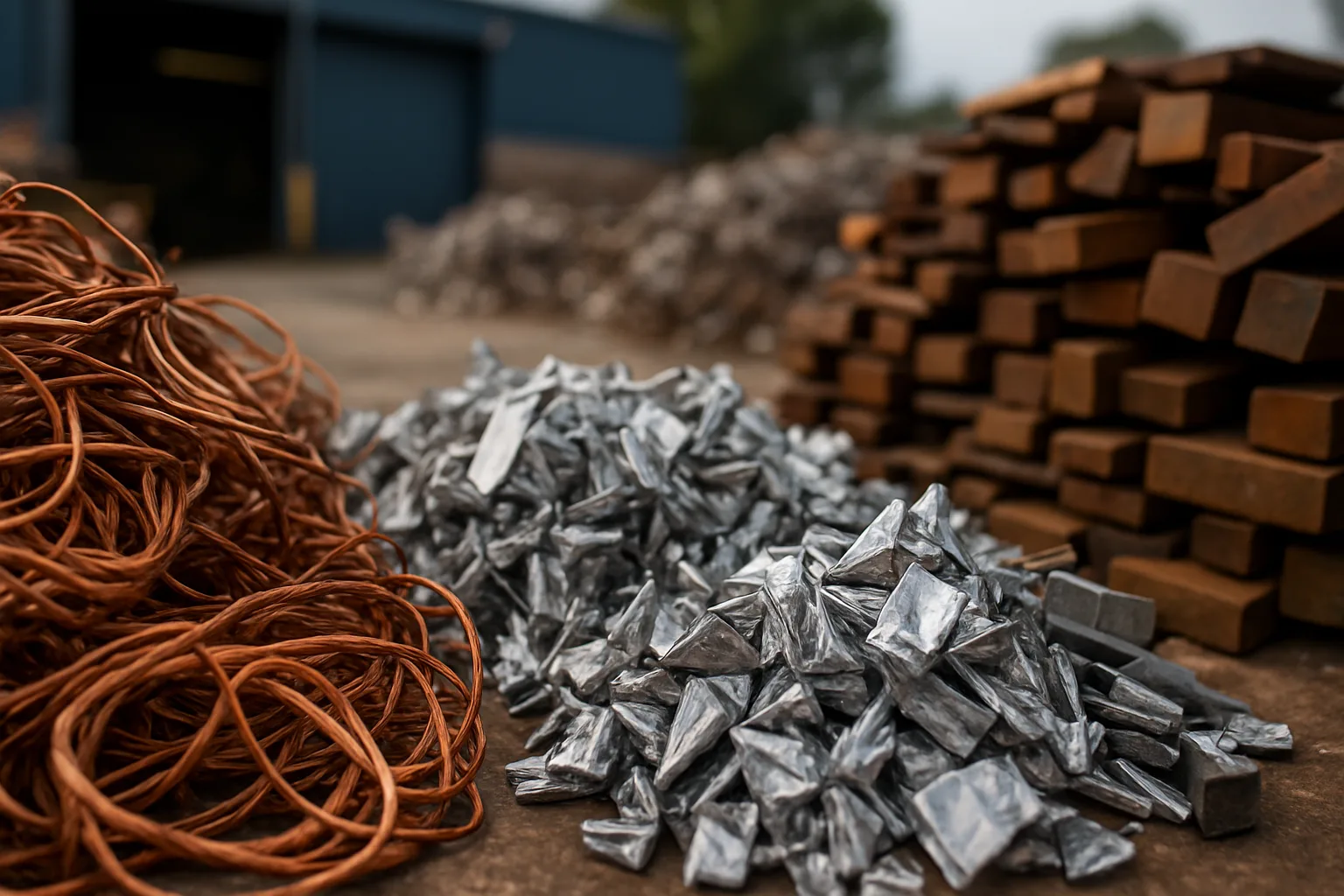
Most people have no idea the small canister under their car is worth more per ounce than gold. Catalytic converters sit quietly beneath millions of vehicles across Ohio, and the metals inside them — platinum, palladium, and rhodium — drive prices that can swing wildly from one month to the next. If you're looking to sell scrap metal near me Cincinnati, understanding how catalytic converter recycling actually works could be the difference between getting a fair price and leaving serious money on the table.
This isn't a simple story. Converter pricing is one of the most misunderstood corners of the scrap metal market. Buyers quote numbers that seem random. Two identical-looking converters can fetch completely different prices. And without price discovery — real competition — you're always guessing. Let's break down exactly what happens when a catalytic converter gets recycled, why prices are all over the map, and how to make sure you're not the one getting shortchanged.
What's Actually Inside a Catalytic Converter (And Why It Matters for Scrap Metal Prices)
The converter itself is a steel shell. That part isn't worth much. What drives the price is the ceramic or metallic substrate inside, coated with a precise blend of platinum group metals (PGMs): platinum, palladium, and rhodium. These three metals are the reason your converter has real value — and also why prices are so volatile.
PGM prices trade on global commodity markets, just like copper or aluminum. But unlike copper, the spread between high and low prices for rhodium, for example, can be enormous — sometimes shifting by hundreds of dollars per troy ounce in a single quarter. Platinum and palladium follow similar patterns, driven by automotive production rates, mining output in South Africa and Russia, and industrial demand from electronics and fuel cell manufacturing.
- Platinum: Used heavily in diesel converters. Demand fluctuates with diesel vehicle production trends.
- Palladium: Dominant in gasoline converters. Tight global supply has kept prices elevated through much of the mid-2020s.
- Rhodium: The rarest of the three. Even small amounts significantly affect converter value — and its price can move dramatically.
The grade and condition of the substrate also matter. A converter that's been running at proper temperatures with intact ceramic honeycomb yields far more recoverable PGM than one that's cracked, melted, or saturated with oil. When you check current scrap metal prices, you're seeing market-level PGM values — but your individual converter value depends on how much recoverable metal is actually in there.
The Recycling Process: From Your Car to the Smelter
Once a converter leaves a vehicle — whether from a junkyard, a body shop, or a direct seller — it enters a chain with several distinct steps. Each step involves a different party, and each one takes a cut. Understanding this chain helps you see why the price you're offered at the curb rarely reflects the full market value of what you're holding.
Here's what the recycling process looks like from start to finish:
- Collection: Converters are pulled from end-of-life vehicles at yards, auto dismantlers, and shops across Ohio and beyond.
- Sorting and identification: Experienced buyers identify the converter type using serial numbers, make/model data, and weight. Some use assay databases to estimate PGM content before purchase.
- Lot consolidation: Individual converters get grouped into lots — sometimes hundreds of units — before being shipped to a processor.
- Decanning: The steel shell is removed (the "can"), exposing the substrate. The steel goes to ferrous scrap; the substrate moves forward.
- Sampling and assay: The substrate is crushed, sampled, and chemically analyzed to determine exact PGM content. This is called "assaying," and it's where the real number comes from.
- Smelting and refining: PGMs are extracted, refined to purity, and sold to industrial end-users or commodity markets.
The time between step one and the final settlement can be weeks. During that window, PGM prices move. That's another reason upfront prices offered at the yard level carry a built-in discount — the buyer is pricing in uncertainty and processing costs. You can read the latest scrap metal pricing guides to track how PGM-related swings affect what converters fetch at the street level.
Why Catalytic Converter Prices Vary So Much — Even for the Same Unit
Walk into three different yards in Cincinnati on the same day with the same converter, and you might get three very different offers. This isn't a coincidence or a mistake. It reflects how fragmented and opaque the converter market still is for most sellers.
Here are the real reasons prices vary:
- Buyer's PGM price assumptions: Every buyer builds in a different margin based on their hedging strategy, processing costs, and how fast they can move the material.
- Identification accuracy: Some buyers use proprietary databases. Others guess based on appearance. A misidentified converter gets mislabeled — often to your disadvantage.
- Volume relationships: A yard moving thousands of converters a month has leverage with processors. A small buyer does not. Their costs are higher, and they pass that back to you.
- Condition assessment: Buyers assess substrate condition differently. One may dock heavily for a hairline crack; another may not.
- Market timing: If rhodium or palladium dropped sharply in the past week, some buyers have already updated their price sheets. Others haven't. You benefit if you walk in after an update that raised prices — and lose if it went the other way.
This is exactly the kind of opacity that platforms like SMASH are built to cut through. When you bring your material to a competitive auction environment instead of a single buyer, the market sets the price — not one person's margin assumptions. Sell your scrap metal on the SMASH marketplace and let multiple vetted buyers compete. That's how real price discovery works.
How Cincinnati Sellers Can Get Better Prices on Converter Recycling
Cincinnati sits in a strong position for scrap metal sellers. Ohio is a significant auto state, with a deep network of dismantlers, recyclers, and industrial buyers. That means competition exists — but only if you know how to access it. Most sellers default to whoever is closest or whoever picks up the phone first. That habit costs money.
If you're in the market for Cincinnati scrap metal services, here's a practical approach to getting better converter prices:
- Document what you have before you sell. Serial numbers, photos of the substrate, vehicle year/make/model if applicable. Better documentation gives buyers more confidence — and more confidence translates to stronger offers.
- Never sell to the first buyer you reach. Get at least two to three quotes before committing. Price spread in this market is real.
- Know the difference between foil and ceramic converters. Foil-substrate converters (common in European vehicles) behave differently in processing and command different prices.
- Understand lot pricing vs. per-unit pricing. If you're moving volume, lot consolidation with a processor may outperform individual unit sales at a local yard.
- Use a platform with vetted buyers. SMASH connects sellers with serious buyers who bid competitively. No subscription fees. No guessing. The platform wins when you win.
If you want a starting point on current PGM-driven market conditions, find the best scrap metal prices today before you walk into any yard or pick up the phone. Walking in informed changes the conversation.
The Role of Auction-Based Pricing in a Volatile PGM Market
Traditional converter buying is a negotiation where only one side has all the information. The buyer knows what the material is worth to their processor. You don't. That information gap is the margin they're working with.
A scrap metal auction changes the dynamic entirely. Instead of one buyer making a take-it-or-leave-it offer, multiple buyers see the same documented lot and compete. The price moves up to where the market actually is — not where a single buyer's margin requirements land it. For catalytic converters especially, where PGM content and grade create real differentiation, documented and properly identified material consistently attracts stronger bids.
SMASH uses vetted buyers, photo documentation, serial tracking, and a transparent auction format to create exactly this kind of competitive environment. If you're sitting on a meaningful volume of converters — whether from a dismantling operation, a fleet turnover, or accumulated yard inventory — the auction model is worth understanding. More buyers mean better price discovery. That's not a slogan. That's how markets work.
Ohio scrap metal sellers who've moved away from single-buyer phone calls report a clearer picture of what their material is actually worth. That clarity alone — knowing the market instead of guessing — has real value regardless of where prices land on any given day.
Frequently Asked Questions
Q: How do I know what my catalytic converter is worth before I sell it?
Start by identifying the converter using the serial number stamped on the shell. Cross-reference it with a buyer database or ask multiple buyers for quotes on the same unit. Current PGM spot prices (platinum, palladium, rhodium) give you a general market direction, though the actual payout depends on processing costs, grade, and condition. Never accept a verbal ballpark as a final number without documentation.
Q: Why do catalytic converter prices change so frequently?
Because the value is tied directly to platinum, palladium, and rhodium — metals that trade on global commodity markets every business day. Supply disruptions in major mining regions, automotive production trends, and industrial demand from the electronics and energy sectors all move these prices. A converter worth a certain amount today may be worth more or less next week, which is why timing and market awareness matter.
Q: Where can I sell scrap metal near me in Cincinnati?
Cincinnati has a solid network of scrap yards and recycling operations across Hamilton County and the surrounding area. For competitive pricing, don't limit yourself to one yard — get multiple quotes. Platforms like SMASH connect Cincinnati-area sellers with vetted buyers who bid competitively, giving you real price discovery instead of a single take-it-or-leave-it offer.
Q: Is it worth selling catalytic converters separately from the rest of the car?
Yes, in most cases. If you're scrapping a whole vehicle, the converter is almost always worth pulling and pricing separately. Rolled into a whole-car scrap deal, the converter's PGM value often gets absorbed into the buyer's margin rather than passed to you. Separating it and marketing it specifically as a converter gives you the best shot at recovering its actual value.
Q: What's the difference between a catalytic converter auction and selling to a local scrap yard?
At a local scrap yard, one buyer sets the price based on their cost structure and margin requirements. In an auction, multiple vetted buyers compete for the same documented material. Competition typically produces a price closer to actual market value. For high-value materials like catalytic converters — where PGM content creates meaningful differences in value — the auction model tends to deliver better price discovery for the seller.
Disclaimer: Catalytic converter and scrap metal prices fluctuate daily based on global commodity markets. Always verify current rates before selling.
If you're serious about getting the best return on your converter material — or any scrap metal — start with real market data. Get the best scrap metal prices and check rates at best-scrap-prices.com before your next sale. Knowing what the market is doing before you walk in the door is the simplest edge you have.
Stay current on scrap metal market trends and auction insights by following SMASH on LinkedIn: follow SMASH on LinkedIn for regular updates on pricing, market shifts, and how competitive auctions are changing the way North American sellers move their material.
```