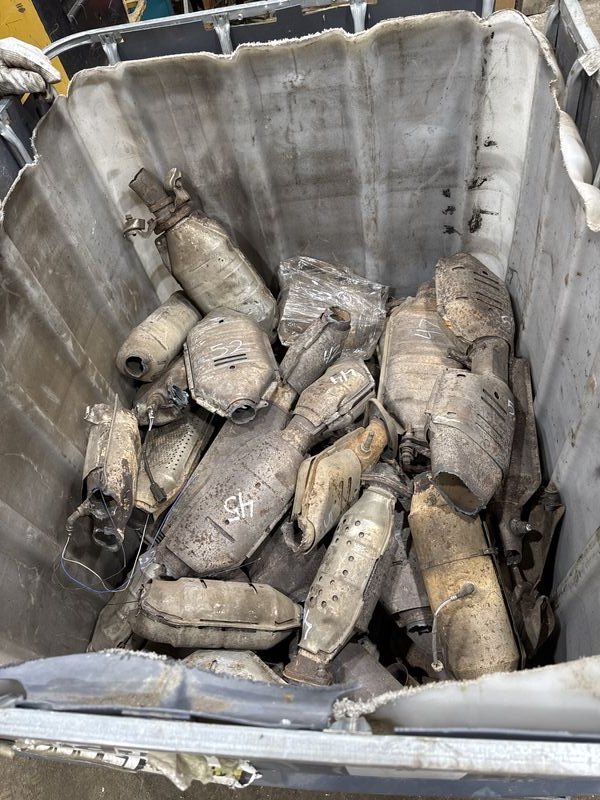
Why Your Catalytic Converter Could Be Worth More Than You Think
Most scrap yards will quote you a number for your cat and move on. No explanation. No breakdown. Just a price — take it or leave it. If you've ever walked away wondering whether you left money on the table, you probably did. Catalytic converter recycling is one of the most price-volatile segments in scrap metal recycling Nashville sellers deal with — and understanding why can put real dollars back in your pocket.
This isn't a simple commodity like shredded steel or clean copper. Cats contain platinum group metals (PGMs) — platinum, palladium, and rhodium — and those markets swing hard. A converter worth $80 one month might fetch $140 six months later, or less. The difference between getting a fair price and getting taken depends on knowing how this works before you show up at a buyer's window.
How Catalytic Converter Recycling Actually Works
When you bring in a cat, the buyer isn't paying you for the steel shell. They're paying for what's inside: the ceramic or metallic honeycomb substrate coated with PGMs. The recycling process starts with the buyer identifying the converter — usually by the serial number stamped on the shell or the OEM part number — and matching it against a pricing database. That database pulls from current PGM spot prices and known assay values for that specific unit.
After purchase, converters are typically consolidated into loads and shipped to a processor or smelter. The processor de-cans the units (removes the substrate from the shell), crushes and samples the material, then runs an assay to determine actual PGM content. That assay result is what drives the real payout up the chain. The buyer at your local yard is essentially making a bet on that future assay result — which is one reason quoted prices vary so dramatically between buyers.
Here's what happens step by step:
- Identification: Buyer matches the converter to a known part number or serial number.
- Grading: The unit is graded based on condition — intact substrate, no missing material, not rattling (a rattle signals a cracked or missing substrate).
- Pricing: The buyer applies a current market value tied to PGM spot prices for that cat type.
- Consolidation: Buyers accumulate loads and ship to processors.
- Assay and settlement: The processor samples and pays the yard based on actual PGM content.
Every link in that chain takes a cut. Your job as a seller is to make sure you're not leaving too much on the table at the first link.
Why Catalytic Converter Prices Vary So Much — Even in the Same City
Two yards in Nashville can quote you completely different prices for the same converter. That's not a glitch — it's how this market works. Several factors drive the spread:
- PGM spot prices: Platinum, palladium, and rhodium trade on global commodity markets. A single day's swing in rhodium can shift converter values by double digits. The buyer quoting you today may be using a price sheet that's 24-48 hours old.
- Database accuracy: Buyers use proprietary or third-party pricing databases. Some are updated daily. Some aren't. The yard with the fresher data wins — and so do their sellers.
- Buyer sophistication: A small independent yard may not have visibility into niche or high-value converters. A more experienced buyer may recognize a high-PGM unit that a generalist would underprice.
- Volume and competition: A buyer moving high volume has more incentive to price aggressively to win your load. A low-volume buyer may lowball because they can.
- Condition of the unit: A converter with a cracked substrate, missing material, or heavy heat damage will grade lower — legitimately. But some buyers use condition as a negotiating tactic even on solid units.
This price variability is exactly why sellers in Tennessee benefit from getting multiple offers before committing. One call to one yard gives you one data point. That's not a market — that's just a number someone handed you.
What You Should Know Before You Sell Catalytic Converters Online
The option to sell catalytic converters online has grown significantly, and for good reason. Online buyers often have tighter margins, better database access, and stronger incentive to compete for your load. But there are traps. Here's how to protect yourself:
Document everything before you ship. Photograph each converter — the serial number, the condition of the shell, the ends of the substrate if visible. A reputable buyer should provide photo documentation standards upfront. If they don't, that's a flag. Documentation protects you if a dispute arises about condition or identity after the load arrives.
Understand what "grade" means for your units. Online buyers typically sort converters into tiers — high-grade, mid-grade, low-grade, aftermarket, and foil. Aftermarket cats (the replacement units most shops install) contain significantly less PGM content than OEM converters. Selling a load of mixed units without understanding the breakdown often means the high-value pieces subsidize the low-value ones. Know what you have.
Confirm shipping and packing list requirements. Serious online buyers require accurate packing lists, sometimes with VIN or part number references. Platforms built for this — like North America's B2B scrap metal auction platform — use serial tracking and photo documentation to create a verifiable record before anything ships. That's not bureaucracy; that's what price confidence looks like.
Watch for lowball-then-adjust tactics. Some buyers quote high, then adjust down after receiving the load — citing condition issues or grade discrepancies. If a buyer doesn't lock pricing to your documented photos, you have no recourse. Always confirm whether the quote is firm or subject to adjustment on receipt.
How Nashville Scrap Sellers Are Finding Better Prices on Cats
The shift is real. More scrap sellers in Nashville are moving away from the one-call, one-price model and into competitive pricing environments. It's not complicated — when multiple vetted buyers see the same documented load and compete for it, you get actual market discovery instead of a single buyer's margin decision.
SMASH is built around that idea. Instead of calling one yard and hoping the number is fair, you put your documented inventory in front of multiple buyers. Competition does what it always does — it pushes prices toward reality. You're not guessing whether your cats are worth more. The market tells you.
For sellers running volume through Nashville scrap metal services, this model matters even more. A few percentage points of price improvement across a regular flow of catalytic converters adds up fast. The old way of selling — one buyer, one number, no leverage — costs you that difference every single time.
SMASH also handles auto-invoicing and BOL documentation, which matters for operators who need clean paperwork trails. If you're moving enough cats to care about recordkeeping, you already know that the admin side of this business is its own headache. A platform that handles it is a platform worth using.
Getting the Best Scrap Metal Prices in Tennessee Starts With Information
Price variability in catalytic converters mirrors what you see across the broader scrap market. Copper scrap prices, aluminum, steel — all of it moves with commodity markets, and the sellers who track that movement make better decisions than those who don't. The best scrap metal prices Tennessee sellers can access aren't hidden — they're just not handed to you automatically. You have to go get them.
A few habits that separate informed sellers from sellers who leave money behind:
- Check PGM spot prices before you sell. Rhodium, palladium, and platinum are publicly traded. Even a rough understanding of where those markets are trading helps you evaluate whether a quoted price is reasonable.
- Use reference databases. There are publicly available and subscription-based catalytic converter pricing databases. Cross-referencing a serial number before you sell takes minutes and can reveal whether you're being quoted full value.
- Get at least two quotes. This is the minimum. One quote is not a market. Two quotes tell you whether you have room to negotiate.
- Track your loads over time. If you sell regularly, documenting what you received for what units — and when — builds your own pricing reference. Patterns emerge. You'll know when you're being lowballed.
To find the best scrap metal prices today, the approach is the same whether you're selling cats or copper: more information, more buyers, better outcomes. If you want to read the latest scrap metal pricing guides, the resources exist — use them. And when you're ready to check current scrap metal prices before your next sale, don't skip that step. That five minutes of research is often worth more than any negotiation tactic.
The market for catalytic converters is not going to simplify. PGM prices will keep moving. New converter types will keep entering the stream as EVs displace older ICE vehicles over time. The sellers who build systems around documentation, market awareness, and competitive pricing will keep outperforming the ones making one phone call and hoping for the best. Nashville scrap sellers who want real price discovery — on cats, copper, or anything else — have the tools to get it. Use them.
Disclaimer: Scrap metal and catalytic converter prices fluctuate daily based on commodity markets. Always verify current rates before selling.
Frequently Asked Questions
Q: How do I know if my catalytic converter is worth a lot or a little?
The value of a catalytic converter depends on its PGM content, which varies by vehicle make, model, and whether it's an OEM or aftermarket unit. OEM converters from certain manufacturers — particularly some foreign luxury and performance brands — tend to carry higher PGM loads and command higher prices. Finding the serial number on the shell and cross-referencing it with a converter pricing database gives you a reliable starting point before you sell.
Q: Why do catalytic converter prices change so often?
Cats are priced based on the platinum group metals inside them — platinum, palladium, and rhodium. These metals trade on global commodity exchanges, and their spot prices can move significantly day to day based on supply, industrial demand, and macro market conditions. A price quote from a yard that updates its database daily will reflect current market reality better than one using stale data.
Q: Is it legal to sell catalytic converters for scrap in Tennessee?
Yes, selling used catalytic converters for scrap is legal in Tennessee, but state law imposes requirements on buyers — including recordkeeping and seller identification — to address catalytic converter theft. As a legitimate seller, you'll typically need to provide ID and may be asked to sign documentation confirming legal ownership. These requirements protect honest sellers and buyers alike.
Q: How does scrap metal recycling in Nashville compare to other cities?
Nashville has an active scrap market with multiple yards serving both residential and commercial sellers. Like most mid-to-large metro areas, prices between local buyers can vary meaningfully — especially on higher-value items like catalytic converters and non-ferrous metals. Getting competitive quotes, either locally or through online platforms, is the most reliable way to confirm you're getting fair market value.
Q: Can I sell catalytic converters online even if I'm based in Nashville?
Absolutely. Many online buyers purchase catalytic converters from sellers anywhere in North America, including Nashville. You document your inventory with photos and serial numbers, pack and ship according to the buyer's requirements, and receive payment after the load is received and verified. Platforms like SMASH streamline this process with built-in documentation, vetted buyers, and competitive auction-style pricing — so you're not relying on a single quote from a single buyer.
If you're selling catalytic converters or any other scrap metal, you deserve to know what the market actually says — not just what one buyer decides to offer. Start with solid documentation, get multiple eyes on your load, and let competition work in your favor. When you're ready to move, get the best scrap metal prices by checking current rates at best-scrap-prices.com.
Follow SMASH on LinkedIn for ongoing scrap metal market insights, pricing trends, and industry updates — straight from the platform built for serious sellers.
```