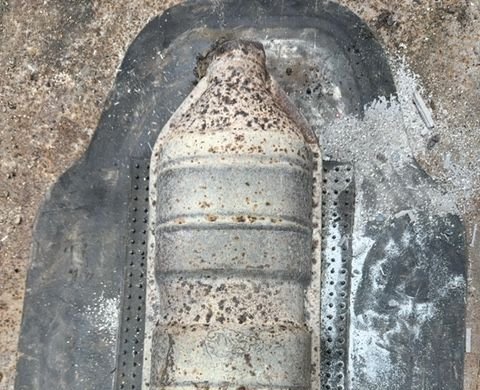
Your catalytic converter is worth more than you think — and most sellers leave serious money on the table because they don't understand how the pricing actually works. If you've ever wondered why two converters that look identical can fetch wildly different prices, you're asking the right question. Understanding how catalytic converter recycling works puts you in control of the transaction instead of at the mercy of whoever happens to answer the phone.
Whether you're a yard operator in Nashville moving volume or an individual seller with a handful of cats, the same principle applies: knowledge is leverage. Let's break down how the recycling process works, what drives the price swings, and how to make sure you're not underselling.
What Actually Happens When a Catalytic Converter Gets Recycled
A catalytic converter isn't just scrap steel. Inside that ceramic or metallic substrate sits a precise blend of platinum group metals — platinum, palladium, and rhodium — commonly called PGMs. These metals are what processors are actually buying when they bid on your cats. The steel shell is secondary. The PGMs are the point.
When a converter reaches a processor, it goes through a multi-step assay process. The unit gets crushed and milled into a fine powder called "spent catalyst." That powder is sampled, tested, and chemically assayed to determine the exact concentration of platinum, palladium, and rhodium inside. The result of that assay — combined with the current spot price of each PGM — determines what the converter is actually worth.
The key steps in catalytic converter recycling look like this:
- Collection and sorting: Units are grouped by make, model, and serial number to estimate PGM content before assay.
- Decanning: The ceramic or metallic substrate is removed from the steel shell.
- Milling: The substrate is ground into homogeneous powder.
- Sampling and assay: The powder is chemically analyzed for PGM concentrations.
- Settlement: Payment is calculated based on assay results and current PGM spot prices.
This is why the steel scrap price today is only part of the story with cats. The shell contributes some value, but the real money lives inside the substrate. Sellers who treat catalytic converters like generic scrap metal consistently undersell.
Why Catalytic Converter Prices Vary So Much
Ask ten buyers for a price on the same converter and you might get ten different numbers. That's not random — it reflects genuine variables that affect what a unit is actually worth. Understanding those variables helps you separate a fair offer from a low-ball.
PGM spot prices move constantly. Platinum, palladium, and rhodium trade on global commodity markets. Rhodium in particular has historically swung from a few hundred dollars per troy ounce to several thousand, sometimes within the same year. A converter with high rhodium content is worth dramatically more when rhodium is running hot. Check the current scrap metal prices today and PGM spot prices before you sell — a week's difference can change your payout.
The converter type and vehicle origin matter enormously. A large diesel oxidation catalyst from a commercial truck has a completely different PGM loading than a small underbody converter from a compact sedan. Exotic and high-end vehicles often carry significantly richer substrate content. Domestic, Asian, and European converters also differ in their PGM blends and concentrations. This is why serial number identification is critical — it ties your unit to known assay data and prevents processors from low-balling you on a valuable piece.
Other factors that influence price include:
- Foil vs. ceramic substrate: Metallic foil substrates (common in European vehicles) often carry different PGM ratios than ceramic biscuits.
- Condition: Cracked, water-damaged, or contaminated substrates yield less on assay. A unit with a blown-out biscuit loses real value.
- Aftermarket vs. OEM: Aftermarket converters carry significantly less PGM loading than factory-installed units. Some buyers won't touch them at all.
- Lot size and volume: Moving volume gives you negotiating leverage. A single cat is a retail transaction. A pallet of sorted, documented cats is a wholesale deal with better margins.
How Serial Number Tracking and Documentation Change the Deal
The difference between guessing and knowing comes down to documentation. Every catalytic converter has identifying information — a serial number, a part number, or at minimum a vehicle origin that ties it to published assay data. Sellers who track this information consistently get better offers because buyers have more confidence in what they're buying.
Platforms like SMASH build serial tracking and photo documentation directly into the inventory workflow. That means when your lot hits the auction, buyers aren't guessing at the content — they're bidding on documented units with known assay histories. That transparency creates competition. Competition reveals the actual market price instead of whatever a single buyer decides to offer you today.
If you're selling in Nashville or anywhere else in Tennessee, this matters locally too. Regional buyers who know their market will sometimes offer strong pricing on specific unit types that are common in your area. But without documentation, you can't have that conversation — you're just selling a pile of cats and hoping for the best.
For sellers handling volume, tools like VIN lookup and serial tracking aren't optional extras. They're the difference between leaving money on the table and knowing exactly what you have before the buyer arrives. Read the latest scrap metal pricing guides to stay current on how documentation practices affect payout across different converter types.
The Old Way vs. the SMASH Way: Why Single-Buyer Deals Cost You
Here's how most cat sales still happen in 2026: a buyer drives up, eyeballs your pile, throws out a number, and you either take it or don't. No assay data. No competing offers. No serial-level documentation. Just a gut feeling on both sides and the buyer's margin built in at your expense.
That model works great for the buyer. It's a poor deal for the seller.
The SMASH scrap metal auction model runs the opposite direction. Your inventory gets documented — photos, serial numbers, unit types — and listed in front of multiple vetted buyers simultaneously. Those buyers compete. Competition does what it's supposed to do: it discovers price. You find out what the market actually pays, not what one buyer decides to offer on a Tuesday morning.
There are no subscription fees on SMASH. The model only works when the seller does. That alignment matters — you're not paying for access to a platform that benefits buyers. You're using a tool built for sellers who want to find the best scrap metal prices today instead of accepting the first number someone throws at them.
For yards in Nashville handling mixed loads — cats alongside non-ferrous, steel, and cores — the ability to move all of it through one documented, competitive process saves time and surfaces better pricing across the board.
Scrap Metal Prices Today and How Steel Fits Into the Cat Picture
Catalytic converter pricing runs on PGM markets, but it doesn't exist in isolation. Steel scrap price today affects the value of the converter shell, the auto bodies that come in with the cats, and the overall economics of your yard's operation. When steel prices are strong, the whole vehicle recycling picture improves — not just the non-ferrous side.
In Tennessee, scrap yards processing end-of-life vehicles are dealing with all of this at once. The steel from the body, the aluminum from the engine block and wheels, the copper from wiring harnesses, and the cats from the exhaust system all carry different pricing dynamics and require different buyers. A B2B scrap metal marketplace like SMASH helps connect yards with the right vetted buyers for each commodity instead of forcing everything through one generalist relationship.
Knowing the check current scrap metal prices across categories — steel, aluminum, copper, and PGMs — before you sell gives you a full picture of what your material is worth. Partial information leads to partial prices. Nashville scrap metal sellers who track the full commodity stack consistently make better decisions about timing, lot assembly, and buyer selection. For sellers specifically in the area, Nashville scrap metal services can help you connect with buyers and get market-rate pricing on your material.
Disclaimer: Scrap metal and PGM prices fluctuate daily based on commodity markets, regional demand, and material condition. Always verify current rates before selling.
How to Sell Catalytic Converters for the Best Price
If you're ready to move cats and want to do it right, here's a practical framework. It applies whether you're clearing out a single vehicle in Nashville or running a yard that processes volume across Tennessee.
- Identify before you sell. Pull serial numbers or part numbers from every unit. Cross-reference against published assay data or use a platform with built-in serial tracking. Know what you have before a buyer does.
- Document with photos. Both ends of the unit, the substrate condition, the shell condition. Photo documentation reduces buyer uncertainty and increases bid confidence.
- Sort by type. Group foreign, domestic, diesel, and aftermarket units separately. Mixed, unsorted lots attract the lowest offers because buyers price in the uncertainty.
- Check PGM spot prices. Know where platinum, palladium, and rhodium are trading before you accept any offer. If rhodium has moved 20% in the last month, that matters.
- Get competing offers. Never accept the first number. Use a competitive auction format or solicit multiple bids. Single-buyer deals are single-buyer prices.
- Use vetted buyers. Unvetted buyers create payment risk and documentation problems. Work with buyers who have track records and can provide proper paperwork — BOLs, packing lists, settlement sheets.
Knowing how to sell scrap metal for cash isn't just about getting paid fast — it's about getting paid right. Speed without price discovery just means you got a fast bad deal.
When you're ready to move your material, find the best price for your scrap on SMASH and let competitive bidding do the work. The market knows what your cats are worth. Your job is to let it speak.
Frequently Asked Questions
Q: Why is the steel scrap price today different from the catalytic converter price?
Steel pricing and catalytic converter pricing are driven by completely different markets. Steel trades on ferrous commodity markets based on supply, demand, and global production. Catalytic converter value is primarily determined by platinum group metal (PGM) spot prices — platinum, palladium, and rhodium — which trade independently. The steel shell of a converter contributes minor value; the substrate is where the money is.
Q: How do I know if I'm getting a fair price for my catalytic converters in Nashville?
The only reliable way to know you're getting a fair price is to have multiple buyers competing for your material. A single offer from a single buyer tells you what that buyer wants to pay, not what the market will bear. Document your units with serial numbers and photos, then run them through a competitive process. Nashville sellers can also benchmark against current PGM spot prices and published assay data for specific converter types.
Q: Does converter condition affect the scrap metal prices I'll receive?
Yes, significantly. A converter with a cracked, crushed, or water-damaged substrate will yield lower PGM concentrations on assay, which reduces your payout. Aftermarket converters carry less PGM loading than OEM units and are priced accordingly. Store your cats in dry conditions and avoid physical damage to the substrate if you want to maximize value at sale.
Q: What's the difference between selling catalytic converters to a local buyer vs. through an online auction platform like SMASH?
A local buyer gives you one offer based on their margin requirements and current inventory position. A platform like SMASH puts your documented inventory in front of multiple vetted buyers who compete for your material. Competition drives price discovery — you find out what the market actually pays rather than what one buyer decides to offer. For volume sellers, the difference in realized price can be substantial over time.
Q: How often do scrap metal prices today change, and when is the best time to sell?
Scrap metal and PGM prices move constantly — often daily. There's no universal "best time" to sell, but tracking price trends gives you context for your decision. If PGM prices are trending upward and you have flexibility, holding documented, well-sorted inventory for a short window can be worthwhile. If you need liquidity or prices are pulling back, moving quickly through a competitive process beats waiting and watching a falling market.
Ready to stop guessing and start getting paid what your material is worth? Check current scrap metal prices and get the full picture before your next sale at best-scrap-prices.com. It's the kind of information that changes how you negotiate — not after the deal, but before it.
Stay sharp on market movements and industry trends — follow SMASH on LinkedIn for regular scrap metal market insights, pricing updates, and B2B recycling industry news.
```