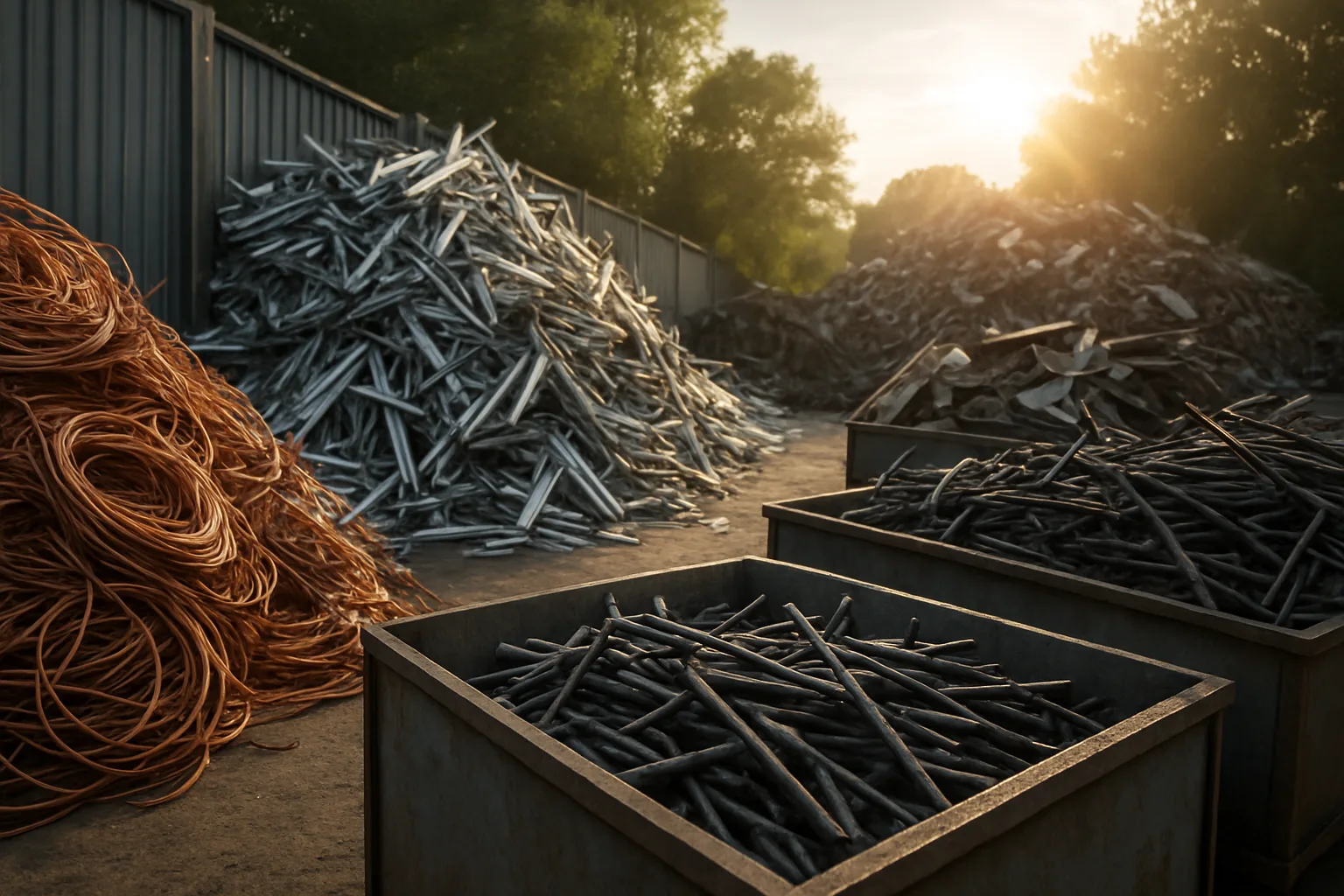
Why Sorted Scrap Sells for More — Every Time
Most sellers leave money on the table before a single bid comes in. Not because their scrap isn't valuable — but because it's mixed, dirty, or poorly documented. In a B2B scrap metal marketplace, buyers pay for certainty. When you hand them uncertainty, they price in the risk. That gap comes straight out of your pocket.
Sorting and preparing your loads properly isn't a courtesy. It's a pricing strategy. Yards and industrial sellers across North Carolina who put in the prep work consistently see stronger offers, faster transactions, and fewer load rejections. Here's exactly how to do it — and how platforms like SMASH help you turn that prep into real competition.
Start With Separation: Mixed Loads Are the Enemy of Good Prices
The first rule of scrap prep is simple: keep metals apart. Mixed loads get downgraded automatically. Buyers can't visually grade a 10,000-pound pile of tangled material, so they assume the worst and price accordingly. Separation is the single highest-leverage thing you can do before your load goes to market.
Here's how to think about your basic sort categories:
- Ferrous vs. Non-Ferrous: Use a magnet. If it sticks, it's ferrous (steel, iron). If it doesn't, you're likely looking at aluminum, copper, brass, or stainless — all of which command significantly higher prices per pound.
- Copper grades: Bare bright, #1 copper, #2 copper, and insulated wire are priced completely differently. Don't mix them. Stripping wire before sale often pays for the labor and then some.
- Aluminum grades: Extrusion, cast, sheet, and mixed clip each have different values. Keeping your aluminum sorted by type gives buyers the data they need to bid with confidence.
- Steel grades: Heavy melt, busheling, and structural are distinct categories. Knowing which you have — and documenting it — removes ambiguity from the bidding process.
- Catalytic converters: Never mix cats with general scrap. They're a standalone category with significant value based on precious metal content. Document them by make, model year, and serial number if possible. A platform with VIN lookup and serial tracking makes this fast.
If you're operating in Charlotte and running regular industrial or demolition scrap, building a sorting workflow into your load process — not as an afterthought — is what separates yards that get average bids from those that get competitive ones.
Clean Scrap Outperforms Dirty Scrap — Know the Standards
Contamination tanks deals. Oil, rubber, plastic attachments, insulation, and non-metal debris all reduce the grade of your material. Buyers on a scrap metal auction platform are quoting based on what they can actually process and resell downstream. Contaminated loads create processing costs they'll discount out of your price.
Cleaning scrap doesn't mean spending hours on every piece. It means being deliberate about the most common contamination sources:
- Remove rubber hoses and plastic connectors from aluminum radiators before sale.
- Strip insulation from copper wire where the stripped value exceeds the stripping labor — bare bright copper prices can run significantly higher than insulated wire per pound.
- Drain fluids from engines and transmissions before they go into a load. Many buyers will reject or heavily discount oil-contaminated material.
- Pull non-ferrous components off steel assemblies when the weight justifies it. A steel frame with brass fittings is worth more separated than combined.
- Check for moisture. Wet scrap adds false weight and can lead to disputes at the scale. Covered storage before pickup matters.
The goal isn't perfection. The goal is to present material that a buyer can price accurately and confidently. When buyers bid with confidence, they bid higher. That's the whole game.
Documentation Is a Competitive Advantage in a B2B Scrap Metal Marketplace
Here's something most sellers underestimate: a well-documented load is a more valuable load. In a B2B scrap metal marketplace, buyers are evaluating risk as much as material. Clear photo documentation, accurate weights, itemized packing lists, and proper BOLs signal professionalism — and professional sellers get professional pricing.
SMASH builds documentation directly into the selling workflow. Photo documentation for every load, VIN lookup for automotive-sourced material, and serial tracking for catalytic converters give buyers on the platform the visibility they need to submit strong bids. You're not just selling scrap — you're selling certainty. That distinction matters when multiple buyers are competing for your load.
For sellers moving volume in Charlotte, documentation also protects you. Weight tickets, packing lists, and photo records create an audit trail that resolves disputes before they start. Auto-invoicing through SMASH means the paperwork side is handled without chasing down buyers after the fact.
How to Price-Test Your Material Before You Commit to a Single Buyer
The old way of selling scrap: call your one buyer, take what they offer, move on. The problem? You have no idea if that number reflects the actual market. You're pricing off a single data point from someone with an incentive to buy low.
The better approach — especially for sellers running consistent volume — is to let the market find your price. That means exposing your load to multiple vetted buyers and letting competition do the work. More buyers mean better price discovery. That's not a theory — it's how auctions function.
Platforms like SMASH make it straightforward to list your load, set your terms, and receive competitive bids from buyers who've been vetted for legitimacy. There are no subscription fees. SMASH only earns when the seller earns. That alignment matters. You're not paying to be on a platform that doesn't care whether you get a good price.
If you're selling scrap metal in Charlotte and you've been working off phone calls and handshake deals with one buyer, run a test. List a sorted, documented load through a competitive channel and compare. The prep work described in this article is what makes that comparison meaningful — because buyers can actually evaluate what you have. You can also find the best scrap metal prices today to benchmark before you decide where to sell.
What Charlotte and North Carolina Sellers Should Know About Local Market Dynamics
Scrap metal recycling in North Carolina reflects broader national trends, but local factors matter. The Charlotte metro sits at an industrial and logistics crossroads — manufacturing, construction, and automotive industries all generate steady scrap flows. That means competition among buyers is real, and sorting your material properly puts you in a position to capture it.
Regional buyers have specific needs based on what mills and processors are near them. A well-sorted load of #1 copper or clean aluminum extrusion is easier to move regionally than a mixed load that requires additional processing. The closer your material is to a buyer's preferred spec, the less friction in the transaction — and less friction means faster payment and stronger bids.
If you're new to selling volume scrap in the Charlotte area, Charlotte scrap metal services can help you understand local buyer pools and current market rates before you list. Knowing your local baseline is part of the prep process too.
For a broader look at what drives copper prices, aluminum prices, and steel prices week to week, read the latest scrap metal pricing guides — they'll give you the context to evaluate any offer you receive.
Putting It Together: A Pre-Sale Checklist for Maximum Value
Before any load goes to market — whether you're listing through a platform or calling a buyer directly — run through this sequence. It takes discipline to build into your operation, but sellers who do it consistently report fewer load disputes, cleaner transactions, and better price outcomes over time.
- Sort by metal type. Ferrous and non-ferrous separated first. Then grade within each category.
- Remove contamination. Pull plastic, rubber, fluid, and non-metal material from your loads before they're weighed and photographed.
- Strip wire where it's worth it. Check current bare bright vs. insulated wire spreads. Strip if the math works.
- Document everything. Photos of every load. Weights from a certified scale. BOLs and packing lists ready before pickup.
- Catalog catalytic converters separately. Serial numbers, vehicle info, condition. This category rewards precision more than almost any other.
- List with multiple buyers. Don't commit to a single offer before you know what competition looks like. Use a platform that lets buyers bid against each other.
- Check live pricing before you accept. Check current scrap metal prices as a reference point so you know if an offer reflects the market.
Then get competitive bids for your scrap metal from vetted buyers who are ready to move. SMASH handles the auction format, the documentation workflow, and the invoicing — so you can focus on running your yard, not chasing paperwork.
If you're serious about getting the most out of every load, the prep work in this article is your starting point — and the right marketplace is where that prep pays off. Get the best scrap metal prices by checking rates at best-scrap-prices.com before your next sale.
Disclaimer: Scrap metal prices fluctuate based on market conditions, material grade, and regional demand. Always verify current rates before finalizing any transaction.
Frequently Asked Questions
Q: What is a B2B scrap metal marketplace and how is it different from a regular scrap yard?
A B2B scrap metal marketplace connects industrial sellers directly with multiple vetted buyers through a competitive auction process — rather than a single negotiated transaction at a yard. This structure creates price discovery through competition, which typically reflects the actual market rate more accurately than a one-buyer conversation. Platforms like SMASH operate on this model with no subscription fees.
Q: How do I sell scrap metal in Charlotte for the best price?
Start by sorting and documenting your material properly — sorted loads get stronger bids because buyers can price with confidence rather than discounting for uncertainty. Then expose your load to multiple buyers rather than committing to the first offer. Local Charlotte scrap sellers can benchmark current rates at best-scrap-prices.com before deciding where to sell.
Q: Does sorting and cleaning scrap metal actually make a measurable difference in price?
Yes — and it's one of the most consistent factors buyers cite when explaining bid differences. Contamination, mixed grades, and missing documentation all introduce risk that buyers price into their offers. Clean, sorted, and well-documented loads remove that risk and give buyers the confidence to bid at the actual market rate rather than a discounted one.
Q: How does a scrap metal auction platform handle catalytic converter sales?
Platforms like SMASH support serial tracking and vehicle-sourced documentation for catalytic converters, which helps buyers assess precious metal content before bidding. Cats should always be listed separately from general scrap — they're a distinct category with specific grading criteria. Accurate documentation consistently produces stronger bids on high-value cores.
Q: What scrap metal prices should I watch most closely in North Carolina's current market?
Copper, aluminum, and catalytic converter prices tend to have the most volatility and the highest per-pound value for most sellers. Steel prices matter more for high-volume ferrous loads. North Carolina sellers should check live rates at best-scrap-prices.com regularly — markets shift week to week based on mill demand, global commodity pricing, and regional buyer activity.
Follow SMASH on LinkedIn for industry updates, scrap metal market insights, and platform news delivered directly to your feed.
```