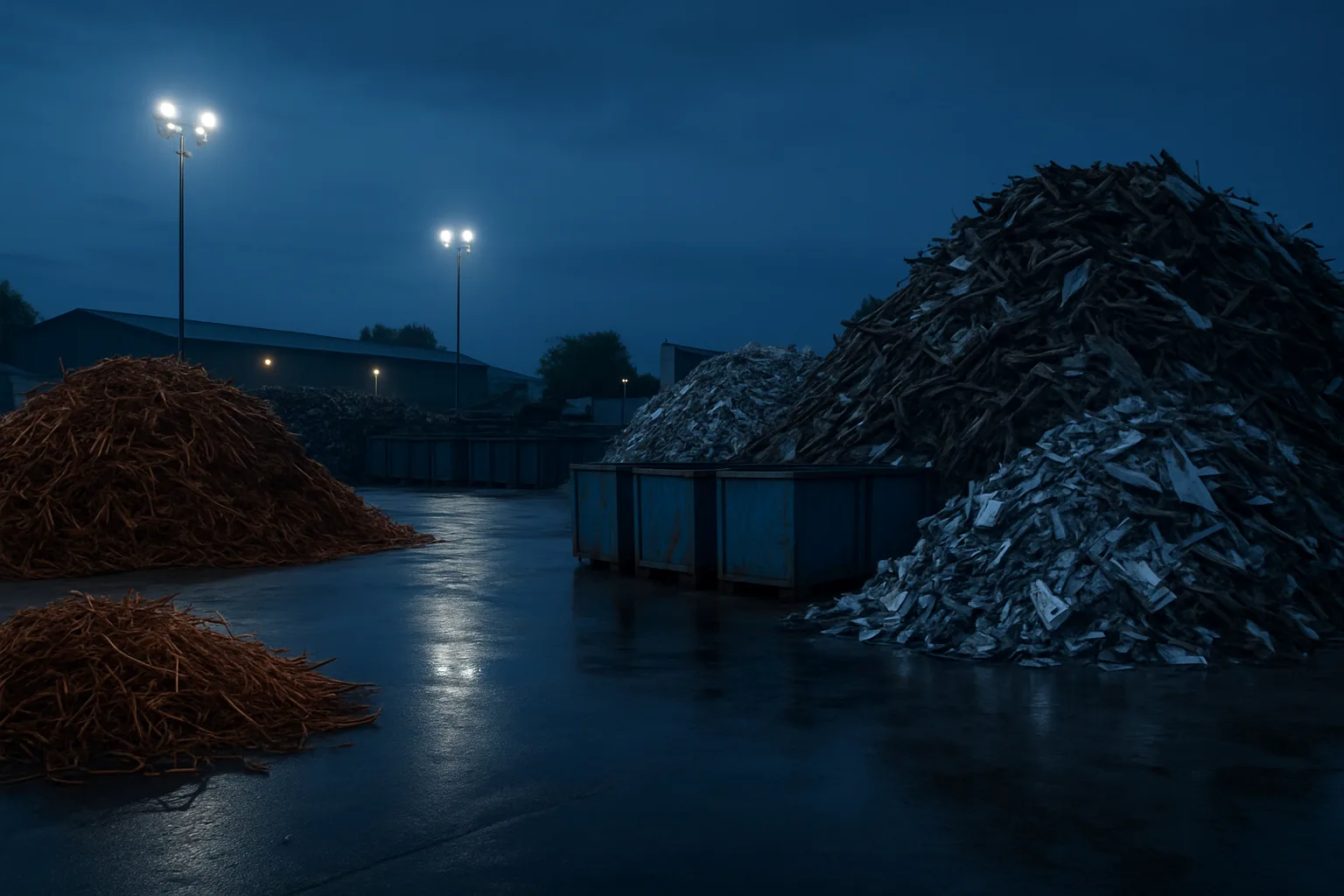
Scrap Metal Prices in Tacoma This Week: What the Market Is Telling You
If you've been sitting on a load of copper, aluminum, or steel, the week of July 19, 2026 gives you a lot to think about. Global supply signals, shifting demand from EV manufacturing, and regional buying patterns across Washington state are all moving at once. Knowing which direction they're pointing could mean real money left on the table — or in your pocket.
This weekly roundup breaks down what's happening with scrap metal prices in Tacoma and the surrounding Pacific Northwest right now. We cover the metals that matter most, the forces driving price swings, and how to make sure you're not selling blind. Whether you run a yard, haul loads independently, or are clearing out an estate, the market conditions this week are worth understanding before you make a move.
Want to skip the guesswork entirely? You can find the best scrap metal prices today without cold-calling a single buyer.
What's Moving Copper Scrap Prices Right Now
Copper continues to be the metal everyone watches first. The copper scrap price today is being pulled in two directions simultaneously. On one side, infrastructure buildout — EV charging networks, grid modernization, data center construction — is keeping demand elevated across North America. On the other side, macro uncertainty and cautious manufacturing output from key trading partners are putting a ceiling on how high prices can climb in the short term.
For sellers in Tacoma and the broader Washington market, this tension matters. You're not far from major Pacific ports, which means local buyers have relatively direct access to export channels. That can work in your favor when overseas demand ticks up. Right now, bare bright copper and #1 copper wire are commanding stronger attention from buyers than lower-grade material. If you have mixed loads, it's worth sorting before you sell — the spread between grades is meaningful.
A few things to watch this week on copper:
- Comex futures movement — any sharp move in futures typically flows into yard pricing within 24–48 hours
- Scrap-to-refined spread — when refiners are hungry for feed, scrap premiums widen
- Insulated wire grades — demand for communication wire scrap has been inconsistent; don't assume last month's price holds
The single biggest mistake copper sellers make is calling one buyer and accepting the first number. Competition is how you find the actual market. Platforms like SMASH are built on exactly that principle — get your load in front of vetted buyers and let the bids tell you what your material is worth.
Aluminum and Steel: The Quieter Metals With Loud Price Swings
Aluminum scrap doesn't get the headlines copper does, but it's been active. Cast aluminum, particularly from automotive sources, has seen steady demand from domestic secondary smelters who are running leaner inventories than they were six months ago. Sheet aluminum and extrusions are more regional in pricing — what a buyer in Tacoma will pay versus a buyer in Ohio can differ more than most sellers expect.
Steel and ferrous material is a different story. HMS (heavy melted steel) pricing has been range-bound, responding more to mill capacity utilization than to any single demand signal. Electric arc furnace mills — which dominate the U.S. steel scrap market — are buying strategically rather than aggressively right now. If you're moving bulk ferrous, timing your sale around mill re-buy cycles matters more than trying to call the macro top.
Key scrap grades to track this week:
- Cast aluminum — automotive tear-down material remains in demand
- Shredded steel / #1 HMS — watch regional mill announcements for buying changes
- Aluminum extrusions — prices vary widely by buyer; get multiple quotes
- Stainless steel — nickel-content grades are tracking nickel price movement closely
- Zorba / twitch — mixed nonferrous from auto shredding continues to attract international interest
If you're a yard operator in Washington state processing mixed loads, the ability to document and itemize your material isn't just good practice — it directly affects what buyers are willing to bid. Undocumented or loosely described loads consistently attract lower offers. That's not a negotiating tactic; it's a buyer protecting themselves from uncertainty.
You can check current scrap metal prices before you lock in any deal this week.
Catalytic Converter Market: Still High-Value, Still Complicated
Catalytic converters remain one of the highest-value scrap categories per unit, and the pricing dynamics in mid-2026 continue to reward sellers who do their homework. PGM (platinum group metal) spot prices — platinum, palladium, and rhodium — are the primary driver of cat values. Palladium has been volatile. Rhodium, after years of extreme price swings, has stabilized at levels that still make cats worth sorting carefully.
The problem most sellers face isn't the value — it's the verification. Without VIN tracking, serial numbers, and proper documentation, you're either leaving money on the table or creating compliance headaches. Both outcomes are avoidable. SMASH's platform includes VIN lookup and serial tracking specifically because undocumented catalytic converter transactions are a liability, not just a pricing issue.
For Tacoma-area sellers, the local enforcement environment around catalytic converter documentation has continued to tighten through 2025 and into 2026. Know your buyer's requirements before you show up with a load. A platform that handles documentation automatically is worth more than a slightly higher quote from a buyer who cuts corners.
What to document on every cat transaction:
- VIN or vehicle source record
- Serial number where visible
- Photo documentation of the unit
- Buyer identity verification
Why Tacoma Scrap Sellers Need More Than One Buyer in 2026
The Pacific Northwest scrap market has structural advantages — port access, active manufacturing base, proximity to recycling-heavy industries. But those advantages don't automatically translate into better prices if you're selling to the same buyer every time out of habit or convenience.
Scrap metal pricing is not standardized. Two vetted buyers in the same week can offer meaningfully different prices on the same load of copper pipe or aluminum extrusions. The difference isn't fraud — it's individual buyer inventory position, logistics costs, and current demand for specific grades. The only way to find the real market is to expose your load to competition.
That's what a scrap metal auction platform like SMASH does. You list your material — with photos, weights, grade descriptions, and documentation — and vetted buyers bid. You see the numbers. You decide. No subscription fees. No guessing. The auction format forces price discovery that a single cold call never will.
For a deeper look at how pricing works across different metal categories, read the latest scrap metal pricing guides on our blog.
Sellers working through Tacoma scrap metal services know that local market access is only part of the equation. The buyers you reach beyond your immediate geography often set the real price ceiling.
Market Signals to Watch the Week of July 19, 2026
This is a week with several moving parts. Here's what experienced sellers and yard operators across Washington and the broader U.S. market are keeping an eye on:
- Federal Reserve language — any signals on rate direction affect the U.S. dollar, which moves metal prices denominated in USD
- Chinese manufacturing PMI data — China remains the largest global consumer of scrap metal; any contraction in manufacturing activity hits demand
- Auto industry production schedules — catalytic converter and nonferrous demand from automotive is closely tied to production run rates
- Regional mill announcements — Pacific Northwest mills occasionally issue unscheduled buy/no-buy windows; follow local trade channels
- Port congestion and logistics costs — export scrap pricing is affected by shipping rates; delays at major West Coast ports impact buyer margins
None of these are reasons to panic or hold indefinitely. They're context. Good sellers use market signals to time loads when possible — but they don't wait forever on a material that's already priced well. If the bids you're seeing reflect real demand, that's the market talking.
For scrap metal recycling in Washington, the combination of port access, active buyers, and platforms that create genuine competition puts sellers in a stronger position than most regions. Use that position. Don't default to one phone call when a documented auction can surface better price discovery.
Ready to stop guessing what your load is worth? Find the best price for your scrap on SMASH and let vetted buyers compete for your material.
The best scrap metal prices don't come from the first buyer who picks up the phone. They come from competition, documentation, and showing up informed. For current rates in your area, head to best-scrap-prices.com — and make your next sale your best one.
Frequently Asked Questions
Q: What are scrap metal prices like in Tacoma right now?
Scrap metal prices in Tacoma fluctuate based on global commodity markets, local buyer demand, and material grade. Copper and aluminum nonferrous grades are generally the strongest performers right now. For current rates, always check with multiple buyers or use a competitive platform — never rely on a single quote. Disclaimer: Prices change daily. Always verify current rates before selling.
Q: How does copper scrap price today compare to last month?
Copper prices in mid-2026 have been influenced by infrastructure demand and global manufacturing output. The direction of the copper scrap price today depends on Comex futures movement and regional buyer activity. Check daily pricing sources and consider selling through a competitive auction to capture peak demand rather than a static yard quote.
Q: Is it worth sorting my scrap before selling in Washington state?
Yes — consistently. Sorted, documented material attracts better bids from buyers because it reduces their risk and processing cost. In Washington state, especially for catalytic converters and regulated materials, documentation is also a legal and compliance requirement. Presenting clean, sorted loads with photos and weight documentation directly supports stronger price discovery.
Q: What is a scrap metal auction platform and how does it work?
A scrap metal auction platform connects sellers directly with multiple vetted buyers who compete for listed loads. You document your material — grades, photos, weights — and buyers submit bids. The competitive format replaces the single-buyer cold call with transparent price discovery. SMASH is one such platform operating across North America with no subscription fees for sellers.
Q: How do I find the best scrap metal prices near me in Tacoma?
Start by knowing your material grades and weights accurately. Then get quotes from more than one buyer — whether through local yards or a platform like SMASH. Sites like best-scrap-prices.com aggregate pricing information to help you benchmark before you sell. The sellers who consistently get strong prices are the ones who come prepared and shop their load to multiple buyers.
Follow SMASH on LinkedIn for weekly scrap metal market updates, pricing insights, and industry news across North America.