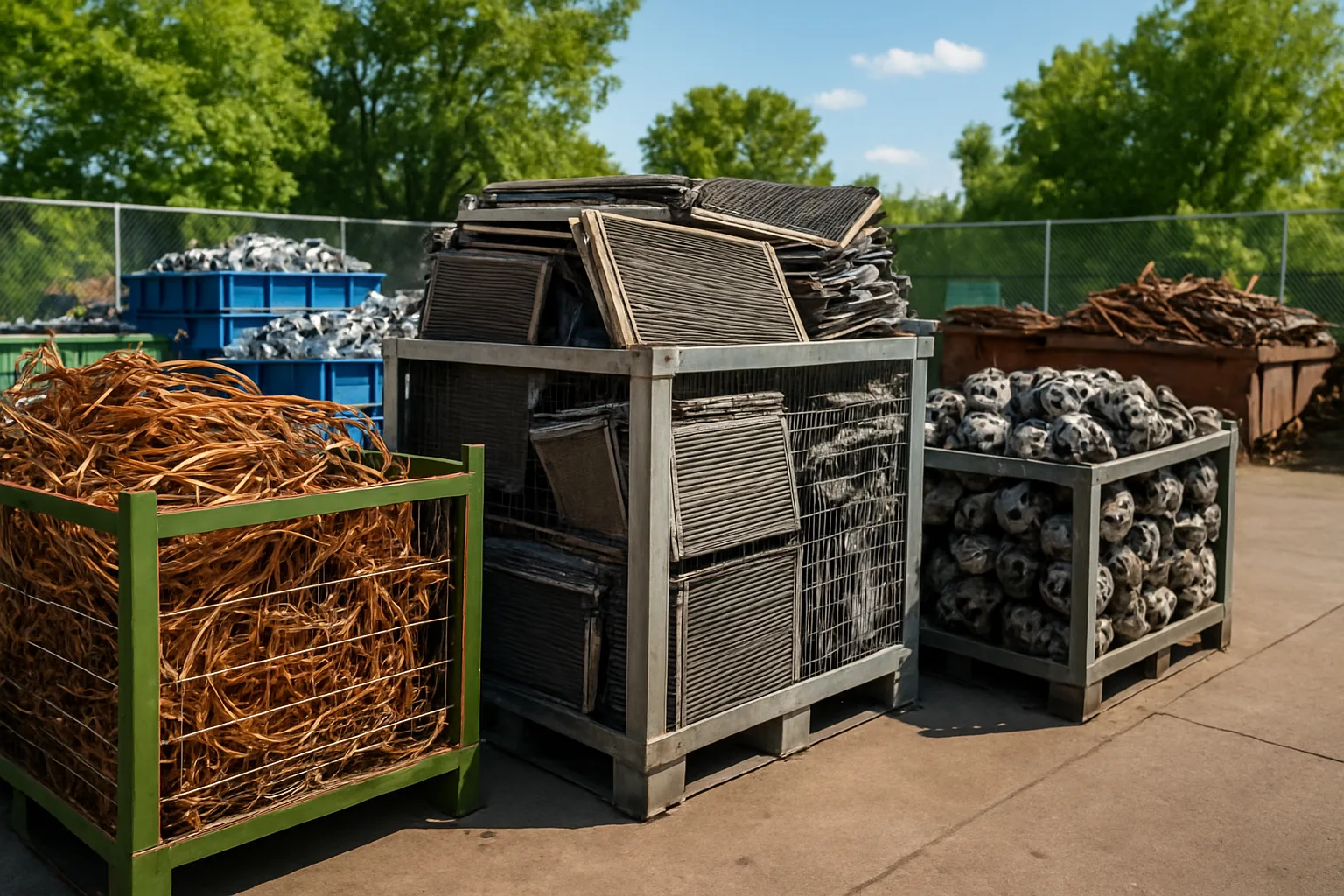
What's Really Inside Your Old Radiator and Alternator — And What It's Worth
Most people toss a blown radiator or a dead alternator in the corner of the shop and forget about it. That's money sitting on a shelf. Auto parts like these are loaded with recoverable metals — aluminum, copper, steel, and sometimes more — and knowing what's inside them changes how you think about your scrap pile. If you're looking to sell scrap metal in Madison, your used auto parts are a stronger starting point than most sellers realize.
This isn't a generic "recycle more" article. This is a breakdown of exactly which parts contain which metals, how recyclers process them, and how to position yourself to get a better price when you're ready to sell. Whether you're a shop owner clearing out cores, a yard operator building loads, or a first-timer with a truck full of parts, this guide is for you.
Radiators: More Copper and Aluminum Than You Think
A standard automotive radiator is one of the better scrap finds in any auto parts pile. Older radiators — typically pre-2000 vehicles — are built with copper cores and brass tanks. Those are high-value metals. A single copper-brass radiator can weigh anywhere from 8 to 20 pounds depending on the vehicle, and copper commands a strong price per pound at most yards.
Newer radiators, especially those from late-model cars and light trucks, are aluminum-core with plastic tanks. The aluminum is still valuable, but it's worth less per pound than copper. That said, volume matters. A shop clearing out a season's worth of radiator replacements can accumulate serious weight fast. The aluminum scrap price today fluctuates, so timing your sale — or putting loads up for competitive bidding — can make a real difference in what you walk away with.
- Copper-brass radiators: Higher value per pound, found in older vehicles
- Aluminum radiators with plastic tanks: Lower per-pound rate, but common and stackable
- Steel mounting brackets and fittings: Worth separating if you have volume
- Coolant contamination: Some yards will dock price if fluid isn't drained — drain them before delivery
Processing at a recycling facility typically involves shredding or baling, followed by sorting using eddy current separators and density-based systems to pull aluminum from steel and plastic. The copper-brass units often get hand-processed to preserve their value. Knowing this helps you understand why a clean, well-sorted load gets a better price than a mixed heap — buyers are paying for predictability.
Alternators and Starters: Steel, Copper Windings, and Aluminum Housings
Pull an alternator apart and you'll find a combination of materials that makes it worth more than its weight in straight steel. The housing is typically cast aluminum. The internal windings are copper wire. The rotor and stator contain electrical-grade copper that recyclers specifically target. Steel makes up the remainder of the structure.
Alternators and starters are often sold as "cores" — a term you already know if you've spent any time at a yard or auto parts counter. Core buyers look for resale into remanufacturing. If a core is too far gone for reman, it flows to metal recyclers who process it for its material content. Either way, you don't want to throw these in the dumpster.
- Aluminum housing: Moderate value, adds up quickly in volume
- Copper windings: Higher value per pound — the real prize inside any alternator
- Steel components: Lower value but still contribute to overall load weight
- Whole vs. broken down: Some yards pay more for whole alternators sold as cores; others want them cracked open
If you're in Madison or anywhere across Wisconsin running a shop or fleet operation, these cores pile up faster than you might notice. A box of 20 dead alternators in the corner of your shop is not clutter — it's a load worth quoting. Before you drop them at the first yard that answers the phone, find the best scrap metal prices today and compare what the market is actually paying.
Other Auto Parts Worth Separating Before You Sell
Radiators and alternators get a lot of attention, but they're not the only auto parts worth pulling out and sorting before you book a pickup or haul a load. The more you separate, the better price discovery you get — and the less you leave on the table with a single buyer who benefits from your mixed pile.
Here's a breakdown of other common auto parts and their primary scrap metal content:
- Catalytic converters: Platinum group metals (PGMs) — rhodium, palladium, platinum. The catalytic converter price varies wildly by make, model, and the current PGM market. Serial tracking matters here.
- Starters: Similar material profile to alternators — aluminum, copper, steel
- AC compressors: Aluminum housing, steel internals, sometimes copper
- Copper wiring harnesses: Stripped bare copper commands the best copper price
- Steel engine blocks: Heavy, lower per-pound value, but volume-friendly for steel price
- Aluminum cylinder heads and intake manifolds: Good aluminum content, common in late-model teardowns
- Transmissions: Mostly steel, some aluminum in housings
Separating by metal type before you sell isn't just tidiness. It's leverage. A yard buying a sorted load of copper-bearing parts prices it differently than a mixed heap. Platforms that bring competitive buyers to your load — rather than a single buyer with a take-it-or-leave-it offer — are where sorted loads really shine. That's where sell your scrap metal on the SMASH marketplace becomes the smarter move over a cold call to one local buyer.
How Recyclers Actually Process Auto Parts — And Why It Affects Your Price
Understanding the downstream process gives you an edge. When you drop a radiator at a yard, that yard is pricing it based on what they expect to recover from it after processing costs. Shredders, separators, and sorting lines cost money to run. The cleaner your material comes in, the more of that processing margin stays in your pocket.
Here's what the flow typically looks like for mixed auto parts scrap:
- Initial sorting: Ferrous vs. non-ferrous, cores vs. body metal
- Shredding: Large shredders break down full assemblies into fist-sized chunks
- Magnetic separation: Steel and iron pulled out first
- Eddy current separation: Non-ferrous metals (aluminum, copper) separated from plastic and rubber
- Density separation: Further sorting of aluminum grades, copper fractions
- Downstream sale: Separated metals go to smelters, mills, and secondary processors
Every step in that chain has a cost. When you pre-sort and document your load — photos, weights, part descriptions — buyers can price more accurately and more competitively. Guessing costs everyone. Documentation creates confidence, and confident buyers bid higher. That's not theory. That's how price discovery works. To read the latest scrap metal pricing guides and stay current on what different metal grades are fetching, bookmark resources that track the market daily.
How to Get the Best Price When You Sell Scrap Auto Parts in Madison
Selling scrap in Madison, Wisconsin is straightforward once you know what you have and how to position it. The market here is active — there are established yards, regional buyers, and increasing access to platforms that bring competition to your load instead of leaving you stuck with one offer.
Here's how to approach a sale the right way:
- Sort before you sell. Copper-brass radiators separate from aluminum. Cats separate from steel. Don't let a buyer blend your high-value material into a low-value mixed load price.
- Document with photos. A photo of a sorted pallet of alternators shows buyers exactly what they're bidding on. It removes uncertainty and supports higher offers.
- Know your weights. Approximate weights help buyers give you real quotes, not guesswork cushioned against their risk.
- Don't call one buyer. The old way — one phone call, one price — leaves money on the table. Multiple buyers in competition is how the market actually finds value.
- Use SMASH. SMASH brings vetted buyers to your load through a competitive auction format. No subscription fees. They only win when you do.
- Check current rates before you sell. The aluminum price, copper price, and steel price all move. Check current scrap metal prices before you commit to a sale so you know whether the timing is right.
If you're running a shop in Madison or hauling loads across Wisconsin, SMASH is built for exactly the kind of volume you're moving. Documented loads, vetted buyers, competitive bids — no guessing, no single-buyer pressure. That's the difference between leaving money behind and getting what your material is actually worth.
The scrap market rewards sellers who show up prepared. Know your metals, sort your parts, document your load, and let competition do the work. When you're ready to move a load, get the best scrap metal prices — check rates at best-scrap-prices.com.
Frequently Asked Questions
Q: What scrap metal is in a car radiator?
Older radiators typically contain copper cores and brass tanks — both high-value non-ferrous metals. Newer radiators are usually aluminum with plastic end tanks. The aluminum is still worth selling, especially in volume. Drain coolant before dropping them at a yard to avoid price deductions.
Q: How much is an alternator worth as scrap metal in Madison?
Alternator scrap value depends on whether it's sold as a core for remanufacturing or broken down for its metal content — aluminum housing, copper windings, and steel internals. Prices fluctuate with the market. Check current aluminum and copper rates before selling, and get more than one quote.
Q: Where can I sell scrap metal near me in Madison, Wisconsin?
Madison has active scrap yards and metal buyers. Beyond local drop-off, platforms like SMASH let you put your load in front of multiple vetted buyers through a competitive auction — which can surface better prices than a single cold call to one yard. Start by sorting your material and documenting what you have.
Q: Does sorting my scrap auto parts before selling actually matter?
Yes — significantly. Mixed loads get priced at the lowest common denominator because buyers build in margin for uncertainty. A sorted, documented load of copper-bearing parts prices differently than a heap of mixed metal. The extra time to separate pays off in better offers.
Q: How do scrap metal prices for aluminum and copper change over time?
Both aluminum and copper prices move with commodity markets, global demand, energy costs, and trade conditions. There's no fixed rate — the aluminum scrap price today may look different next week. Check current market rates before you commit to a sale, especially on larger loads where the difference adds up fast.
Follow SMASH on LinkedIn for industry updates, scrap metal market insights, and tips on getting more from every load you sell.