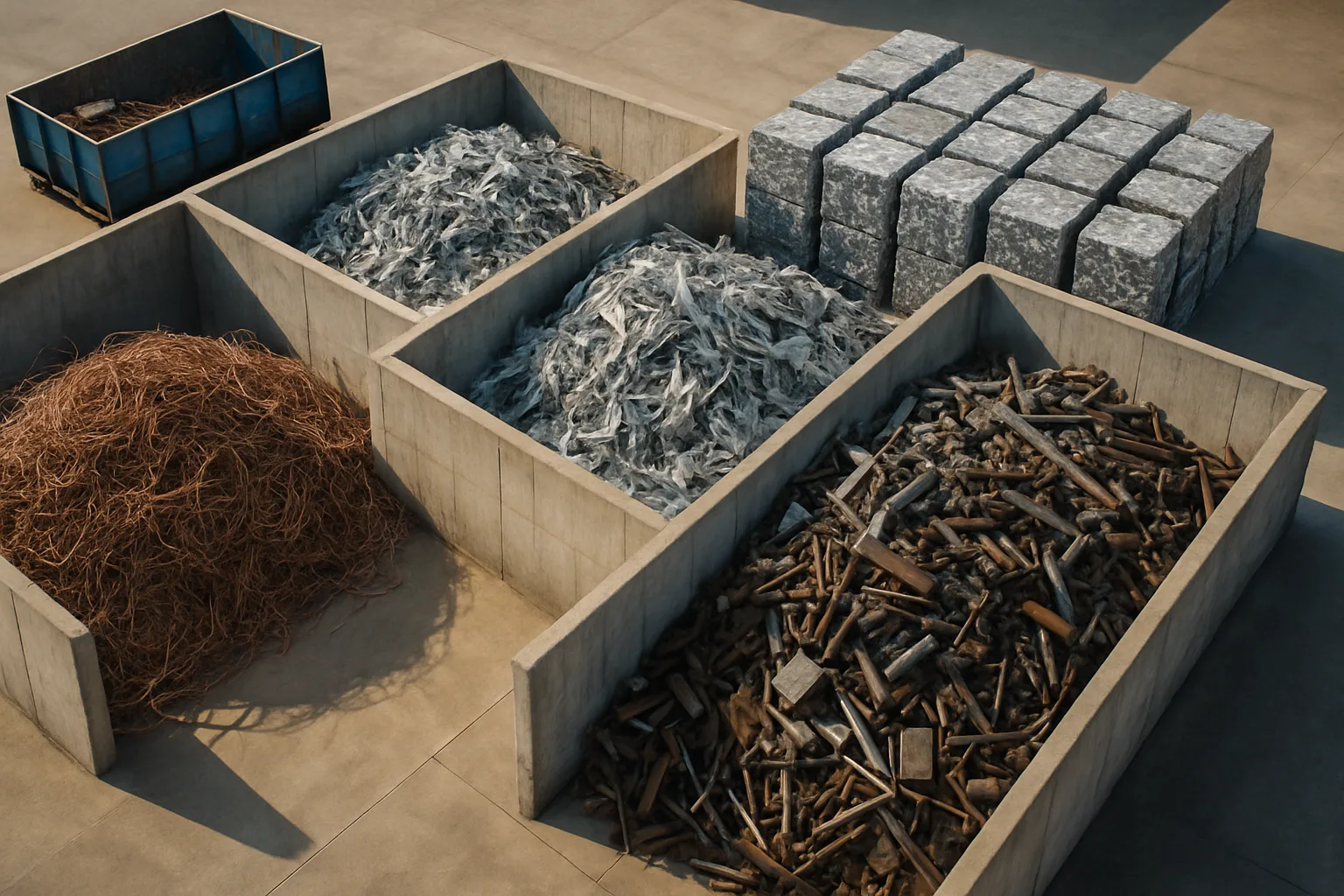
Not All Aluminum Pays the Same — Here's How to Grade Your Load Before You Sell
Most yards in St. Louis will quote you a price per pound. What they won't always tell you is that the number on the board assumes the cleanest, most straightforward aluminum they can process. Bring in a mixed, contaminated, or misidentified load and that number drops fast. Knowing your grades before you show up is the difference between a good day and a frustrating one.
The aluminum scrap price today varies more than most sellers realize — not just by market conditions, but by grade. Two sellers can walk into the same yard on the same morning and walk out with very different payouts. The one who sorted, identified, and documented their load wins. Every time.
This guide breaks down the most common aluminum grades, what each one is worth relative to the others, and exactly how to position your load for the strongest return. Whether you're clearing out a shop in St. Louis scrap metal services or running a steady recycling operation across Missouri, these fundamentals apply.
The Main Aluminum Scrap Grades and What They Actually Mean
The scrap industry uses a mix of informal yard language and formal ISRI (Institute of Scrap Recycling Industries) codes. Most sellers don't need to memorize every code — but you do need to know the broad categories and how buyers see them.
Here's a practical breakdown of the grades you're most likely to encounter:
- 1100 / Pure Aluminum (Taint/Tabor or "Candy"): The cleanest grade. Think sheet aluminum, foil stock, and certain food-grade containers. High purity, no coatings, no attachments. Commands the best price per pound.
- Cast Aluminum (Zorba / Mixed Auto Cast): Engine blocks, transmission housings, wheels. Heavier, but mixed alloys mean lower purity. Paid accordingly.
- Aluminum Extrusions (Tense): Window frames, door frames, architectural profiles. Generally clean and sorted. Commands a solid mid-tier price.
- Aluminum Breakage (Twitch): Mixed, shredded aluminum with some contamination. Priced lower because processors have more work to do.
- Painted/Coated Aluminum: Aluminum with paint, lacquer, or other coatings. Reduced value — the coating adds non-aluminum weight and processing cost.
- Aluminum Cans (UBC — Used Beverage Containers): Consistent grade, widely accepted. Price fluctuates with commodity markets but is well-established.
- Aluminum Wheels: Clean, off-car wheels with tires and valve stems removed pay significantly more than dirty wheels still attached to rotors or with rubber intact.
- Irony Aluminum: Aluminum with steel attachments (bolts, inserts, brackets) that can't be easily removed. Penalized heavily — sometimes down to a fraction of clean aluminum value.
The spread between the top grade and the bottom grade can be substantial. On any given day, clean extrusions might pay two to three times more per pound than irony aluminum. That gap makes sorting worth your time.
How the Aluminum Scrap Price Today Gets Determined — and Why It Shifts
The aluminum scrap price today ties directly to the London Metal Exchange (LME) benchmark, but that's just the starting point. Your local yard in St. Louis or anywhere across Missouri adds a spread — their margin for processing, overhead, and local demand — on top of the commodity price.
Several factors push that price up or down on any given week:
- LME aluminum spot price: This moves daily based on global supply and demand. Tariff changes, energy costs in smelting regions, and international trade flows all move the needle.
- Regional demand: A nearby mill or smelter running hot means stronger local bids. A slowdown in auto manufacturing reduces demand for cast alloys.
- Load quality: Clean, sorted, well-documented loads attract better bids. Yards price in processing risk on dirty loads.
- Volume: Larger loads give you more negotiating leverage. A one-pound sample and a 10,000-pound load are handled very differently.
- Competition: How many buyers are actively bidding for your material determines how much of the market value you actually capture.
That last point is where most sellers leave money on the table. Calling one buyer and accepting one quote is not price discovery — it's guessing. Platforms like sell your scrap metal on the SMASH marketplace exist specifically to fix that. When vetted buyers compete for your load, you find out what the market actually will pay — not what a single buyer feels like offering today.
To check current scrap metal prices before you show up to any yard, use a reliable pricing resource. Walking in with current data makes you a harder negotiator.
Grade-by-Grade: How to Maximize Your Payout Before the Scale
Getting the best price isn't just about knowing what you have. It's about presenting it correctly. Here's how to approach each major grade to get top dollar.
Clean Extrusions and Sheet
Remove all fasteners, rivets, and plastic components before delivery. Even a few percent of non-aluminum content can trigger a downgrade. Separate by alloy type if you know it — mixed extrusions still pay well, but identifiable alloys can sometimes command a premium from specialty buyers.
Cast Aluminum
Clean off oil, coolant, and dirt. Buyers discount wet or heavily contaminated cast. If you have wheels, pull the tires and valve stems — clean aluminum wheels are a different line item entirely and pay meaningfully more than cast mixed with rubber.
Cans (UBC)
Crush for volume efficiency if you're hauling. Make sure cans are dry — wet cans add false weight and yards will notice. Most yards have a straightforward UBC price; the opportunity to outperform here is in volume and consistency, not grade manipulation.
Painted and Coated Aluminum
If you have enough volume, ask whether a mill buyer will take it separately. Some processors specialize in painted aluminum and can offer better rates than a general yard because they've built the process for it. This is exactly the type of niche load that benefits from competitive bidding across multiple buyers.
Irony Aluminum
Don't sell it as irony if you can avoid it. Spend the time to remove steel inserts, bolts, and brackets. Even rough removal that takes your contamination from 15% down to 3% can move your load into a better pricing tier. The labor-to-return math usually works in your favor.
Documentation and Photo Proof: Why Buyers Pay More for Transparency
Here's something most sellers underestimate: a well-documented load sells better. When a buyer can see clear photos of your aluminum — sorted by grade, laid out cleanly, with visible condition — they price in less risk. Less risk means a stronger bid.
This is especially true when selling online or across distances. Platforms like SMASH require photo documentation as part of the listing process. That's not just compliance — it's a competitive advantage for sellers who take it seriously. A load with six clear photos, accurate weights, and grade identification pulls better bids than the same load described in two vague sentences.
For larger commercial loads, consider including:
- Photos of each grade separated and staged
- Approximate weight per grade category
- Source of the material (demolition, manufacturing offcut, auto dismantling)
- Any certifications or mill certs if you have them
This level of detail is what separates a seller who consistently gets strong bids from one who constantly wonders why their prices are lower than expected. Read the latest scrap metal pricing guides to understand what buyers look for when evaluating loads online.
Selling Aluminum in St. Louis and Missouri: What to Know Locally
The St. Louis market sits in a strong position geographically — central distribution, proximity to manufacturing corridors, and active industrial recycling across Missouri's river and industrial zones. That means buyer activity for non-ferrous material, including aluminum, tends to be solid compared to more isolated markets.
Still, even in an active market, the one-buyer problem exists. Many sellers in St. Louis default to their closest yard because it's convenient. That's understandable — but convenience has a price. If your closest yard knows you're not shopping the load elsewhere, there's no pressure to sharpen their bid.
Using an online platform to create competitive pressure — even if you ultimately sell locally — gives you a real data point on what your material is worth. You either get a better remote bid and ship the load, or you go back to your local buyer with documented market evidence. Either outcome is better than the default. To find the best scrap metal prices today, you need more than one data point.
Missouri sellers with consistent volume — manufacturing scrap, demolition loads, or regular auto recycling — are exactly the profile that benefits most from auction-format selling. Vetted buyers compete, the market sets the price, and you don't leave money on the table by defaulting to whoever picks up the phone first.
Frequently Asked Questions
Q: What aluminum grade pays the most at scrap yards?
Clean, uncoated aluminum extrusions and sheet aluminum (often called "tense" or "candy" in yard language) typically pay the highest price per pound. The key factors are purity, lack of contamination, and ease of processing. Remove all steel, plastic, and coatings before delivery to access the top tier.
Q: How do I find the aluminum scrap price today in St. Louis?
Prices shift with LME commodity movements and local yard margins. Check a pricing resource like best-scrap-prices.com for current regional benchmarks, then call or check at least two or three St. Louis-area yards to compare. For larger loads, listing on a competitive platform like SMASH gives you multiple buyer bids simultaneously.
Q: Does sorting aluminum before selling actually make a difference?
Yes — significantly. Mixed or contaminated aluminum can pay 30–50% less than the equivalent clean, sorted grade. The time it takes to separate cast from extrusions or remove steel inserts almost always pays off in a higher per-pound rate. Yards price in processing risk; you pay for that risk when you don't sort.
Q: Can I sell scrap aluminum online and get a competitive price?
Absolutely. Online platforms like SMASH let you list your load with photos and documentation, then have vetted buyers bid competitively. This is especially effective for larger commercial loads where the difference between a single bid and a competitive auction can add up to real money. It's one of the most practical ways to sell scrap metal online without defaulting to a single local quote.
Q: What is "irony aluminum" and why does it pay less?
Irony aluminum is aluminum scrap with steel attachments — bolts, inserts, brackets — that haven't been removed. The steel content reduces the overall aluminum purity of the lot and adds processing cost for the buyer. Yards discount this grade significantly. If you can remove the steel components, even partially, you'll usually recover more money than the labor costs you.
The aluminum scrap price today is out there — the question is whether you're positioned to capture it or settle for less. Sort your grades, document your loads, and use competitive tools to put buyers in a room together. If you're selling in St. Louis or anywhere across Missouri, the market is there. You just need the right approach to access it. Get the best scrap metal prices by checking current rates at best-scrap-prices.com — and stop leaving money on the scale.
Disclaimer: Scrap metal prices fluctuate daily based on commodity markets and local yard conditions. Always verify current rates before selling.
Stay sharp on market moves — follow SMASH on LinkedIn for ongoing scrap metal market insights and industry updates.