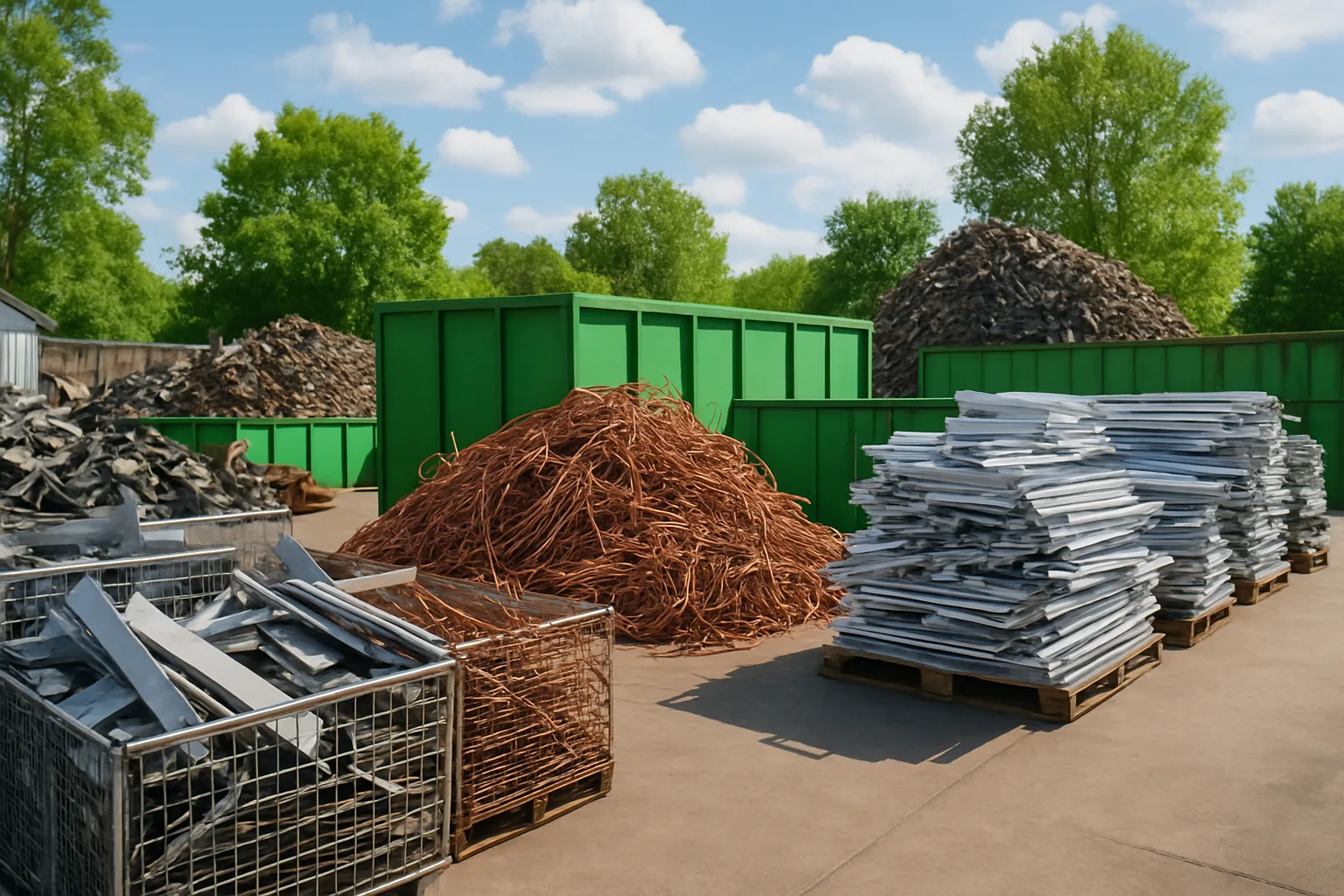
Copper Scrap Prices Are Moving — Here's What Sacramento Yards Need to Know in 2026
Most sellers focus on steel scrap price today and forget that copper is quietly one of the highest-value metals sitting in their yard right now. Copper wiring, pipe, bus bars, and motors — graded correctly, these loads can move the needle on your monthly revenue more than a full trailer of HMS ever will. But misgrade a load, and you leave serious money on the table.
Copper markets in 2026 are being pulled in multiple directions. Electrification demand — EVs, grid infrastructure, data centers — keeps long-term copper consumption elevated. At the same time, global economic uncertainty creates short-term volatility that catches sellers off guard. If you're in Sacramento or anywhere across California, understanding how copper grades translate into price is non-negotiable right now.
This guide breaks down copper scrap grades, what drives price swings, and how to make sure you're getting a fair number every time — not just the number one buyer decides to quote you.
Understanding Copper Scrap Grades and Why They Determine Your Price
Copper isn't copper. The grade you declare — or fail to declare — directly sets your baseline price before a single negotiation happens. Buyers price copper scrap off COMEX futures, then apply a discount based on contamination, alloy content, and processing required. Know your grade, and you know where you stand.
Here's a practical breakdown of the most common copper scrap grades in North American yards:
- Bare Bright Copper (#1 Bare Bright): The cleanest grade. Uncoated, unalloyed copper wire, minimum 1/16" diameter, free of solder, paint, insulation, and corrosion. Commands the highest price per pound — often benchmarked closest to COMEX spot.
- #1 Copper (Millberry): Clean, unalloyed copper pipe and wire, free of excessive oxidation. May include bus bars and tubing. Slightly lower than Bare Bright but still a premium grade.
- #2 Copper: Unalloyed copper, but with some oxidation, coatings, or minor contamination. Includes mixed copper pipe with solder joints. Expect a meaningful discount versus #1.
- Insulated Copper Wire (ICW): Price depends entirely on copper recovery percentage. A heavy-gauge wire with 85%+ recovery pays very differently than a thin communications cable at 30% recovery. Always know your recovery rate.
- Copper Alloys (Brass, Bronze): These aren't pure copper plays. Yellow brass, red brass, and bronze each have their own price spread versus copper. Don't mix them into a copper load and expect copper money.
- Burnt Wire: Some markets accept it; others won't touch it. Environmental regulations in California increasingly scrutinize burnt wire sourcing. Know your buyer's stance before you build inventory around it.
Getting grading right is the first step. The second step is making sure the buyer you're selling to is pricing each grade competitively — not just quoting a number they know you'll accept because you have no comparison point.
What's Driving Copper Scrap Prices in 2026
Copper prices don't move in a vacuum. Several converging forces are shaping the market heading into the second half of 2026, and sellers who understand these drivers make better timing decisions on when to move material.
Electrification demand remains structurally elevated. North American grid expansion, EV manufacturing buildout, and the continued rollout of large-scale data infrastructure all consume copper at rates that support long-term price strength. This isn't a short-term spike — it's a multi-year demand cycle that's still playing out.
Smelter and refinery capacity constraints can tighten secondary copper supply chains even when scrap availability is high. When processors can't move material through quickly, premiums compress and buyers get selective about grade and contamination. Clean material always finds a home faster than dirty loads.
Other factors to watch:
- USD strength versus commodity currencies — a stronger dollar typically pressures copper futures denominated in USD
- Chinese import demand signals — China remains a major consumer of secondary copper globally
- COMEX copper futures positioning — large speculative positions can create short-term disconnects from physical market fundamentals
- Energy costs affecting smelter operations — higher energy costs reduce processor margins and filter back into buy prices
For sellers in Sacramento and across California, the local market layer matters too. Regional processor capacity, transport costs to end users, and California's environmental compliance requirements all create a local spread on top of national copper benchmarks. Sacramento scrap metal services can help you understand what local buyers are actually paying versus what the national benchmark suggests.
The Problem With a Single Buyer for Your Copper Loads
Here's where most yards underperform on copper revenue: they have one buyer. One phone call. One number. No idea whether that number reflects the actual market or just what that buyer wants to pay today.
Copper margins are tight and move fast. A buyer who knows you're not shopping your load has no structural incentive to sharpen their number. They quote what works for them. You accept it because you don't have a comparison. That's the old way — and it's costing sellers money they don't even know they're leaving behind.
Competition changes the dynamic entirely. When multiple vetted buyers see the same load — with documented photos, accurate grade declarations, and clean packing lists — they price to win. That's basic market mechanics. More buyers competing for your material means better scrap metal prices today, not because of luck, but because of structure.
This is exactly where a B2B scrap metal marketplace like SMASH does real work. Instead of one call to one buyer, your copper load goes in front of a pool of vetted buyers who submit competing bids. The documentation tools — photo uploads, grade declarations, weight and lot details — give buyers the confidence to bid aggressively because there's no ambiguity about what they're buying. To find the best scrap metal prices today, you need more than one data point. You need competition.
How to Document Copper Loads to Get Better Bids
Documentation isn't just paperwork. On a competitive auction platform, a well-documented copper load pulls stronger bids than an identical load with vague descriptions and no photos. Buyers discount uncertainty. Remove the uncertainty, and you remove the reason to discount.
Here's what strong copper load documentation looks like:
- Clear grade declaration: State the grade explicitly — #1 Bare Bright, #2 Copper, 85% ICW, etc. Don't leave buyers to guess and price conservatively.
- Photo documentation: Multiple angles. Show the material clearly — no hidden piles, no ambiguous shots. Buyers who can see what they're buying bid more confidently.
- Accurate weight and lot size: Estimated weights are fine at listing time, but be realistic. Significant weight discrepancies after pickup create disputes and damage your reputation with buyers.
- Contamination disclosure: If there's minor contamination, disclose it. Buyers who discover issues on delivery won't come back. Buyers who see honest disclosures and still win the bid become repeat buyers.
- Packing list and BOL readiness: Know what documentation is required for the buyer's facility before the load moves. Delays at receiving hurt everyone.
Platforms like SMASH scrap metal auction are built around this documentation-first approach. The inventory tool keeps your lot records organized. Serial tracking and VIN lookup apply where relevant (think motors, transformers, or industrial copper-bearing equipment). It's not extra work — it's the work that gets you better numbers. You can also read the latest scrap metal pricing guides to stay current on what buyers expect from documentation across different metals.
Steel, Aluminum, and Copper — Balancing Your Yard's Revenue Mix in 2026
Copper gets the attention for price per pound, but a well-run yard doesn't optimize one metal in isolation. Watching steel scrap price today alongside copper and aluminum gives you a fuller picture of where your best margin opportunities sit at any given time.
In 2026, the ferrous and non-ferrous markets have been moving with some divergence. Steel and HMS pricing has faced pressure from domestic mill overcapacity relative to certain scrap grades, while non-ferrous — particularly copper and aluminum — has held stronger on the back of manufacturing and electrification demand. This creates real strategic decisions for yards about how they sort, store, and time their loads.
California yards face additional considerations. Stricter environmental and operational compliance requirements mean documentation and material sourcing standards matter more here than in some other markets. Buyers know this, and a California-sourced, well-documented load from a compliant yard often commands a premium over ambiguous material. Use that to your advantage — especially in the Sacramento market where industrial and construction scrap volumes are significant.
To check current scrap metal prices across copper, steel, and aluminum simultaneously, use a platform that aggregates real bid data rather than relying on lagging published indices. The gap between a published benchmark and what a buyer will actually pay today can be meaningful — and that gap is your problem to close.
Frequently Asked Questions
Q: What is the copper scrap price today in Sacramento?
Copper scrap prices fluctuate daily based on COMEX futures, regional demand, and material grade. Published prices are a starting point, not a guarantee. The best way to know what Sacramento buyers are actually paying today is to get competing bids on your specific material — not rely on a single quote or a lagging price index. Disclaimer: Scrap metal prices change frequently. Always verify current rates before selling.
Q: How is copper scrap graded?
Copper scrap is graded based on purity, contamination level, and form. The main grades are Bare Bright (#1 Bare Bright), #1 Copper, #2 Copper, and insulated copper wire (priced by recovery percentage). Copper alloys like brass and bronze are graded separately. Accurate grading is critical — misgrading costs you money or creates disputes with buyers.
Q: What's the difference between COMEX copper price and scrap copper price?
COMEX reflects the price of primary refined copper futures. Scrap copper prices are derived from COMEX but discounted based on grade, processing costs, and market conditions. Clean #1 Bare Bright trades closest to COMEX; lower grades carry larger discounts. The spread between COMEX and scrap buy prices is where buyer margin lives — competition helps compress that spread in the seller's favor.
Q: How does the steel scrap price today affect my overall yard revenue?
Steel scrap is typically your highest-volume material, so its price sets the baseline for yard cash flow. When steel prices compress, optimizing your non-ferrous revenue — copper, aluminum, brass — becomes even more important. Watching both markets together helps you prioritize which loads to move when.
Q: Is a B2B scrap metal marketplace better than calling my regular buyer?
A B2B scrap metal marketplace like SMASH creates competition for your material. Your regular buyer has no incentive to sharpen their price if they know you'll accept what they offer. Multiple vetted buyers competing for the same load produces better price discovery. No subscription fees — you only pay when a deal closes.
Copper grading knowledge and market awareness are only worth something if you're selling into real competition. If you're still working off one phone call and one number, you're not getting the market — you're getting what one buyer wants to pay. Get the best scrap metal prices by putting your loads in front of buyers who have to compete to win them. Check current rates and get started at best-scrap-prices.com.
Follow SMASH on LinkedIn for scrap metal market updates, pricing insights, and industry news that actually matters to yard operators.