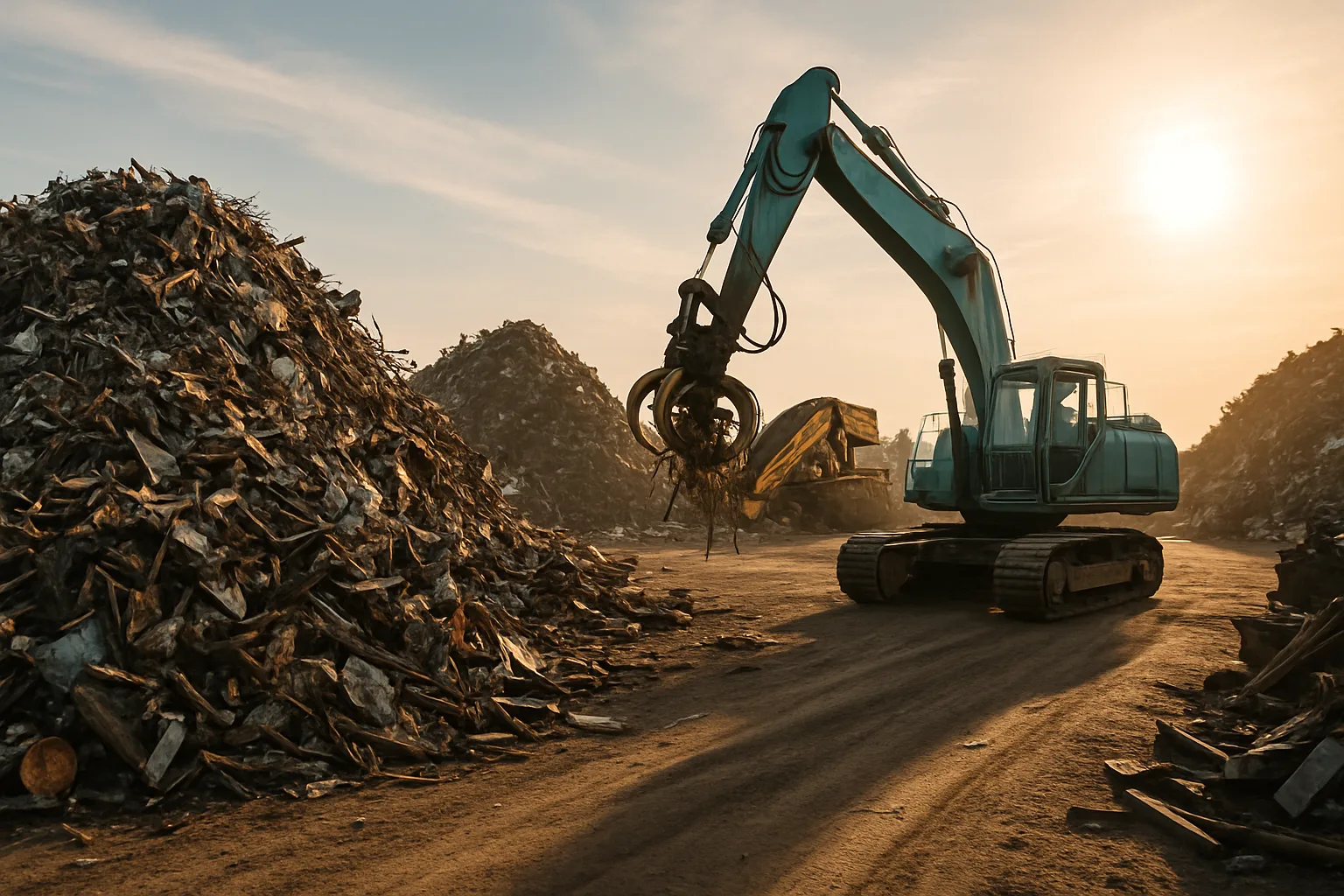
You're standing in your yard with a pile of mixed metal and no idea what you're looking at. Before you haul it anywhere, you need to know what you've got — because copper prices and steel prices aren't even close to the same ballpark. In San Antonio, where industrial scrap, automotive cores, and construction salvage move constantly, misidentifying your metal means leaving real money on the table.
This guide gives you a practical, no-nonsense way to sort your pile. We're talking visual checks, the magnet test, and a few other field tricks that scrap yard operators actually use. Learn your metals first. Then find the best scrap metal prices today before you commit to a single buyer.
Why Metal Identification Matters Before You Sell
Scrap yards price by the pound — and they price by what the metal actually is. Walk in with a load you've labeled wrong and you either get underpaid or get turned away for a reweigh. Neither is a good use of your time. Knowing the difference between bare bright copper and #2 copper wire, or between cast aluminum and sheet aluminum, can shift your payout significantly on a single load.
This is especially true in Texas, where the scrap market runs hot and buyers are specific about grades. San Antonio yards deal with everything from HVAC copper to automotive non-ferrous, structural steel, and catalytic converters pulled from a wide range of vehicles. The more accurately you sort and document your load, the stronger your negotiating position — whether you're dealing with a local yard or using a B2B scrap metal marketplace to get competitive bids for your scrap metal.
The Magnet Test: Your First Line of Identification
This is the fastest, most reliable starting point. Grab a strong magnet — a rare earth magnet from a hardware store works best. Then work through your pile methodically.
If it sticks to the magnet, it's ferrous. Ferrous metals contain iron. That means steel, cast iron, and most structural metals fall into this category. Ferrous scrap is worth less per pound than non-ferrous, but it moves in volume. Know the difference between:
- Light steel / sheet metal — thin, often from appliances or car bodies
- Heavy melt steel — thick structural pieces, I-beams, plates
- Cast iron — heavy, brittle, often from engine blocks, radiators, old cookware
- Stainless steel — a magnet test isn't always definitive here (some grades are only weakly magnetic), but stainless is visually distinct — it has a brushed or polished silver finish with no rust
If it doesn't stick, you're likely in non-ferrous territory. That's where copper, aluminum, brass, bronze, lead, and zinc live — and where the real money is. Non-ferrous metals resist corrosion, which is often your first visual clue before you even reach for the magnet.
Visual Identification Guide by Metal Type
Once you've separated ferrous from non-ferrous with the magnet, use visual and physical clues to break down what you've got. Here's how each major metal typically looks in a scrap context.
Copper
Copper is one of the most valuable metals you'll find in a scrap pile. Fresh copper is a distinctive reddish-orange color. Oxidized copper turns greenish (called patina or verdigris) — you'll see this on old plumbing pipe, roofing flashing, and electrical components. Bare bright copper is clean, uncoated wire with no solder and no insulation. It commands the highest copper price per pound. #1 copper includes clean pipe and heavy wire. #2 copper is slightly contaminated — soldered joints, light corrosion, thinner gauges.
- Color: Reddish-orange to green with age
- Sources: Plumbing, HVAC coils, electrical wiring, motors
- Key test: Scratch the surface — copper stays orange underneath oxidation
- Weight: Heavier than aluminum, lighter than lead
Aluminum
Aluminum is the workhorse of non-ferrous scrap. It's lightweight, doesn't rust (it oxidizes to a dull grey-white), and shows up in everything from window frames to engine blocks to drink cans. The aluminum price varies considerably by grade. Cast aluminum (engine parts, wheels) is worth more than sheet aluminum (gutters, siding). Extrusions (door frames, window tracks) fall in between.
- Color: Dull silver-grey, no rust
- Sources: Auto parts, building materials, cans, wiring (aluminum wire is a different grade)
- Key test: Very lightweight. Scratch it — stays silver-grey, no color underneath
- Common mistake: Chrome-plated steel looks like aluminum but sticks to a magnet
Brass and Bronze
Brass is a copper-zinc alloy. It's yellowish — like dull gold — and heavier than aluminum. You find it in plumbing fittings, valves, electrical connectors, and musical instruments. Bronze is a copper-tin alloy, typically darker and more brownish. Both are non-magnetic and valuable, though neither hits copper price levels. Yards often grade brass by cleanliness — yellow brass, red brass, and mixed brass are priced differently.
- Color: Yellow-gold (brass), brown-gold (bronze)
- Sources: Fittings, valves, bearings, hardware
- Key test: Heavier than aluminum, yellower than copper. Doesn't rust, but tarnishes dark
Lead
Lead is extremely heavy for its size — noticeably denser than any other common scrap metal. It's dull grey, soft enough to scratch with a fingernail, and doesn't spark. Common sources include wheel weights, old pipe, batteries (lead-acid), and roofing flashing. Non-magnetic, and the softness is your clearest field test. Handle with care — lead requires proper disposal protocols.
Stainless Steel
Stainless steel looks bright and clean. Unlike regular steel, it doesn't rust. Grades 304 and 316 (the most common scrap grades) are only weakly magnetic or non-magnetic at all. The simplest field test: if it's shiny steel with no rust and doesn't stick strongly to a magnet, it's likely stainless. Check it against known stainless — restaurant equipment, food-grade tanks, surgical tools, marine hardware.
Sorting for a San Antonio Yard — What Local Buyers Actually Want
San Antonio scrap buyers handle high volumes of automotive and construction-related metal. When you show up with a sorted, documented load, you get processed faster and often better. Here's how to prep your load for local yards or for listing on a get competitive bids for your scrap metal platform like SMASH.
Sort by grade, not just by metal type. Don't mix copper grades in the same bag. Don't throw aluminum cans in with cast aluminum wheels. The more you pre-sort, the less the yard has to downgrade your load. Buyers on a B2B scrap metal marketplace expect accurate grade descriptions — that's what drives competitive bidding.
Document your load with photos and weights before you move it. SMASH's inventory tool supports photo documentation and serial tracking, which matters especially for catalytic converters and non-ferrous loads. In Texas, catalytic converter documentation requirements are taken seriously — having your paperwork in order keeps you moving.
Use VIN lookup and serial tracking for any automotive cores, catalytic converters, or batteries. This isn't just about compliance — it's about price. Buyers pay more for documented, verifiable material. If you're managing scrap metal inventory at scale, scrap metal inventory management tools reduce the guesswork and speed up your transaction timeline considerably.
Field Tests Beyond the Magnet
The magnet gets you started. These additional tests help you nail the grade.
- Scratch test: Scrape a hidden spot. Copper stays orange. Aluminum stays grey. Brass shows yellow under tarnish. Chrome-plated steel reveals grey steel underneath.
- Weight test: Lead is extremely heavy. Aluminum is light. Copper and brass are mid-weight but noticeably denser than aluminum.
- Bend test: Aluminum bends and stays bent. Steel springs back. Lead bends easily and feels soft.
- Sound test: Tap it. Cast iron and steel have a dull thud. Aluminum rings slightly. Copper and brass have a distinct resonant tone.
- Spark test (use carefully): Hold ferrous metals against a grinder. Steel produces a spray of bright sparks. Cast iron produces shorter, redder sparks. Never spark non-ferrous metals — they don't spark and the heat can produce toxic fumes.
You don't need lab equipment. A combination of two or three of these tests will get you to the right identification on almost every common scrap metal. For anything unusual or mixed-alloy, ask your yard before assuming a grade.
How to Get the Best Scrap Metal Prices in San Antonio Once You Know What You Have
Identification is step one. Pricing is step two. The biggest mistake sellers make is calling one yard, getting one number, and accepting it. That's not price discovery — that's guessing. Competition is what reveals the market.
San Antonio has multiple active yards, but yard prices vary by day, by load type, and by buyer demand. The same load of #1 copper might get you a different number depending on who's buying that week. Platforms like SMASH put your load in front of vetted buyers and let competition do the work. No subscription fees — SMASH only wins when you win.
For sellers managing recurring loads — whether you're a demolition contractor, HVAC shop, or auto recycler — scrap metal inventory management through a structured platform means better records, faster invoicing, and more consistent pricing. Read the latest scrap metal pricing guides to stay current on what grades are moving and at what levels.
If you're looking for San Antonio scrap metal services that connect you to real buyers with competitive rates, the combination of knowing your grades and using the right platform makes a measurable difference in what you walk away with.
Prices shift constantly — steel prices, copper prices, aluminum prices — so always check current scrap metal prices before you load your truck. Don't haul based on a number you heard last week.
Ready to stop guessing and start selling smarter? Get the best scrap metal prices — check rates at best-scrap-prices.com.
Frequently Asked Questions
Q: What's the fastest way to identify scrap metal without any tools?
Start with a visual check — color, finish, and whether it shows rust. Then use a standard magnet if you have one. Ferrous metals (steel, iron) stick to a magnet; non-ferrous metals (copper, aluminum, brass) don't. Weight and flexibility give you additional clues even without specialized equipment.
Q: What metals bring the highest prices at San Antonio scrap yards?
Non-ferrous metals consistently command higher prices than ferrous. Copper — especially bare bright and #1 grades — typically leads, followed by brass, bronze, and aluminum. Catalytic converters can also yield strong returns depending on the vehicle make and PGM content. Always confirm current rates before hauling, since prices fluctuate daily.
Q: How do I find the best scrap metal prices near me in San Antonio?
Don't rely on a single yard's quote. Check multiple buyers, use online pricing guides, and consider listing your load through a platform like SMASH to generate competitive bids from vetted buyers. More competition means better price discovery. You can also find the best scrap metal prices today at best-scrap-prices.com.
Q: Does sorting my scrap actually make a difference in what I get paid?
Yes — significantly. Mixed loads get downgraded to the lowest-value metal in the mix. A sorted load of clean #1 copper gets priced as #1 copper. A mixed bag of copper and solder joints gets priced as #2 or lower. Pre-sorting your load is one of the highest-return actions you can take before driving to any yard in Texas.
Q: Do I need documentation for catalytic converters in Texas?
Texas has regulations around catalytic converter sales that require sellers to provide identifying information and documentation. Requirements can include proof of ownership, vehicle VIN, and seller ID depending on the transaction type and volume. Using a platform with VIN lookup and serial tracking helps you stay compliant and gives buyers the confidence to bid competitively on your inventory.
Stay current on scrap metal market trends and pricing insights — follow SMASH on LinkedIn for regular industry updates.