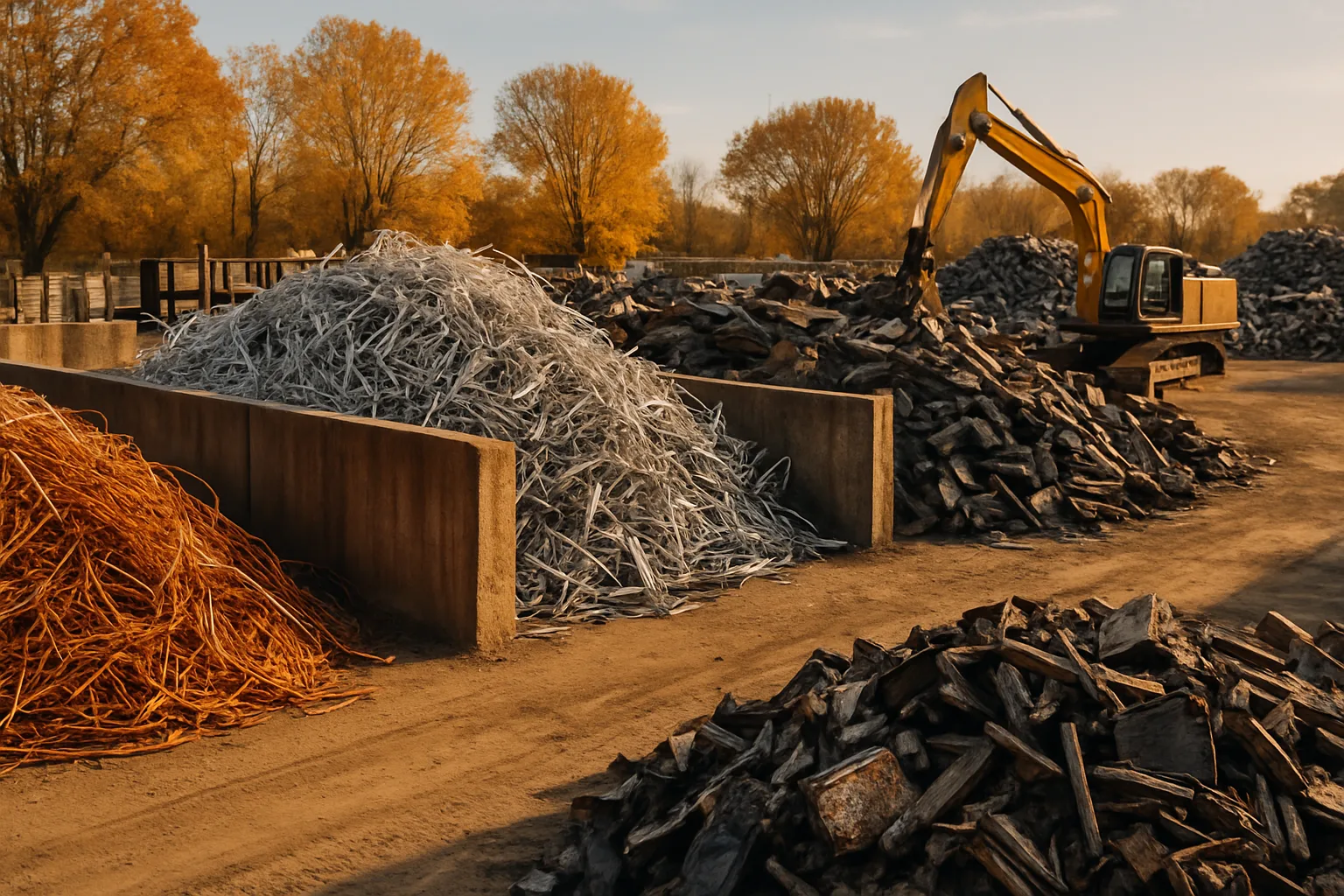
Most scrap sellers leave money on the table before the truck even leaves the yard. Not because of bad luck — because they don't understand how recycling yards actually weigh and grade their material. If you're selling scrap metal in Jacksonville or anywhere across Florida, knowing this process is the difference between taking whatever price you're quoted and knowing whether that number is fair.
The weighing and grading process sounds simple. It isn't. Every decision a yard makes at the scale and the sorting table affects your payout. And if you're selling through a single buyer with no competition, you have no way to know if that payout reflects the actual market. That's where a B2B scrap metal marketplace changes the game — more on that in a moment.
Let's break down exactly how yards evaluate your load, what grading means for your price, and how to protect yourself from leaving cash on the table.
How Scrap Yards Weigh Your Load — and Why It Matters
When your truck pulls onto the scale, the yard records your gross weight. After you unload, they weigh your empty truck. The difference is your net weight — and that number drives your payout. Sounds straightforward. But there are variables most sellers don't think about.
Moisture weight is real. Rain-soaked steel, wet cardboard packing, ice in a load of shredded aluminum — yards can legally deduct for contamination and moisture. Some are fair about it. Some aren't. If your load comes in wet, you're already starting behind.
- Certified scales: Reputable yards use state-certified scales that are calibrated regularly. In Florida, scale certification falls under Department of Agriculture oversight. You have the right to ask when the scale was last certified.
- Tare weight disputes: Always weigh in and weigh out at the same facility. Don't assume your tare weight from another yard carries over.
- Load documentation: A solid bill of lading (BOL) and packing list protects you. Document what you loaded before it leaves your facility.
Platforms like SMASH require photo documentation and packing lists as part of the listing process. That documentation doesn't just protect buyers — it protects you as the seller. When a buyer bids on a documented load, disputes at the scale become far less common.
Scrap Metal Grading: What Buyers Are Actually Paying For
Weight gets you in the door. Grade determines your price per pound. And grading is where most sellers lose money without realizing it.
Grading standards in North American scrap are largely based on Institute of Scrap Recycling Industries (ISRI) specs. Every major commodity has a grade designation — and the gap between grades can be significant. A load graded as #1 Bare Bright copper pays considerably more than the same weight graded as #2 copper. Steel HMS 1 pays better than HMS 2. The difference isn't arbitrary — it reflects how much processing the buyer needs to do before the metal is usable.
Common grade categories you'll encounter:
- Copper: Bare bright, #1 copper, #2 copper, insulated wire, light copper. Bare bright is the top tier — clean, uncoated, unalloyed wire. Attachments, solder, or paint knock it down a grade immediately.
- Aluminum: Extrusions, cast, sheet, MLC (mixed low copper), zorba, twitch. Clean segregated material always grades higher than mixed loads.
- Steel: HMS 1, HMS 2, shredded, busheling, turnings. Contamination with non-ferrous attachments or excessive rust can pull a grade down.
- Stainless: 304, 316, 201 — grade is everything here. If you're not sure what alloy you have, a handheld XRF analyzer will tell you in seconds. Don't guess.
- Catalytic converters: Graded by substrate type, OEM number, and PGM content (platinum, palladium, rhodium). A catalytic converter auction environment is the only way to ensure you're getting a price that reflects actual PGM market value — not a flat rate that benefits the buyer.
When you find the best scrap metal prices today, you're not just looking for the highest number — you're making sure the grade being applied to your material is accurate and that the price reflects current market rates for that specific grade.
Why Single-Buyer Pricing Leaves You Guessing
Here's the problem most yards in Jacksonville face: they call one buyer, get one price, and accept it. Maybe they call two buyers if they're feeling ambitious. But with a single offer — or even two — you have no real market signal. You're guessing.
The buyer knows more than you do. They know today's LME copper price. They know what the mill is paying for HMS 1 this week. They know what a specific catalytic converter core is worth at current PGM spot prices. That information asymmetry costs you money every time you sell without competition.
Competition changes the dynamic. When multiple vetted buyers are bidding on your load simultaneously, the price they offer has to reflect reality — not just what they think you'll accept. That's the core logic behind a B2B scrap metal marketplace. More buyers bidding on the same documented load means better price discovery. The market reveals itself.
If you're in Jacksonville and want to understand how this plays out in practice, Jacksonville scrap metal services through a competitive auction platform give you real bids from real buyers — not a single take-it-or-leave-it quote. You can also check current scrap metal prices to benchmark any offer you receive before you commit.
Catalytic Converter Grading: The High-Stakes Category
If you accumulate cats at your yard, this section matters more than any other. Catalytic converters are the most complex commodity to grade in the scrap metal world. The wrong approach costs real money.
Every converter has a substrate — ceramic or metallic — loaded with platinum group metals (PGMs). The PGM content varies wildly by make, model, and year of the vehicle. A domestic cat from a full-size truck can be worth multiples of a small foreign cat from the same year. Appearance tells you almost nothing. The OEM part number or VIN lookup tells you everything.
How yards and buyers grade cats:
- Visual inspection: Aftermarket vs. OEM, intact substrate vs. rattled, foil vs. ceramic. This is a starting point, not a final grade.
- Serial/OEM number lookup: The number stamped on the converter shell or sourced via VIN lookup ties to an assay database that estimates PGM content. This is where real pricing starts.
- Assay results: High-volume buyers process cats in lots and track their assay results over time. When you sell into a catalytic converter auction, you're dealing with buyers who have real assay data backing their bids.
Flat-rate buying on cats — one price per unit regardless of type — is almost always a losing proposition for the seller. The buyer is pricing in maximum downside risk. A competitive bid environment, where buyers compete on documented serial numbers and photos, is the only way to ensure the PGM value in your material translates into your payout.
SMASH's platform includes VIN lookup and serial tracking specifically for this reason. When you list converters with proper documentation, buyers bid with confidence — and that confidence shows up in the numbers. Get competitive bids for your scrap metal and see the difference between a documented auction and a flat-rate quote.
How to Prepare Your Load for Maximum Grade and Weight Accuracy
The yard grades what you give them. You control more of this than you think. A little prep work before a load ships can move it up a grade and protect your weight from deductions.
Practical steps before your load goes out:
- Segregate by commodity. Don't mix copper with aluminum. Don't mix stainless with carbon steel. Mixed loads get graded at the lowest common denominator.
- Remove attachments. Steel bolts on aluminum extrusions, plastic insulation on copper pipe, rubber hoses on radiators — strip what you can. Every attachment the buyer has to remove reduces your effective grade.
- Photograph everything. Before the load ships, document the material in the container or on the trailer. Date-stamped photos protect you from grade disputes after delivery.
- Keep your load dry. If you're shipping through Florida in summer, you know what afternoon rain looks like. Cover your loads. Moisture weight is real weight loss in your payout.
- Count your cats separately. Never bury converters in a bulk metal load. List them separately with OEM numbers and photos. They're worth too much to get lost in a mixed load price.
This kind of documentation is exactly what the SMASH inventory tool is built for. When your load is listed with photos, weights, grades, and supporting documentation, buyers have the information they need to bid aggressively. A load that looks like a black box gets low bids. A documented load gets competitive ones.
Finding Real Market Prices in Florida Before You Sell
The single best thing you can do before you sell scrap metal in Jacksonville or anywhere across Florida is know the market before you pick up the phone. Benchmarking isn't complicated — it just requires the right sources.
LME (London Metal Exchange) prices for copper and aluminum are published daily. They're the upstream number. By the time that number filters down to the scrap yard buying price, there's a spread — the yard's margin. Knowing the LME price tells you the ceiling. Knowing typical spreads tells you what range is fair. If the offer you're getting is far outside that range, you know something is off.
For steel, the AMM (American Metals Market) publishes regional indices that are the industry benchmark. For cats, PGM spot prices for platinum, palladium, and rhodium are updated daily on commodity exchanges.
You can read the latest scrap metal pricing guides to stay current on how commodity moves translate into scrap yard buying prices. And when you're ready to sell, the competitive auction format through a B2B scrap metal marketplace like SMASH means you don't have to guess whether your offer is fair — the market tells you directly.
Knowing how yards weigh and grade your material is the foundation. From there, it's about making sure you're selling into a market — not to a single buyer with no competition. If you're a yard operator or a commercial seller in Jacksonville looking to close that gap, start by benchmarking your loads and letting buyers compete for them. When you're ready to see what your loads are actually worth, find the best scrap metal prices today and get into the market.
Disclaimer: Scrap metal prices fluctuate daily based on commodity markets and regional demand. Always verify current rates before making selling decisions.
Frequently Asked Questions
Q: How do scrap yards determine the grade of my copper or aluminum?
Yards grade based on ISRI commodity specifications — cleanliness, alloy type, and the presence of attachments or contamination all factor in. The cleaner and more segregated your material, the higher the grade. Mixed or contaminated loads get priced at the lowest applicable grade, which directly reduces your payout per pound.
Q: Can I dispute a weight or grade at a Jacksonville scrap yard?
Yes. In Florida, commercial scales are subject to state certification requirements, and you can ask for documentation on scale calibration. For grade disputes, having your own pre-shipment photos and a detailed packing list is your best protection. Documented loads are significantly easier to dispute than undocumented ones.
Q: What's the advantage of a B2B scrap metal marketplace over calling individual buyers?
A B2B scrap metal marketplace puts your documented load in front of multiple vetted buyers simultaneously. Instead of one take-it-or-leave-it quote, you get competitive bids — and competition reveals the real market price. For high-value commodities like catalytic converters, copper, or mixed non-ferrous loads, the difference can be significant.
Q: How should I handle catalytic converters when selling in Jacksonville?
Separate them from your bulk metal loads, photograph them, and identify OEM or serial numbers where possible. Never accept a flat-rate per-unit price without understanding what PGM content the converter contains. A catalytic converter auction through a vetted platform gives you buyers who have assay data and are bidding on the actual value of your material.
Q: How do I know if the scrap metal price I'm being offered is fair?
Benchmark against published commodity prices — LME for copper and aluminum, AMM indices for steel, PGM spot rates for catalytic converters. If the offer you receive is far below the expected spread from those benchmarks, you have a basis to push back or seek competing bids. Platforms like SMASH create that competition automatically, so you don't have to chase it down yourself.
Ready to stop guessing and start getting real market value for your loads? Check rates and find the best scrap metal prices today at best-scrap-prices.com — and let competition do the work for you.
Stay current on scrap metal markets and industry insights by following SMASH on LinkedIn — practical updates for yard operators and commercial sellers across North America.
```