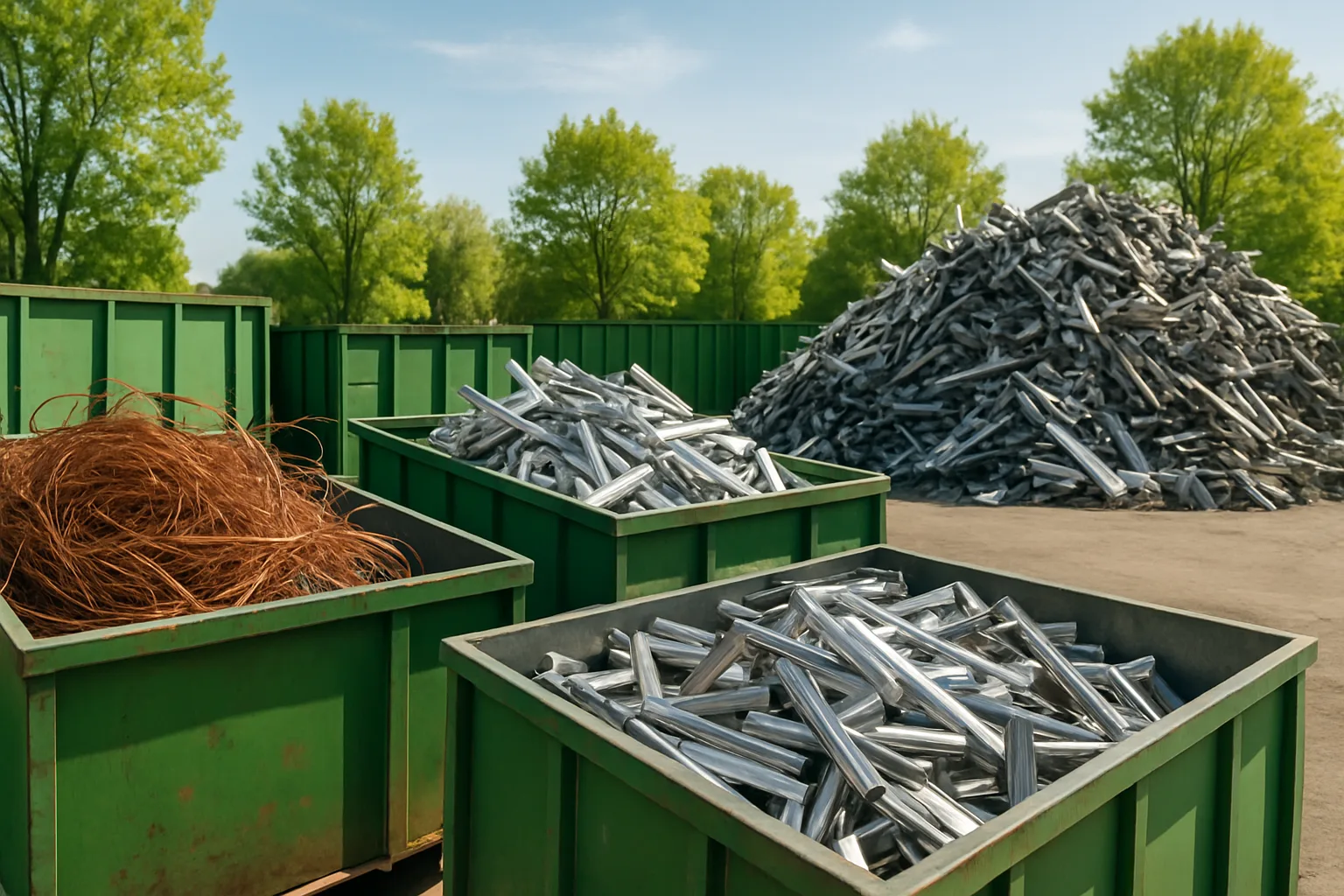
Why Identifying Your Scrap Metal Correctly Can Mean Serious Money
Most people leave cash on the table at the yard — not because they brought bad material, but because they couldn't tell copper from brass, or aluminum from stainless. One misidentified load gets sorted into the wrong bin and pays you the wrong price. In scrap metal recycling Colorado Springs, that gap between what you got and what you could have gotten adds up fast.
This guide gives you two tools you already have — your eyes and a magnet — and shows you how to use them to sort metal before you haul it anywhere. Better identification means better conversations at the yard, fewer surprises on the scale ticket, and more confidence when you're ready to find the best scrap metal prices today.
Let's break it down by metal type, starting with the most valuable and working down.
The Magnet Test: Your First and Fastest Sorting Tool
Before you look at color, weight, or surface texture — grab a magnet. A basic rare earth magnet (neodymium) from any hardware store costs a few dollars and tells you more in two seconds than most visual checks. The rule is simple: ferrous metals stick, non-ferrous metals don't.
Ferrous metals contain iron. Steel and cast iron are the big ones. They rust, they stick to a magnet hard, and they pay lower prices per pound than non-ferrous material. That doesn't mean they're worthless — heavy steel loads move in volume — but you don't want to mix them in with your copper or aluminum.
Non-ferrous metals won't stick to a magnet at all. This group includes:
- Copper
- Aluminum
- Brass
- Stainless steel (mostly — more on this below)
- Bronze
- Lead
- Zinc
The tricky one is stainless steel. It's iron-based but often non-magnetic depending on its grade. Grade 304 stainless (most common in kitchens and appliances) has weak or no magnetic pull. Grade 430 stainless pulls more strongly. If your magnet barely grips something shiny and silver — it's likely stainless, not aluminum. Weight confirms it: stainless is significantly heavier than aluminum for the same size piece.
Run the magnet test first, every time. It's the fastest way to separate your load into two piles before you do anything else.
Visual ID Guide: Copper, Brass, and Bronze
These three get confused constantly. They're all reddish or yellowish and they're all non-ferrous, but their prices are different. Copper scrap prices in Colorado Springs tend to run higher than brass or bronze, so misidentifying them costs you real money.
Copper is your highest-value common scrap metal. Fresh copper is a bright salmon-red or orange-pink. Aged or oxidized copper turns brown, then dark, then green (that green coating is called patina or verdigris). Key sources: electrical wire, plumbing pipe, AC coils, and motor windings. Bare bright copper wire — no insulation, no solder, no corrosion — is the top grade. Copper with insulation still attached pays less because the yard has to account for the jacket weight.
Brass is an alloy of copper and zinc. It looks more yellow than copper — think door hinges, plumbing fittings, shell casings, and musical instruments. It's denser than it looks and has a duller yellow compared to gold. It does not stick to a magnet. Brass pays well but typically below bare bright copper. If you're pulling plumbing fixtures in Colorado Springs during a renovation, sort those brass fittings separately from your copper pipe.
Bronze is copper mixed with tin. It looks similar to brass but tends to run more reddish-brown. You'll find it in bushings, bearings, boat fittings, and some statuary. Bronze is often harder and more brittle than brass. At the yard, it grades differently — know what you have before you show up.
Quick visual test: copper = red/orange, brass = yellow, bronze = reddish-brown. When in doubt, the magnet won't help here (all three are non-ferrous) — use color and context of where the material came from.
Identifying Aluminum, Stainless Steel, and Lead
These three show up constantly in demolition, HVAC work, automotive teardowns, and household cleanouts. Getting them right matters whether you're a one-time seller or hauling regular loads for scrap metal recycling in Colorado Springs.
Aluminum is light — dramatically lighter than steel or copper for the same volume. It's silver-gray, doesn't rust (it oxidizes to a dull white powder instead), and won't stick to a magnet. Common sources include window frames, gutters, siding, beer cans, automotive parts, wire, and cast engine components. Aluminum grades vary significantly in price:
- Cast aluminum (engine blocks, wheels) — heavier, rough texture, slightly lower grade
- Sheet aluminum (siding, gutters) — clean, flat, moderate grade
- Aluminum cans — low price per pound but easy to accumulate in volume
- Aluminum wire — check for insulation; clean wire pays more
- Aluminum extrusions (like window frames) — often a higher grade
Stainless steel is heavier than aluminum and has a brighter, shinier appearance. A weak magnetic pull or no pull at all (depending on grade) and a smooth, polished look distinguish it from regular steel. It does not rust. Common sources: kitchen appliances, restaurant equipment, sinks, automotive exhaust components. Stainless pays more per pound than regular steel but less than aluminum in most markets.
Lead is unmistakable once you've handled it. It's extremely heavy for its size, dull gray, and soft enough to scratch with a fingernail. You'll find it in old plumbing pipe, wheel weights, roofing flashing, and battery plates. It does not stick to a magnet. Lead prices fluctuate but it's consistently worth separating from your other material. Handle it carefully — wash your hands, don't grind it, and check your local Colorado regulations on lead disposal.
Automotive Scrap: Reading Steel, Catalytic Converters, and Copper Wire Harnesses
Vehicle teardowns produce some of the most varied and valuable scrap if you sort correctly. Steel is the dominant material by weight — body panels, frames, engine blocks — and most of it is ferrous (magnet sticks). But the valuable pieces are non-ferrous.
Catalytic converters contain platinum group metals (PGMs) — platinum, palladium, and rhodium. Visually, a cat looks like a canister or honeycomb structure in the exhaust system. The price varies wildly based on make, model, and the specific precious metal content. Platforms like smashscrap.com use serial number tracking and documentation tools to make sure you know what you have before you sell — that matters when a single cat can swing hundreds of dollars depending on who's buying.
Copper wire harnesses run throughout the entire vehicle. They're not worth stripping out unless you're doing a full dismantling, but if you're processing volume, that insulated copper wire accumulates quickly. The magnet won't stick. The color under the insulation is your tell — orange-red copper inside a plastic jacket.
Aluminum components to watch for in vehicles: wheels (cast aluminum), intake manifolds, transmission housings, and radiator end caps. Separate these from steel before you go to the yard. Mixing them costs you the aluminum price premium.
If you're processing junk vehicles in Colorado or across the region, good documentation and photo records of your material help. Read the latest scrap metal pricing guides to understand how yard grading works and why sorted loads consistently outperform unsorted ones.
How to Use This Knowledge to Get Better Scrap Metal Prices
Identification is only useful if it leads to action. Here's how to turn what you now know into better returns:
- Sort before you haul. Mixed loads get paid at the lowest grade in the mix. A bin of copper and steel pays steel prices for the whole thing if it's not separated.
- Clean your material where it makes sense. Bare bright copper, clean aluminum, and insulation-free wire all grade higher. Stripping a small amount of wire takes minutes and changes your pay rate.
- Document what you have. Photos of your sorted load — especially for non-ferrous and catalytic converters — give buyers more confidence and can help you negotiate.
- Know the grades before you walk in. Yards use standard grading language (#1 copper, #2 copper, clean aluminum, etc.). Showing up with correctly sorted and labeled material signals that you know what you're doing.
- Get competitive offers. One buyer and one phone call is the old way. When you check current scrap metal prices across multiple buyers, you discover what your material is actually worth in the current market.
That last point is where SMASH changes the game for serious sellers. Instead of calling one yard and taking whatever they offer, SMASH puts your documented load in front of vetted buyers who compete. More buyers means better price discovery. That applies whether you're selling copper scrap in Colorado Springs or processing loads anywhere across North America.
No subscription fees. You only pay when a deal closes. If you're moving volume, that model adds up in your favor — not the platform's.
Scrap metal prices shift with global commodity markets, so today's copper price won't be the same next month. The advantage of knowing what you have and how to present it stays constant regardless of where the market sits. Whether best scrap metal prices in Colorado are running high or pulling back, a well-sorted, documented load always outperforms a mixed pile at the gate.
Start with the magnet. Follow with your eyes. Sort before you haul. Then put your material in front of real competition. That's how you stop guessing and start getting paid what your scrap is worth. When you're ready to move your next load, find the best scrap metal prices today at best-scrap-prices.com — and see what competitive buying actually looks like.
Frequently Asked Questions
Q: How do I know if my scrap metal is worth selling in Colorado Springs?
If it's non-ferrous — copper, aluminum, brass, or stainless — it's almost always worth sorting and selling. Even ferrous steel and cast iron have value in volume. The key is knowing what you have and separating grades before you go to the yard. Scrap metal recycling in Colorado Springs is accessible through multiple local yards, so even smaller loads can be worth the trip if your material is sorted correctly.
Q: What's the easiest way to tell copper from brass at home?
Color is your fastest tell. Copper is orange-red or salmon-pink when clean. Brass is clearly yellow. Both are non-ferrous and won't stick to a magnet, so the magnet test won't separate them — use your eyes. If you're still unsure, check where the material came from: electrical wire and plumbing pipe are almost always copper, while door hardware and plumbing fittings are often brass.
Q: Do scrap yards in Colorado Springs pay different prices for sorted vs. unsorted metal?
Yes, consistently. A sorted load of #1 copper pays at the copper rate. That same copper mixed into a general load often gets downgraded or weighed at a blended rate. Sorting takes time upfront but changes what you walk away with. Most experienced sellers consider sorting non-negotiable for any non-ferrous material.
Q: How do I identify aluminum versus stainless steel without a scale?
Pick it up. Aluminum is dramatically lighter — if two pieces are the same size and one feels much heavier, it's likely stainless. Also check the magnet: stainless may have a weak magnetic pull (especially grade 430), while aluminum has none at all. Aluminum also tends to have a slightly duller, more matte finish, while stainless is shinier and more reflective.
Q: Can I sell scrap metal online instead of driving to a yard in Colorado Springs?
Yes. Platforms like SMASH let you document your load — with photos, weight estimates, and item descriptions — and put it in front of vetted buyers who compete for it. This is especially useful for larger loads or specialty material like catalytic converters and non-ferrous metals where price variation between buyers can be significant. Selling scrap metal online gives you access to competitive offers without being limited to whoever is local.
Follow SMASH on LinkedIn for scrap metal market updates, pricing insights, and industry news delivered straight to your feed.
```