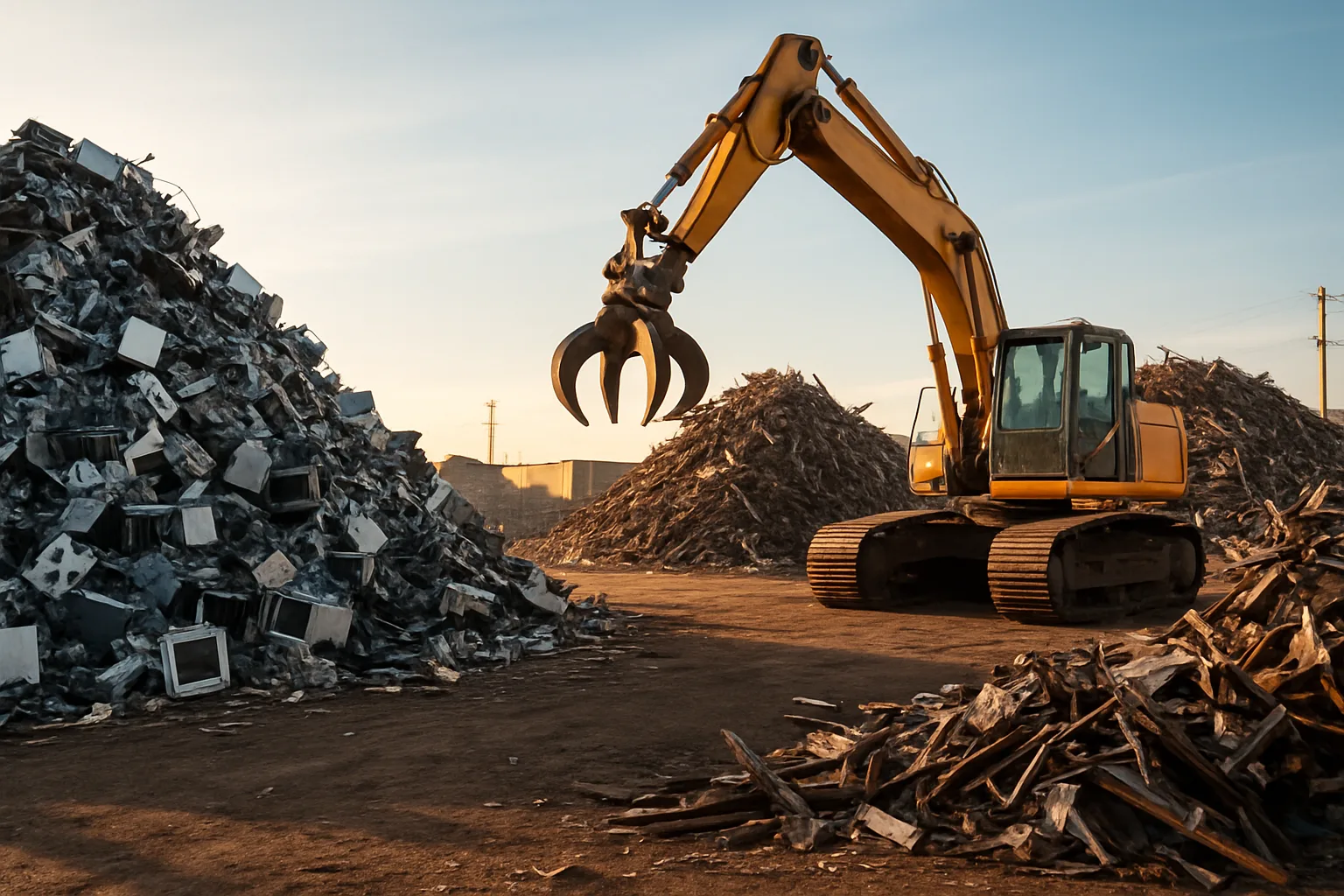
Your old laptop might be worth more dead than you think — and not because of what's on the hard drive. Inside that cracked screen and dusty chassis sits copper, gold, silver, palladium, and aluminum. Real metals. Real value. Most people toss e-waste without a second thought, but scrap metal prices in Richmond and across Virginia tell a different story for sellers who know what they're holding.
E-waste is one of the fastest-growing waste streams in North America. It's also one of the most underleveraged sources of recoverable metal for recyclers, yards, and individual sellers. If you've got a pile of old electronics sitting in a corner — laptops, phones, servers, circuit boards — this guide breaks down what's inside, what it's worth, and how to get competitive pricing instead of leaving money on the table.
What Precious Metals Are Actually Inside Old Electronics
This isn't hypothetical. Electronics manufacturers use real precious metals because no synthetic substitute performs the same way under heat, electrical load, and miniaturized conditions. Gold, silver, palladium, and platinum all show up inside consumer and commercial electronics at varying concentrations.
Here's where the metals actually live:
- Gold: Connector pins, CPU contacts, edge connectors on circuit boards. Gold resists oxidation and conducts electricity reliably — that's why it's used at every critical connection point.
- Silver: Solder points, membrane switches, some capacitors. Silver is the best electrical conductor of any metal, which is exactly why it ends up in high-frequency circuits.
- Palladium: Multi-layer ceramic capacitors (MLCCs). These tiny components are in almost every modern device — phones, tablets, laptops, industrial controls.
- Copper: Wiring harnesses, motherboard traces, transformer windings, power supplies. Check current scrap metal prices before you sell — the copper scrap price today fluctuates with global markets and affects your return significantly.
- Aluminum: Heatsinks, chassis frames, MacBook-style unibody shells. Aluminum scrap value per pound isn't as dramatic as gold, but volume adds up fast when you're processing commercial e-waste.
The mix varies by device type and age. Older electronics from the 1990s and early 2000s often contain higher concentrations of precious metals than modern devices — manufacturers have been engineering precious metals out to cut costs. That 20-year-old server rack in your warehouse might be richer in recoverable value than the newest model it replaced.
How E-Waste Recovery Works — From Pile to Payout
You've got two main paths when recovering value from e-waste: sell it whole to a yard or buyer that processes electronics, or sort and strip it yourself before selling by metal type. Each approach has tradeoffs depending on volume, time, and your setup.
Whole-unit selling is the fastest route. You deliver or ship the equipment as-is, and the buyer handles processing. The convenience comes at a cost — buyers price in their processing labor, so you're getting wholesale rates on mixed material. For small volumes or hard-to-strip items like phones and tablets, this often makes sense.
Sorting and stripping unlocks better per-pound pricing. When you separate your metals — pulling copper wire, segregating aluminum heatsinks, bagging circuit boards by type — you remove the buyer's sorting cost. That work translates directly to better offers. A load of clean, sorted copper wire commands a higher copper scrap price today than the same copper buried in a mixed e-waste pile.
For larger commercial volumes — decommissioned server farms, corporate hardware refreshes, industrial control equipment — the sorting effort pays real dividends. This is where platforms like SMASH let you compare scrap metal bids from verified buyers across multiple buyers, which matters when you're moving significant weight and want actual market discovery instead of one yard's quote.
Scrap Metal Prices Richmond: What E-Waste Fetches in Your Market
Richmond's scrap metal market sits in a productive zone for e-waste sellers. Virginia's industrial corridor, the density of tech companies and government contractors in the region, and proximity to major east coast ports all contribute to a buyer ecosystem that can handle electronics-grade material. That means more competition for your load — and competition is how you get a real price.
General market ranges for e-waste categories (note: prices fluctuate constantly — always verify current rates before selling):
- Circuit boards (low-grade): Typically a fraction of a dollar per pound — value comes from volume
- Circuit boards (high-grade, gold-rich): Significantly higher per pound — think server motherboards, telecom cards
- Copper wire (bare bright): Tracks closely with the copper scrap price today — one of the most price-sensitive categories
- Aluminum heatsinks and frames: Aluminum scrap value per pound varies; clean, sorted aluminum commands better rates than mixed
- Hard drives (shredded vs. whole): Data security drives many sellers to shred first — but this affects scrap value differently depending on the buyer
- Transformers: Copper-wound transformers carry meaningful value if the copper content is documented
The single biggest mistake Richmond sellers make is calling one buyer, accepting one quote, and assuming it's the market rate. It isn't. Find the best scrap metal prices today by putting your material in front of multiple vetted buyers. That's not haggling — that's how pricing works in a functional market.
Richmond Yards and the E-Waste Sorting Advantage
Not every yard in Virginia handles e-waste the same way. Some buy it all mixed and price accordingly. Others specialize in specific streams — precious metal boards, copper recovery, aluminum chassis. Knowing which yard wants what — and in what condition — saves you the frustration of hauling a load somewhere that doesn't want it or won't price it fairly.
For Richmond scrap metal services, sorting your e-waste before you show up isn't just a courtesy — it's dollars per pound. Yards that process electronics regularly have grading systems. They know the difference between a telecom board and a consumer motherboard. They'll pay more for clearly labeled, well-documented material because it reduces their uncertainty.
Photo documentation helps. If you're moving a mixed commercial lot, photograph what's in it. Catalog the high-value pieces. Provide an inventory. This is standard practice for large industrial loads in scrap metal recycling Virginia, and it directly affects buyer confidence — which affects the bid you receive.
The scrap metal auction platform model is built around exactly this principle: documented, transparent inventory produces better price discovery. When buyers can see what they're bidding on, they bid with more confidence — and that confidence shows up in the number.
Using a Scrap Metal Auction Platform to Maximize E-Waste Value
Traditional e-waste selling — one call, one quote, take it or leave it — is the worst way to sell anything of real value. The old way benefits the buyer. The buyer knows what the market will pay. The seller is guessing.
A scrap metal auction platform flips that dynamic. You document your material, list it, and let vetted buyers compete. Competition does what competition always does — it surfaces the real market price instead of one buyer's preferred margin.
SMASH is built for this. The platform handles inventory documentation, photo uploads, VIN and serial tracking for equipment lots, and auto-invoicing once a deal closes. No subscription fees. You only pay when you sell. For e-waste sellers moving volume — whether you're a Richmond IT asset disposition shop, a demolition crew pulling data center equipment, or a yard looking to move processed boards upstream — the auction format creates accountability on both sides of the transaction.
Want to read the latest scrap metal pricing guides to understand where copper, aluminum, and circuit board grades are trading before you list? Do that first. Show up informed. The best sellers in this market treat every load like a business transaction — because it is one.
What to Do Before You Sell Your E-Waste
A few steps before you haul anything to a yard or list it on a platform make a real difference in what you walk away with.
- Data wipe or physical destruction first. This isn't optional if you're handling business equipment. Hard drives need certified destruction or documented wiping. Some buyers require documentation. Protect yourself and your clients before the metal question comes up.
- Sort by material type. Copper wire separate from circuit boards. Aluminum heatsinks out of the chassis. Mixed loads get mixed prices — which means low prices.
- Identify high-value pieces. Server motherboards, telecom switching cards, and gold-rich CPU lots should be documented separately. These aren't commodity — don't price them like commodity.
- Photograph everything. Especially for large lots. Buyers bid higher when they can see what they're buying. Mystery boxes get mystery prices.
- Check current rates before you go. The copper scrap price today and aluminum scrap value per pound shift with global markets. Know where you stand before you accept anything.
- Get multiple quotes. One number is not the market. Three numbers start to tell you something real.
Disclaimer: Scrap metal prices fluctuate daily based on commodity markets, regional demand, and material grade. Always verify current rates before selling. Nothing in this article constitutes a guaranteed price offer.
Frequently Asked Questions
Q: What electronics are worth scrapping for metal value in Richmond?
Servers, workstations, telecom equipment, and older laptops tend to carry the best metal value — especially anything with gold-rich circuit boards or copper-wound transformers. Consumer phones and tablets have value but in lower concentrations. Volume matters: the more you move, the more sorting and documentation pays off.
Q: How do scrap metal prices Richmond compare to national rates for e-waste?
Richmond-area prices generally track closely with national commodity benchmarks for copper, aluminum, and precious metals — the underlying metal markets are global. Local variation comes from yard competition, regional demand, and transportation costs. More buyers competing for your material means tighter spreads from the national rate.
Q: What's the best way to get accurate copper scrap price today information before I sell?
Check commodity market data, then call at least two or three local buyers to compare against spot. Better yet, use a platform that puts your material in front of multiple vetted buyers simultaneously — that's the fastest way to surface what the local market will actually pay versus what one yard wants you to accept.
Q: Do I need to strip circuit boards before selling them for scrap in Virginia?
Not always — many buyers in scrap metal recycling Virginia purchase whole boards. But sorted, graded boards typically fetch better per-pound pricing than mixed piles. If you can separate high-grade boards (server, telecom) from low-grade consumer boards, you'll almost always come out ahead on the high-grade portion.
Q: Can I use a scrap metal auction platform for e-waste lots specifically?
Yes — and for large or high-value e-waste lots, the auction format makes particular sense. Platforms like SMASH support photo documentation, inventory detail, and serial tracking, which gives buyers the confidence to bid competitively on complex or mixed-material e-waste loads. No subscription required; you only pay on a completed sale.
E-waste sitting idle is money sitting idle. The metals inside those old electronics are real, the market for them is active, and Richmond sellers who approach it systematically consistently do better than those who guess and accept the first offer. Find the best scrap metal prices today — and put your material in front of buyers who actually compete for it.
Stay ahead of scrap metal market shifts — follow SMASH on LinkedIn for industry updates, pricing insights, and news that affects what your loads are worth.