Why Your Catalytic Converter Quote Varies By Hundreds of Dollars — And What to Do About It
One Austin recycler gets $85 for a catalytic converter. His neighbor gets $340 for the same unit the same week. Same part. Wildly different outcomes. That gap isn't luck — it's the difference between calling one buyer and running a real scrap metal auction. If you're recycling cats and not getting competitive bids, you're leaving money on the table every single time.
Catalytic converters are some of the most price-volatile scrap material in the recycling industry. The platinum group metals (PGMs) inside — platinum, palladium, and rhodium — swing with global commodity markets daily. A single converter can contain anywhere from 3 to 7 grams of PGMs depending on the vehicle, the year, and the manufacturer. That's why prices vary so dramatically, and why understanding how the process works gives you a serious edge when it's time to sell.
How Catalytic Converter Recycling Actually Works
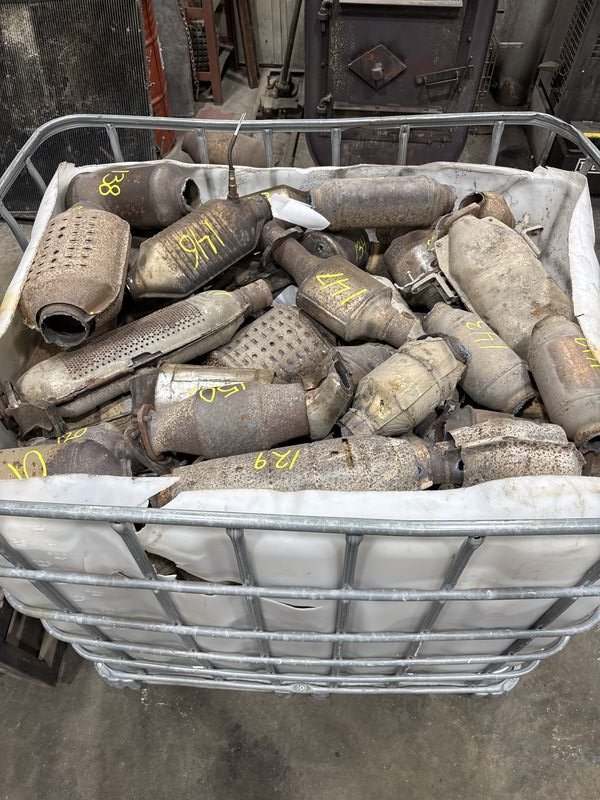
When a converter comes off a vehicle, it heads through a process most sellers never see. The unit gets sorted, assayed (tested for PGM content), and priced based on what's actually inside — not just what it looks like on the outside. That sorting and assay process is where the money is made or lost.
Buyers typically categorize converters into grades — domestic, foreign, aftermarket, and foil units each carry different PGM concentrations. A domestic cat from a late-model Ford F-150 might yield significantly more palladium than a cheap aftermarket replacement bolted onto the same truck. The buyer knows this. The question is whether you do too.
- Domestic converters: Generally higher PGM content, stronger prices
- Foreign (import) converters: Often contain different PGM ratios — not necessarily lower, just different
- Aftermarket converters: Typically lower PGM content, lower payouts
- Foil/diesel units: Require separate pricing — don't assume they're worth less
- DPFs (diesel particulate filters): Increasingly valuable, often mispriced at yards
The recycler who processes the converter strips the ceramic honeycomb, smelts it, and recovers the PGMs. That process takes time and has refining costs attached. Buyers factor those costs into their offer — which is exactly why having multiple buyers compete changes the outcome for you.
Why Catalytic Converter Prices Vary So Much — Even Day to Day
Palladium hit historic highs earlier this decade and has since moved through cycles of volatility. Rhodium is even more extreme — it can swing thousands of dollars per troy ounce over a short period. That volatility flows directly into what a buyer quotes you on a Tuesday versus a Friday.
But commodity prices are only one part of the equation. The bigger variable most sellers never account for is buyer margin. A single buyer with no competition has every reason to quote you a conservative number. That's not dishonest — it's business. The problem is that you have no way to know whether that quote reflects the market or just reflects that buyer's preferred margin. Find the best scrap metal prices today by putting buyers in competition with each other, not by hoping one buyer is feeling generous.
Here's what drives converter price variation:
- PGM spot prices — platinum, palladium, and rhodium move independently and daily
- Converter grade and unit type — the actual metal content inside the specific converter
- Buyer margin — how much the buyer needs to cover their refining and processing costs
- Volume and relationship discounts — buyers may quote better to preferred suppliers
- Market demand for refining capacity — when smelters are backed up, spreads widen
Yards in Texas selling converters in volume deal with all five of these variables constantly. The ones getting the best returns aren't calling one guy they've always dealt with. They're running competitive processes.
The Old Way of Selling Cats vs. Running a Scrap Metal Auction
The old way: you pull converters off vehicles, photograph a few, call your regular buyer, take his number, and ship. He's friendly. He pays on time. And he's been taking 15–20% more margin than necessary because you've never given him a reason not to.
That's not a partnership. That's a pricing environment with one data point.
A proper scrap metal auction puts your documented inventory in front of multiple vetted buyers simultaneously. They see the same photos, the same serial tracking, the same unit descriptions — and they bid against each other. That competitive pressure is the mechanism that reveals the actual market. Not what one buyer thinks he can get away with quoting, but what multiple buyers with real intent are willing to pay.
Platforms like SMASH make it straightforward to sell your scrap metal through a structured auction process built specifically for recycling yards and scrap dealers. No subscription. No guessing. The inventory tool handles photo documentation, serial tracking, and lot organization — which gives buyers the confidence to bid aggressively because they know exactly what they're buying. Better documentation directly supports better price discovery.
For Austin-area yards moving regular volumes of cats, this matters. Texas has a significant auto recycling footprint, and converter volumes across the state are substantial. The yards getting top dollar aren't the ones with the best buyer relationships. They're the ones with the most structured sales process.
How to Document Catalytic Converters for Maximum Price Discovery
Bad documentation kills converter prices. If a buyer can't clearly assess what you have, he discounts for uncertainty. Every ambiguous photo, every missing serial number, every unlabeled unit is money out of your pocket.
Strong documentation means:
- Clear photos of both ends — buyers need to see the honeycomb condition and inlet/outlet markings
- Serial numbers captured — many converters can be matched to vehicle databases for PGM content estimates
- Lot organization by grade — domestic, foreign, aftermarket, and foil separated and labeled
- Accurate unit counts — no rounding, no approximations
- Vehicle source notation where available — VIN lookup data adds buyer confidence
SMASH's inventory tool handles this systematically. Serial tracking and photo documentation aren't optional add-ons — they're built into how the lot is presented to buyers. That structure translates directly into buyer confidence, and buyer confidence translates into stronger bids. Read the latest scrap metal pricing guides to stay current on what buyers are looking for in converter documentation right now.
If you're running Austin scrap metal services and you're not documenting your cats this way, you're competing with one hand tied behind your back against yards that are.
What Competitive Bidding Actually Does to Converter Prices
More buyers in the room means better price discovery. That's not a slogan — it's how markets work. When buyers know they're competing, they sharpen their numbers. The spread between their opening position and their best number closes. The seller captures more of the actual value.
This is why running a scrap metal auction for your converter lots consistently outperforms single-buyer negotiation. Not because every auction produces a record price — some loads move at expected levels, some move better. But the competitive process removes the structural disadvantage of being a single seller negotiating against a buyer who talks to dozens of suppliers every day.
The best scrap metal prices Texas recyclers are getting right now aren't coming from loyalty to one buyer. They come from a process. And that process is what platforms like SMASH are built to support — no subscription fees, no lock-in, and we only win when you win.
If you want to understand where your converter prices should sit relative to the market, start by checking current scrap metal prices and getting your inventory properly documented before the next lot goes out the door. The data exists. Use it.
Recycling converters in Austin or anywhere else in Texas shouldn't feel like a guessing game. The market has real prices. Vetted buyers have real numbers. A structured auction process connects those two things — and the difference shows up directly in what lands in your account at the end of the month. Get the best scrap metal prices for your loads at best-scrap-prices.com.
Frequently Asked Questions
Q: Why do catalytic converter prices vary so much between buyers?
Prices vary because converter values depend on PGM spot prices (platinum, palladium, and rhodium), the specific grade of the unit, and the individual buyer's margin requirements. Without competitive bidding, a single buyer has no pressure to offer their best number. A scrap metal auction puts multiple vetted buyers in competition, which supports better price discovery for the seller.
Q: How does a scrap metal auction work for catalytic converters?
You document your converter lot with photos, serial numbers, and grade classifications, then list it on an auction platform like SMASH. Vetted buyers review the inventory and submit competing bids. The competitive process helps reveal the actual market value of your lot rather than a single buyer's preferred margin. Auto-invoicing and documentation are handled through the platform.
Q: What's the best way to sell catalytic converters in Austin, Texas?
Start by properly documenting your inventory — photos of both ends, serial numbers, and grade separation by unit type. Then run a competitive sale process rather than calling a single buyer. Austin-area recyclers using platforms like SMASH gain access to vetted buyers across North America, which expands the competitive field beyond local market limitations.
Q: Does converter grade really affect the price that much?
Yes — significantly. A domestic converter from a late-model vehicle can contain meaningfully more palladium or platinum than an aftermarket unit, and buyers price accordingly. Mixing grades in an undocumented lot forces buyers to discount for uncertainty. Separating and documenting by grade is one of the most straightforward ways to support stronger converter prices.
Q: Are there fees to sell on a scrap metal auction platform?
SMASH charges no subscription fees. The model is transaction-based — costs are tied to completed sales, not to access or listing. That structure means the platform's incentive is aligned with getting you a completed sale at a strong price, not charging you monthly regardless of outcome.
Follow SMASH on LinkedIn for industry updates, scrap metal market insights, and pricing trends: linkedin.com/company/scrap-metal-auction-sales-hub.
Disclaimer: Scrap metal prices — including catalytic converter values and PGM spot prices — fluctuate daily based on market conditions. Always verify current rates before selling. Prices referenced in this article are illustrative ranges only.
```