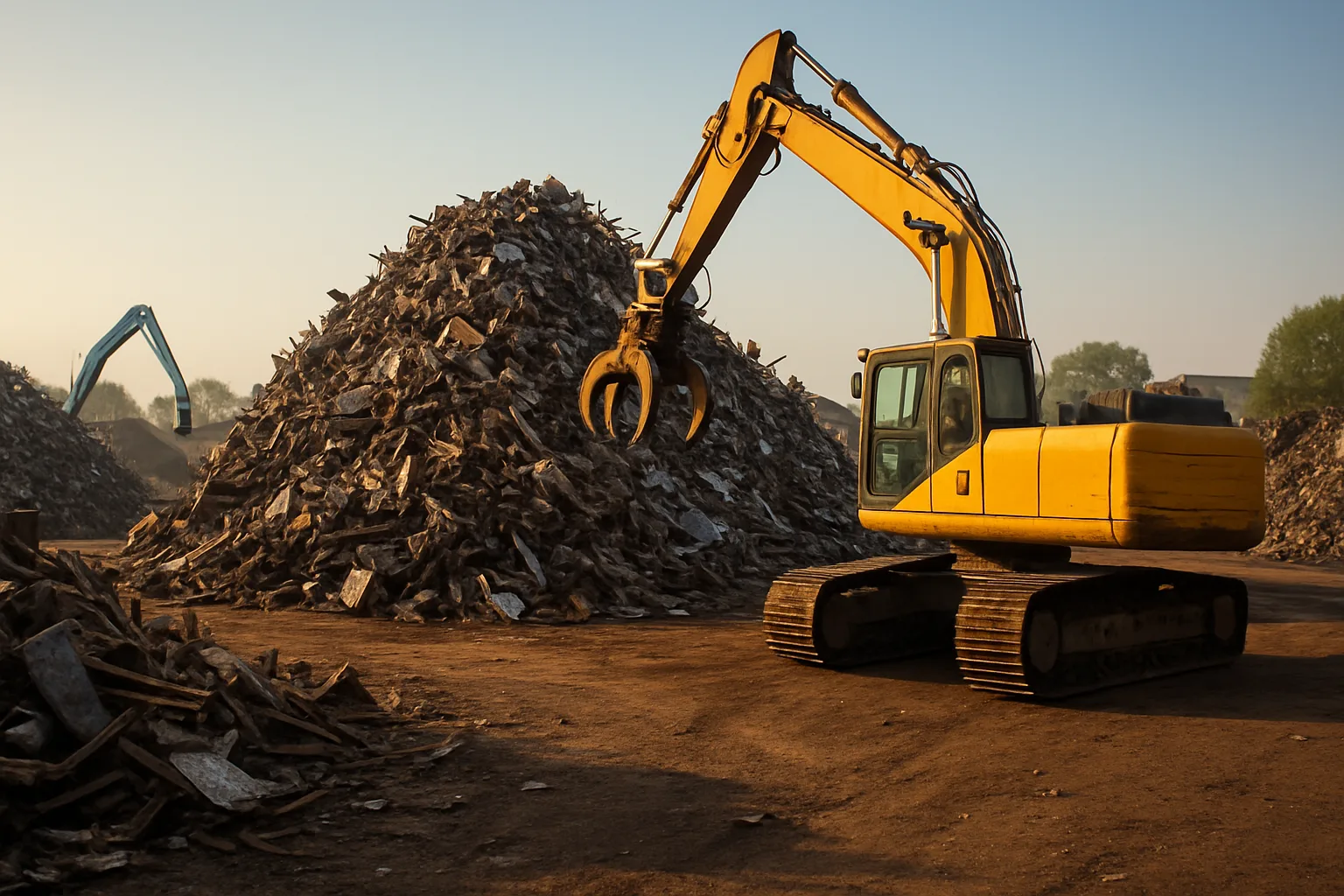
Why the Steel Scrap Price Today Is Never the Same as Yesterday
You checked the steel scrap price today. You checked it again an hour later. It moved. That's not a glitch — that's how this market works. Scrap metal prices respond to global forces, regional supply shifts, and buyer demand, sometimes all at once. If you're selling without that context, you're likely leaving money on the table.
This guide breaks down what actually drives daily price swings, what it means for your operation in Worcester and across Massachusetts, and how to stop guessing and start selling smarter.
What Drives Scrap Metal Prices Today — The Real Factors
Prices don't just float. They move for specific reasons. Understanding those reasons helps you time your sells better and negotiate from a position of knowledge instead of hope.
Here are the primary drivers behind daily scrap metal price fluctuations in 2026:
- Futures markets and mill demand: Steel mills adjust their buying prices based on hot-rolled coil futures and their own inventory levels. When mills are running lean, they compete harder for shredded steel and HMS loads. When they're sitting on stockpiles, prices soften fast.
- Global trade flows: Export demand from overseas buyers — particularly for copper and aluminum — shifts the domestic price floor. A tariff adjustment or a port bottleneck can ripple into your local yard's posted price within 24 hours.
- Commodity exchanges: Copper scrap price today broadly tracks COMEX copper futures. Aluminum scrap value per pound moves with LME aluminum. These aren't abstract — your yard buyer watches them every morning before posting their price board.
- Regional scrap availability: A big demolition job flooding the market with HMS in central Massachusetts can compress local prices even when national benchmarks hold steady. Supply and demand is hyperlocal in this business.
- Freight and fuel costs: Diesel prices affect what buyers can actually pay after logistics. When trucking costs climb, net prices at origin drop to protect margins.
None of this is invisible. But if you're only calling one buyer, you're only seeing one interpretation of all these moving parts. That's the core problem.
Steel Scrap Price Today: What the Different Grades Actually Mean
Not all steel scrap moves together. The steel scrap price today looks different depending on what you're actually selling. Knowing your grades is the first step to pricing accurately.
The main categories most sellers in Worcester and across the Northeast encounter:
- HMS 1 & 2 (Heavy Melting Steel): The benchmark grade for structural scrap — beams, plate, and heavy gauge. HMS 1 commands a premium over HMS 2 because of lower residual content.
- Shredded steel: Post-shredder material with a more consistent chemistry. Mills often prefer it. Typically priced at or near HMS 1 depending on demand cycles.
- Busheling / Bundles: Clean industrial steel punchings and stampings. High-quality, often used in electric arc furnace (EAF) steelmaking. Priced at a premium in tight supply windows.
- Cast iron: Heavier, lower value per ton than most steel grades. Common in demolition loads.
When you check current scrap metal prices, make sure you're comparing the same grade to the same grade. A price that looks high for shredded might be average for busheling. Grade confusion is one of the most common ways sellers underestimate what they're actually owed.
Aluminum and Copper: The Non-Ferrous Side of Daily Price Volatility
If steel moves daily, non-ferrous metals move hourly. Aluminum scrap value per pound and copper scrap price today are both tightly linked to exchange-traded commodity prices, which means any macro economic news — inflation data, Fed decisions, manufacturing output reports — can push prices in real time.
In 2026, aluminum demand remains strong across automotive, construction, and packaging sectors. Scrap aluminum — whether you're moving cast, extrusions, or litho sheet — commands competitive pricing when buyers are active and supply is balanced. The gap between a strong day and a soft day can be meaningful at scale.
Copper is even more sensitive. Clean #1 copper and bare bright both track closely to COMEX. Dirty copper, burnt wire, and insulated wire each carry varying discounts from the bare bright benchmark. Knowing the spread on your specific copper type before you call a buyer is basic due diligence.
This is exactly where competitive bidding earns its value. When you sell your scrap metal on the SMASH marketplace, vetted buyers see your documented inventory and bid against each other — which means the price you get reflects actual market demand, not one buyer's margin target.
Scrap Metal Inventory Management: Why Documentation Affects the Price You Get
Here's something most sellers don't connect: how you document your inventory directly impacts what buyers will pay. A well-documented load — photos, weights by grade, packing lists, VIN lookups on catalytic converter cores — gives buyers confidence. Confident buyers bid higher. Undocumented loads invite discount assumptions.
Solid scrap metal inventory management isn't just about internal organization. It's a pricing tool. Consider what a buyer sees when they receive:
- A load listed as "mixed metal, various" with no photos
- versus a load with grade breakdowns, photo documentation, accurate weights, and serial tracking on high-value cores
The second load commands more competitive bids every time. Buyers price in uncertainty. Remove the uncertainty and you remove the discount.
SMASH builds this into the platform. The inventory tool, VIN lookup, serial tracking, and photo documentation features exist specifically to give buyers what they need to price aggressively — which means you benefit directly from putting in the documentation work upfront.
For yards in Worcester handling a mix of ferrous and non-ferrous loads alongside catalytic converter cores and auto bodies, having that structure in place makes a real operational difference. You're not scrambling to answer buyer questions after the fact — the information is already in the listing.
How the SMASH Scrap Metal Auction Model Changes Your Price Discovery
The old way: one phone call, one number, take it or leave it. You had no way to know if that number was fair. You still don't — unless you call three more buyers, which most people don't have time for.
The SMASH scrap metal auction model flips that dynamic. You list your load once. Vetted buyers across North America see it. They compete. You see actual market demand in real time, not one buyer's opening offer.
That's not hype — that's just how competition works. More buyers means better price discovery. The market tells you what your load is worth. No subscription fees. SMASH earns only when the seller earns.
For sellers in Massachusetts — whether you're running a mid-sized yard in Worcester or a smaller operation pulling material from job sites across the region — the ability to reach a broader buyer pool without cold-calling changes your leverage position. You go from reactive to competitive.
To find the best scrap metal prices today, you need more than one data point. You need a market. That's what SMASH provides.
Timing Your Sells: When to Move Metal and When to Hold
Not every load needs to move today. Understanding when to sell is as important as understanding what to sell.
A few principles worth knowing:
- Month-end and quarter-end often see softer prices. Buyers tighten up to manage their own inventory and cash positions. If you can, avoid rushing large loads out the door in the final week of a quarter without checking where the market is sitting.
- Watch mill utilization rates. When steel mill utilization is high nationally, demand for scrap feedstock increases and prices firm up. Public data on this is available — pay attention to it.
- Don't hold non-ferrous indefinitely chasing a peak. Copper and aluminum can correct quickly. Moving product when the market is strong beats waiting for a peak that may not come.
- Weather affects logistics. Northeast winters — including across Massachusetts — can delay pickups and compress local supply temporarily. That can create short-term price pressure in either direction depending on which side of the supply equation you're on.
None of this is about gaming the market. It's about making informed decisions instead of reactive ones. The difference between selling on information and selling on habit is real money over a full year of loads.
Stay sharp on market movements — read the latest scrap metal pricing guides to keep your knowledge current as conditions shift through 2026.
Prices change fast. The yards and sellers who stay competitive are the ones who understand why — and who use platforms and tools that give them real market exposure instead of a single buyer's word. If you want to see what your loads are actually worth, start there. Get the best scrap metal prices for your material — check current rates and market data at best-scrap-prices.com.
Price disclaimer: All scrap metal prices fluctuate based on market conditions, grade, location, and buyer demand. The information in this article reflects general market dynamics as of June 2026. Always verify current rates directly with buyers or through live pricing platforms before making selling decisions.
Frequently Asked Questions
Q: What is the steel scrap price today in Worcester, Massachusetts?
Steel scrap prices vary daily based on grade, mill demand, and regional supply conditions. HMS and shredded steel prices in Worcester follow broader Northeast market benchmarks but can differ from national averages based on local buyer competition. Check live rates at best-scrap-prices.com for current figures.
Q: Why does the scrap metal price today differ between yards?
Each yard sets its own buy price based on their current inventory, their downstream buyer relationships, and their margin requirements. Two yards in the same city can post meaningfully different prices for the same grade. Competitive bidding platforms like SMASH expose that spread and let the market set the price.
Q: How does aluminum scrap value per pound compare to steel?
Aluminum scrap consistently prices higher per pound than steel scrap due to the energy savings of recycling aluminum versus primary production. However, aluminum is sold by the pound while steel is typically priced per ton — so total load value depends heavily on weight and grade mix.
Q: Does better inventory documentation actually improve my scrap prices?
Yes. Buyers discount loads with incomplete information to account for uncertainty. Documented loads — with photos, accurate grade breakdowns, and weights — give buyers confidence to bid higher. Tools like SMASH's inventory and photo documentation features are built specifically to support this.
Q: Is there a subscription fee to use the SMASH scrap metal auction platform?
No. SMASH does not charge subscription fees to sellers. The platform earns only when a transaction is completed — so SMASH's incentive is aligned with getting you the best possible outcome on every load.
Follow SMASH on LinkedIn at linkedin.com/company/scrap-metal-auction-sales-hub for ongoing scrap metal market updates, pricing insights, and industry news.