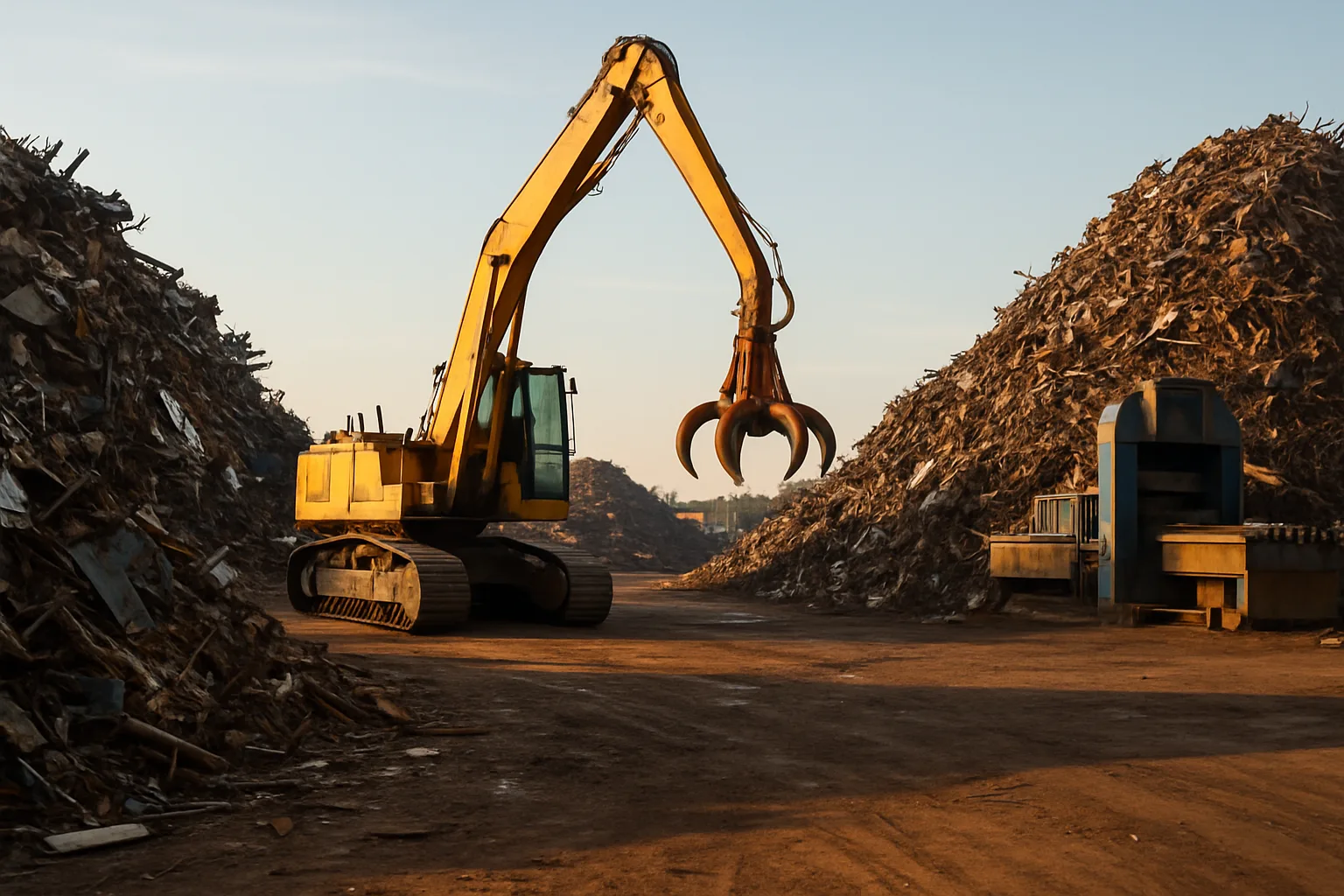
What's Driving Scrap Metal Prices in Mid-2026 — and What Jacksonville Sellers Need to Know
Most scrap sellers check prices the same way they did ten years ago — a phone call, a gut feeling, maybe a glance at yesterday's numbers. But mid-2026 looks nothing like the market from two years ago. Tariff shifts, shifting manufacturing demand, and tighter EV supply chains have reshaped what buyers will pay for copper, aluminum, steel, and catalytic converters. If you're selling scrap in Jacksonville or anywhere across Florida, understanding these trends isn't optional anymore. It's the difference between leaving money on the table and getting what your load is actually worth.
Here's what's moving the market right now — and how to position yourself to capture the best scrap metal prices Jacksonville has to offer.
Copper and Aluminum Prices Are Being Pulled in Two Directions
Copper demand remains strong in 2026. Grid infrastructure buildout across the U.S. — driven by EV charging networks, data center expansion, and ongoing utility upgrades — continues to consume significant volumes of copper wire, tube, and bare bright. That keeps upstream demand elevated. But pricing volatility hasn't gone away. Global supply disruptions, U.S. trade policy adjustments, and fluctuating Chinese manufacturing output all push copper prices up and down within the same week.
What this means for sellers: the copper price you get quoted on Monday morning may look different by Thursday. Yards that are well-connected to active buyer networks tend to reflect real-time demand faster than those operating off a single buyer relationship. If you're in Jacksonville and sitting on a load of #1 copper or insulated wire, timing and buyer competition matter more than ever.
Aluminum is a different story. Automotive sector demand has softened slightly in some segments, but aerospace and packaging continue to absorb supply. Extrusions, cast aluminum, and sheet are all performing differently in the current market. Don't lump your aluminum together and expect one flat number — grade separation pays off. A platform like North America's B2B scrap metal auction platform exposes your documented, graded load to multiple buyers at once, which helps reveal the actual market rather than a single buyer's margin.
Steel and Ferrous Markets: Watch the Mill Buyers Closely
Steel scrap — HMS, shredded, plate and structural — has been through a rough patch and is showing signs of stabilization heading into the second half of 2026. Domestic mill consumption is the key driver here. When electric arc furnace (EAF) mills are running hard, ferrous prices follow. When order books thin out, they pull back on scrap intake and prices feel it immediately.
As of early June 2026, steel markets are in a cautious recovery phase. Infrastructure-related construction activity in the Southeast, including Florida, has provided some floor for regional demand. Jacksonville specifically sits in a strong logistics corridor — proximity to port infrastructure means some loads move to export buyers, which adds another pricing layer that sellers should understand.
- HMS #1 and #2: Pricing spread between grades remains meaningful — don't mix them if you can help it.
- Shredded steel: Demand tied closely to domestic mill capacity utilization rates.
- Plate and structural: Still attracting interest from fabrication buyers when properly documented.
- Cast iron: Slow but consistent — automotive and municipal sources feeding the market.
The single-buyer model hurts ferrous sellers more than most realize. If your yard sends one call to one buyer and takes whatever price they give, you have no idea if that number is the market or just their margin. More buyers competing for the same load fixes that problem. To find the best scrap metal prices today, you need access to more than one buyer — full stop.
Catalytic Converter Prices: Regulation, PGMs, and What's Shifting
Catalytic converters remain one of the most volatile and scrutinized categories in the scrap market. PGM prices — platinum, palladium, and rhodium — continue to drive value, but the spread between what different buyers pay for the same core can be dramatic. A converter that pays well at one buyer may get severely undervalued at the next if they're not actively running the VIN or serial against current PGM assay data.
On the regulatory side, the push for tighter documentation and tracking of catalytic converter transactions has continued to intensify across multiple U.S. states. Florida has been active in this space. Sellers and yards that document their cats — serial numbers, vehicle VINs, photo records — are in a stronger legal position and often attract better offers from compliant buyers who need clean paper trails. Proper documentation isn't just a compliance requirement; it's a selling advantage.
SMASH handles serial tracking and photo documentation as part of the standard listing process. That means when a cat load goes to auction, buyers see verified data and bid with more confidence. More confidence means more competitive offers. To read the latest scrap metal pricing guides on catalytic converters and PGM market movements, you'll find detailed breakdowns of how to grade and document your cores for maximum value.
What Jacksonville Scrap Sellers Should Watch in the Second Half of 2026
Jacksonville is one of the Southeast's most active logistics hubs for scrap movement. The port, the rail access, and the density of industrial and automotive activity all feed the local scrap supply chain. That's an advantage — but only if you're selling into a market that actually reflects that demand.
Here are the trends worth watching closely for the rest of 2026:
- U.S. trade policy and tariff adjustments: Changes to steel and aluminum import/export rules continue to ripple through domestic scrap pricing. Sellers who stay informed adapt faster.
- EV battery and motor recycling: Early-stage but growing. Copper motor windings and battery packs are starting to generate real volume in Florida's recycling stream as the first wave of EVs hits end-of-life.
- Non-ferrous grade tightening: Buyers are getting more precise about what they'll accept and at what grade. Loose, mixed loads are getting discounted harder than before.
- Buyer consolidation: Larger regional buyers are acquiring smaller yards. Less competition in your local area means seller leverage drops — unless you're accessing a broader buyer pool.
- Documentation requirements: Expect more compliance pressure on sellers, not less. Start building clean BOLs, packing lists, and photo records now.
If you're relying on the same one or two buyers you've used for years, it's worth asking: are those relationships working for you, or are they working for them?
How to Get Better Scrap Metal Prices in a Volatile Market
The principle is simple. More competition between buyers means better price discovery for sellers. When you call one yard and take their price, you're not learning the market — you're accepting someone else's interpretation of it. That interpretation includes their margin, their current inventory position, and how much they want your load that day.
A B2B scrap metal marketplace changes that dynamic. Instead of one offer, you get multiple vetted buyers competing for your load. Instead of a verbal price over the phone, you get documented bids, auto-invoicing, and a paper trail that holds. Check current scrap metal prices before you sell — then let competition do the rest.
SMASH works on a no-subscription model. There are no monthly fees eating into your margin before you've sold a pound of metal. The platform only earns when a transaction completes — which means the incentive is aligned with yours. Get the load sold, get it documented, get paid.
For Jacksonville sellers, local Jacksonville scrap metal services are available to help you connect with the right buyers in your region. Whether you're moving a full truckload of non-ferrous or a regular stream of ferrous loads, the market is there — you just need the right channel to reach it.
Markets move fast. The sellers who adapt their process to match the market's speed are the ones capturing the best numbers. Stop guessing at price. Start selling into competition. When you're ready to move your next load, get the best scrap metal prices — check rates at best-scrap-prices.com.
Frequently Asked Questions
Q: What scrap metal prices are highest right now in Jacksonville?
Copper grades — especially bare bright and #1 copper — consistently command the highest prices per pound in the Jacksonville market. Non-ferrous metals in general outperform ferrous on a per-pound basis. Catalytic converters can also yield strong returns depending on PGM content. Prices shift week to week, so check current rates before you sell.
Q: How do I find the best scrap metal prices near me in Jacksonville, Florida?
The most effective approach is to access multiple buyers rather than relying on a single yard's quoted price. A B2B scrap metal marketplace like SMASH connects sellers with vetted buyers competing for your load, which helps surface the actual market rate rather than one buyer's offer. Proper documentation — weights, grades, photos — also increases buyer confidence and bid quality.
Q: Why do scrap metal prices change so frequently?
Scrap metal prices are tied to commodity markets, manufacturing demand, trade policy, and global supply conditions — all of which shift constantly. Copper follows LME spot pricing. Steel tracks domestic mill demand. Catalytic converter values move with platinum, palladium, and rhodium spot prices. A price quoted today may differ from tomorrow's number at the same yard.
Q: Is it better to sell scrap metal to a local yard or through an online platform?
Local yards offer convenience and immediate cash, but they typically represent one buyer's price on any given day. Online platforms with multiple buyers create competition, which can help reveal a more accurate market price for your load. The best approach depends on load size, material type, and how much price visibility matters to you. For larger loads, competitive bidding almost always works in the seller's favor.
Q: Do I need documentation to sell catalytic converters in Florida?
Yes. Florida has strengthened documentation requirements for catalytic converter transactions. Sellers are typically required to provide proof of ownership and identification, and buyers must maintain transaction records. Beyond legal compliance, documented cats — with VINs, serial numbers, and photos — tend to attract stronger offers from buyers who need clean records for their own compliance. This is an area where documentation directly affects price.
Stay current on scrap metal market trends and pricing by following SMASH on LinkedIn — regular updates on industry news, price movements, and market insights for scrap sellers and buyers across North America.
Disclaimer: Scrap metal prices fluctuate based on commodity markets, regional demand, and buyer conditions. All price references in this article are general and directional. Always verify current rates before selling.