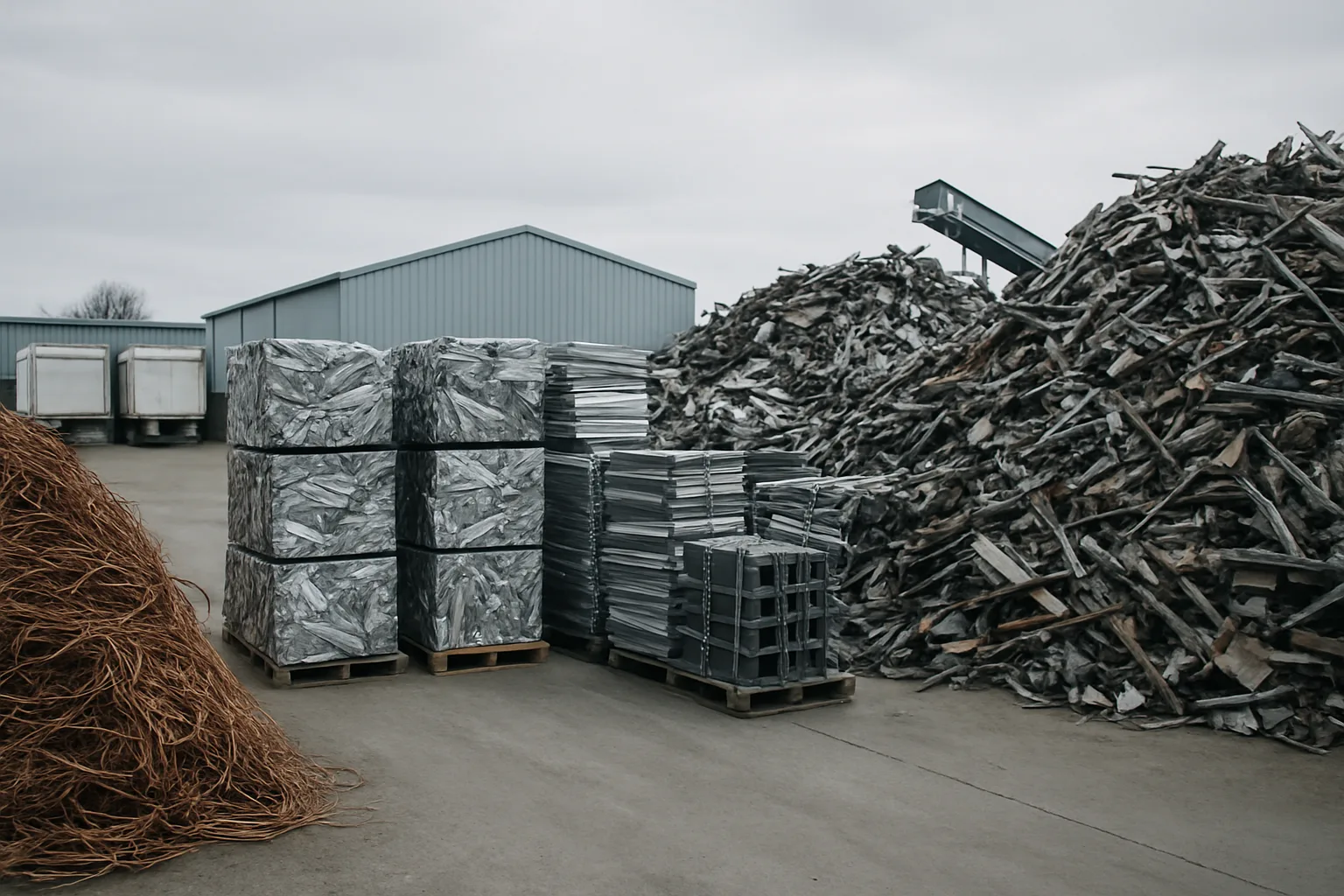
When a Steel Mill Closes in Turkey, Your Salt Lake City Yard Feels It
Most scrap yard operators don't think about Chinese manufacturing output or Middle Eastern trade routes when they're loading a truck. But they should. The steel scrap price today sitting on your price board didn't get there by accident — it traveled through global commodity markets, shipping lanes, currency exchanges, and mill capacity decisions before landing in your lap. Understanding that journey can help you time your loads better and stop leaving money on the table.
This isn't theory. It's the daily reality for yards across Utah and every other scrap-producing state in the country. Let's break down exactly how global forces hit local prices — and what one Salt Lake City-area yard learned when they started paying attention.
How Global Steel Markets Set Your Local Scrap Metal Prices Today
Steel scrap is a global commodity. Mills in Turkey, the U.S., South Korea, and India buy shredded steel, HMS, and busheling to feed their electric arc furnaces. When those mills are running hot — filling orders, ramping production — they compete for scrap. That competition lifts prices worldwide, including in the Mountain West.
When demand cools — mill maintenance shutdowns, slowdowns in construction, tariff disruptions on finished steel — orders dry up fast. Mills pull back. Brokers get cautious. And yards in Salt Lake City suddenly find buyers quoting $40 to $60 per ton lower than they were two weeks ago. That's not local. That's global.
Key global signals that drive scrap metal prices today:
- Turkish export demand: Turkey is one of the world's largest importers of ferrous scrap. When their mills book ships, U.S. prices respond within days.
- Chinese industrial output: China drives raw materials markets. A slowdown in Chinese steel production can redirect scrap flows and shift global pricing.
- U.S. dollar strength: A stronger dollar makes American scrap more expensive for foreign buyers. Export demand falls. Domestic prices soften.
- Energy costs at mills: Electric arc furnaces are energy-hungry. When electricity prices spike in key markets, mills slow down and scrap demand dips with them.
- Shipping and freight rates: High container costs make it expensive to export processed scrap. Export-oriented mills pay less when freight eats their margin.
None of these factors live inside your state. But all of them land on your price board every week.
A Salt Lake City Yard Stops Guessing — And Here's What Changed
This is the story of a mid-size ferrous and non-ferrous yard operating out of the Salt Lake City metro. Like most yards, they were pricing based on what their single primary buyer told them each week. Some weeks that buyer was generous. Other weeks, the quote came in thin and the yard had no real way to push back. They had one data point: one phone call, one number, take it or leave it.
In early 2026, copper prices were moving hard on the back of tightening global supply and surging demand from energy infrastructure buildout. The yard was sitting on a solid inventory of bare bright copper, #1 copper wire, and aluminum breakage. Their buyer offered them a price that felt off — below what the market was suggesting based on LME movement and what the operators were reading in industry feeds.
They listed on find the best price for your scrap on SMASH for the first time. Built out their inventory properly — weights, grades, photos, documentation. Multiple vetted buyers saw the listing and put in competing bids.
The result wasn't magic. It was just what happens when you replace one phone call with actual competition. The yard moved that load at a price meaningfully above the single buyer's offer. More importantly, they got a real market read — not a number handed down from one buyer with their own margin to protect.
Since then, they've made market awareness part of their operation. They track global signals. They time loads when demand signals look favorable. And they use competitive bidding as a check on whether what they're being offered reflects what the market will actually pay.
Non-Ferrous Prices and the Global Signals Yards in Utah Can't Ignore
Copper, aluminum, brass, and stainless all respond to their own global supply-demand dynamics — and they move faster and harder than ferrous.
Copper tracks closely with the LME (London Metal Exchange) and COMEX futures. Infrastructure investment, electric vehicle production, and grid buildout are all copper-intensive. When those sectors accelerate, the copper price moves up. When manufacturers pull back inventory, copper softens. The lag between a global signal and your local copper price can be as short as 48 hours.
Aluminum is tied to energy costs at smelters worldwide. Aluminum smelting is electricity-intensive. When power prices spike in Europe or China, primary aluminum production drops. That pushes buyers toward secondary aluminum from scrap — which lifts prices at yards. Right now in 2026, ongoing energy volatility in global markets has kept aluminum scrap pricing active and somewhat unpredictable.
Catalytic converters run on their own track — platinum group metals (PGMs) like rhodium, palladium, and platinum. These are among the most volatile scrap commodities. A shift in automotive production mix, a PGM supply disruption in South Africa, or changes in emissions regulation can all swing catalytic converter prices sharply. Yards holding cats need to understand they're essentially holding a futures position. For current catalytic converter pricing, check current scrap metal prices before you commit to a buyer's quote.
For yards in Salt Lake City, being landlocked doesn't insulate you from any of this. Utah scrap moves through regional processors and export channels tied to West Coast ports. What happens in Long Beach or Oakland's shipping lanes affects your non-ferrous quotes just like it affects coastal yards.
How to Use Global Market Signals to Time Your Scrap Sales
You don't need a commodities trading desk. You need a few reliable data points and the discipline to use them.
Here's a basic framework that scrap operators use to avoid selling at the bottom of a price cycle:
- Watch LME copper and aluminum weekly. Both are publicly available and give you directional signals on non-ferrous pricing. Up trend? Hold if your storage situation allows. Down trend? Move material before the quotes catch up to the fall.
- Track Turkish import data. Turkish mills publish scrap import volumes. Strong import activity typically means U.S. export demand is healthy and ferrous prices should be supported. This is one of the most useful leading indicators for shredded steel pricing.
- Watch U.S. dollar index (DXY). A rising dollar tends to suppress export demand for U.S. scrap. If DXY is climbing, expect pressure on ferrous export prices and downstream effects on domestic buying.
- Check domestic mill utilization rates. American Iron and Steel Institute (AISI) publishes weekly U.S. steel capacity utilization. High utilization = strong scrap demand. Low utilization = softer demand, softer prices.
- Use a competitive marketplace as your price check. Even if you sell locally most of the time, running loads through a platform like SMASH tells you what the market will actually pay — not just what your single buyer is willing to offer.
Timing isn't always possible. You may have cash flow needs or storage constraints that force you to move material on a set schedule. But even partial awareness helps. You'll at least know whether you're selling into strength or weakness — and you can factor that into negotiations.
To find the best scrap metal prices today, you need more than one data source. You need real market competition, and you need to understand what's driving the numbers you see.
Why a B2B Scrap Metal Marketplace Closes the Gap Between Global and Local
The single biggest structural problem in local scrap pricing isn't global volatility. It's information asymmetry. Your buyer watches global signals all day. You're running a yard. They know more about what the market will bear than you do — and that gap costs you money on every load.
A B2B scrap metal marketplace like SMASH doesn't eliminate market volatility. Nothing does. What it does is shrink that information gap by replacing a single buyer's quote with actual competitive bidding from vetted buyers across the market.
More buyers means better price discovery. That's not a sales pitch — it's how markets work. When multiple buyers compete on the same documented load, you get a real read on what the market will pay, not just what one buyer wants to pay.
SMASH also requires proper documentation — grade, weight, photo documentation, serial tracking for cores and cats, BOLs and packing lists. That documentation increases buyer confidence, and buyer confidence supports better bids. A well-documented load of #1 copper or clean aluminum extrusion will attract more serious buyers than a vague description with no photos.
There are no subscription fees. SMASH only earns when you complete a transaction. That alignment matters — your incentive and the platform's incentive point the same direction.
Whether you're running a small operation in a Utah county yard or managing volume across multiple Salt Lake City locations, the mechanics are the same: more competition, better data, less guessing. Read the latest scrap metal pricing guides to understand how to position your loads before you list them.
Frequently Asked Questions
Q: Why does the steel scrap price today change so frequently?
Steel scrap is a traded commodity tied to global mill demand, export markets, and finished steel pricing. Mills adjust their scrap buying budgets weekly — sometimes daily — based on their order books, energy costs, and available inventory. That's why prices can shift $20–$60 per ton within a single week without any changes happening locally.
Q: How do I find a competitive scrap metal price in Salt Lake City?
Get more than one quote. Local yard prices vary based on their own buyer relationships and overhead. Using a platform like SMASH puts your documented inventory in front of multiple vetted buyers simultaneously, which gives you a real market read rather than a single negotiated offer. Checking current rates at best-scrap-prices.com also helps you benchmark before you pick up the phone.
Q: What global factors most directly impact non-ferrous scrap prices today?
For copper and aluminum, watch LME pricing, energy costs at primary smelters, and downstream manufacturing demand (especially automotive and construction). For catalytic converters, watch PGM spot prices — rhodium, palladium, and platinum — which are driven by automotive production volumes and mining supply out of South Africa and Zimbabwe. These markets move fast and carry directly into local quotes.
Q: Does it matter that I'm in Utah and not near a coast?
Somewhat — but less than you might think. Utah scrap eventually flows through regional processors connected to West Coast export channels and domestic mills. You may pay slightly more in freight to reach export hubs, which can affect what buyers offer you compared to coastal yards. But the global price signals that drive demand are the same everywhere. Competitive bidding through a marketplace helps offset geographic disadvantage.
Q: Is SMASH a scrap metal auction open to yards across the U.S.?
Yes. SMASH operates as a vetted B2B scrap metal auction platform serving yards and buyers across North America. There are no subscription fees — you only pay when a transaction completes. Sellers list their inventory with documentation, and vetted buyers submit competitive bids. It's designed for operators who want real price discovery, not just the number their single buyer decides to offer that week.
Disclaimer: Scrap metal prices fluctuate daily based on global commodity markets, local supply and demand, and buyer conditions. All pricing information in this article is for general educational context only. Always verify current rates directly with buyers or through a real-time pricing platform before making selling decisions.
The global economy doesn't care that you're running a yard in Salt Lake City and just need to move a load of shredded steel. But it will absolutely affect what you get paid for it. Knowing why prices move — and using competitive tools to make sure you're not leaving margin on the table — is the difference between a good week and a frustrating one. Get the best scrap metal prices by staying informed and staying competitive. Check current rates and market data at best-scrap-prices.com.
Follow SMASH on LinkedIn for ongoing scrap metal market insights, pricing updates, and industry news that actually helps you run your yard better.
```