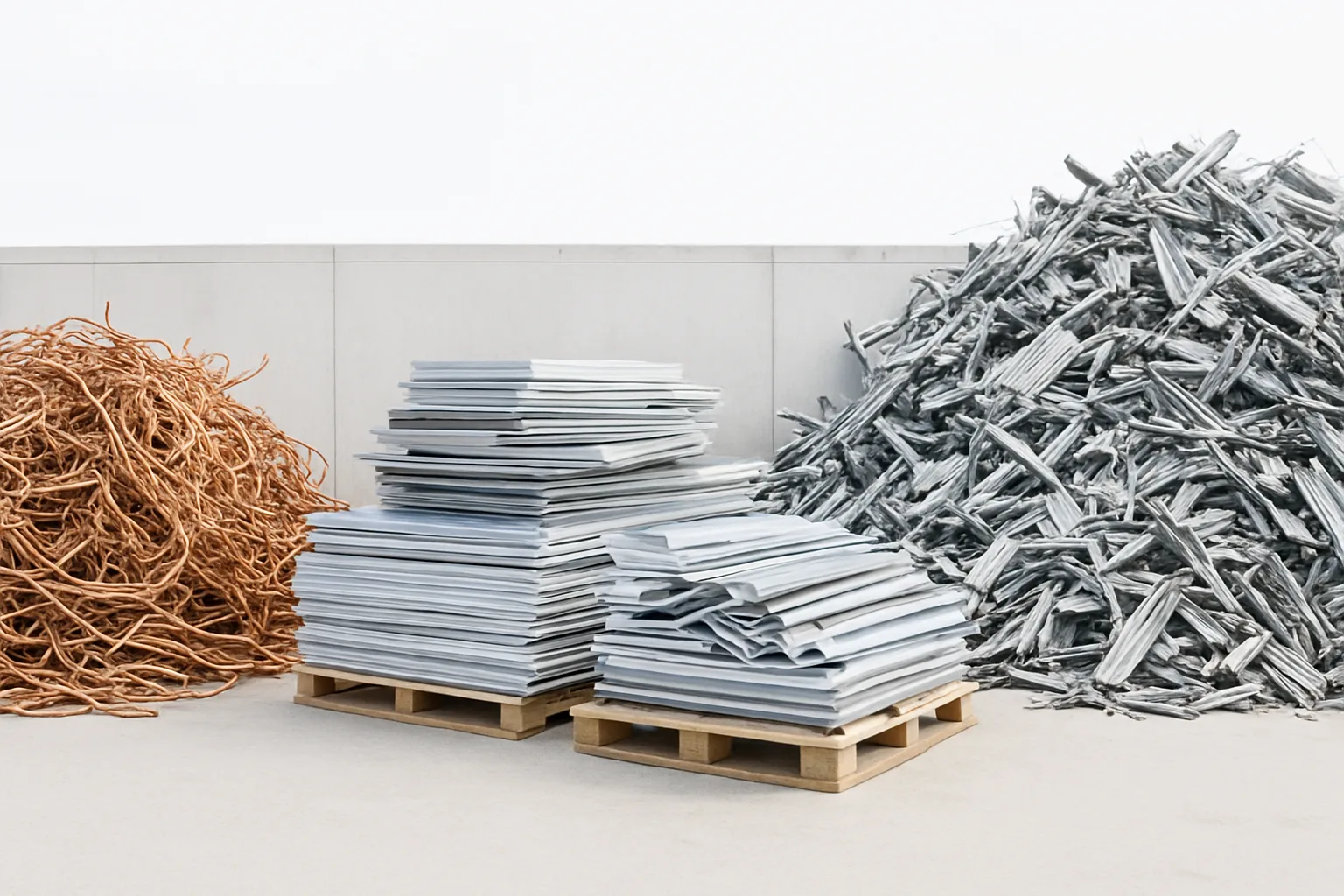
Most scrap sellers leave money on the table — not because they have bad material, but because they don't know what they're holding. Understanding the difference between ferrous and non-ferrous scrap metals is the single fastest way to improve what you get paid. If you're hauling loads to a Baltimore yard and treating every piece of metal the same, you're pricing yourself out of your own profit.
This guide breaks it down plainly. What each category includes, why it matters for pricing, and how to use that knowledge to find the best scrap metal prices today — especially here in Maryland where industrial and residential scrap volumes are both significant.
Ferrous vs. Non-Ferrous: The Core Difference
The word "ferrous" comes from the Latin ferrum, meaning iron. Simple rule: if it contains iron, it's ferrous. If it doesn't, it's non-ferrous. A magnet is your fastest sorting tool. Ferrous metals stick. Non-ferrous metals don't.
That one distinction drives a significant pricing gap. Non-ferrous metals — copper, aluminum, brass, stainless steel, lead, nickel — typically command far higher prices per pound than ferrous materials like steel and cast iron. Ferrous metal is bought by the ton. Non-ferrous is bought by the pound. That difference matters when you're loading a trailer.
- Ferrous examples: structural steel, rebar, sheet iron, cast iron, car bodies, appliances
- Non-ferrous examples: copper wire, aluminum extrusions, brass fittings, catalytic converters, stainless steel, lead pipe
Mixing these categories in a single unsorted load is one of the most common mistakes sellers make. Yards will grade the whole load down to protect themselves. Keep them separated from the start.
Why Non-Ferrous Scrap Metal Prices Run Higher
Non-ferrous metals are rarer, harder to produce from raw ore, and more energy-intensive to refine. Recycling them instead of mining virgin material saves real energy and cost — and that efficiency gets reflected in the price buyers are willing to pay.
Copper is the benchmark. The copper price on any given day signals what's happening across the non-ferrous market. Aluminum price tracks closely with global production output and energy costs. Brass and bronze follow copper trends. Catalytic converter prices are a category of their own — driven by platinum group metals (PGMs) like palladium and rhodium locked inside the unit.
Here's what that looks like in practice for a Baltimore seller:
- Copper wire (bare bright): consistently among the highest-paid scrap grades
- Aluminum (clean extrusion): solid value, especially if you're pulling window frames or HVAC components
- Catalytic converters: high-value, grade-dependent — serial tracking matters here
- Steel (HMS 1&2): priced per ton, moves in bulk
- Cast iron: lower per-pound value but heavy, adds up fast on large lots
If you want to check current scrap metal prices before you move a load, that step alone can shift your decision on when and where to sell.
How Ferrous Scrap Pricing Works in Baltimore and Maryland
Baltimore sits on the Chesapeake Bay with direct port access and a dense industrial corridor running through central Maryland. That geography matters for scrap. Steel mills, auto dismantlers, demolition contractors, and municipal yards all generate ferrous volume here. Supply is consistent. That keeps ferrous prices competitive but rarely exceptional for individual sellers.
Ferrous scrap — your steel beams, car bodies, and sheet iron — gets graded into categories. The most common are:
- HMS 1 (Heavy Melting Steel): clean, thick-gauge steel, no attachments
- HMS 2: lighter gauge, some mixed material
- Prepared steel: cut to specific dimensions for mill requirements
- Shredded steel: processed auto scrap, high iron content
- Cast iron: engine blocks, radiators, heavy machinery
Grade determines price. A load of clean HMS 1 pays better than a mixed heap of light gauge and coated steel. Preparation — cutting, separating, removing non-metallic attachments — directly affects what you receive per ton. Don't hand a yard a sorting problem and expect top dollar.
Sorting Your Load: Where Sellers in Baltimore Gain an Edge
The single biggest lever you control is how your material arrives. Yards price certainty. They discount uncertainty. A well-documented, sorted load with photos and a clear packing list creates confidence — and confident buyers pay more.
Here's where documentation tools become valuable. Platforms like the SMASH scrap metal auction marketplace let sellers build inventory with photos, weights, and material grades before the load ever goes out the door. That documentation follows the load through the transaction. Buyers bidding on a well-documented load of copper or aluminum aren't guessing at what they're getting — and that reduces the discount they feel they need to build in.
For non-ferrous sellers especially, consider these sorting steps:
- Separate copper grades: bare bright, #1 copper, #2 copper, insulated wire
- Pull aluminum alloys apart where possible — extrusion, cast, sheet, and clip price differently
- Keep stainless separate from mild steel — a magnet won't stick to most stainless, but it looks similar to untrained eyes
- Log catalytic converter serials before they leave your yard — serial tracking protects value and provenance
- Document with photos at intake, not at the gate
Scrap metal inventory management isn't just paperwork. It's the difference between a yard taking your word for it and a buyer paying for what you actually have.
Using Competition to Reveal Your Real Market Price
Here's where most Baltimore sellers are losing money without knowing it. One buyer, one phone call, one price. If that's how you're moving loads, you're not selling — you're accepting. Those are different things.
More buyers means better price discovery. That's not a slogan, it's economics. When multiple vetted buyers compete for your load, the price reflects what the market actually values your material at — not what one buyer decided to offer on a Tuesday morning.
SMASH runs a B2B scrap metal marketplace built on exactly this model. You list your load with documentation, vetted buyers bid, and you see competitive offers rather than a single take-it-or-leave-it number. No subscription fees. SMASH only wins when you win. For sellers running non-ferrous loads — copper, aluminum, brass, or cats — that competitive dynamic can make a real difference in what ends up on your check.
If you want context before you list, read the latest scrap metal pricing guides to understand where the market is sitting before you negotiate.
What Drives Scrap Metal Price Fluctuations in 2026
In 2026, the scrap metal market is shaped by a combination of infrastructure spending, global steel demand, and continued pressure on critical mineral supply chains. Copper demand remains elevated as electrification projects — EV infrastructure, grid upgrades, data center builds — absorb refined supply. That keeps copper price firm and makes high-grade copper scrap consistently valuable.
Aluminum price continues to track energy costs closely. Recycled aluminum requires roughly 5% of the energy needed to produce primary aluminum from bauxite. When energy costs rise, recycled aluminum becomes even more attractive to buyers. For sellers, that's a signal: clean, sorted aluminum commands attention.
Steel markets are more cyclical. Construction slowdowns and mill inventory levels affect ferrous demand more directly than non-ferrous. Baltimore's port connectivity does give regional sellers some advantage — export demand from overseas mills can firm up local ferrous prices when domestic mill activity softens.
The consistent truth: knowing what you have, how it grades, and what the current market is paying gives you far more control over your outcome than just showing up at a yard and taking whatever's on the board.
If you're looking for Baltimore scrap metal services that connect you with competitive buyers, start with current market data and go from there.
You've done the work to collect and sort the material. Don't skip the step that actually maximizes what you earn from it. Head to best-scrap-prices.com to check rates, understand current market conditions, and connect with buyers who compete for your loads.
Frequently Asked Questions
Q: What's the easiest way to tell ferrous from non-ferrous scrap?
Use a magnet. Ferrous metals — steel, cast iron — attract a magnet strongly. Non-ferrous metals like copper, aluminum, and brass don't. Stainless steel is an exception: most grades won't attract a magnet, but it's still a ferrous alloy. When in doubt, ask your yard to identify the material before you price it.
Q: Which scrap metals pay the most in Baltimore right now?
Non-ferrous metals consistently pay more per pound than ferrous. Bare bright copper and high-grade catalytic converters typically sit at the top of the value range. Aluminum and brass follow. Steel and cast iron are priced per ton and move in larger volumes. Prices fluctuate with market conditions — always check current rates before moving a load.
Q: Does sorting my scrap actually affect what I get paid?
Yes, significantly. Yards price uncertainty into mixed loads. A sorted, documented load of #1 copper or clean aluminum extrusion gives buyers confidence — and confident buyers pay more. Mixing grades forces the yard to grade the whole load to the lowest common denominator. Sort before you load.
Q: How does a scrap metal auction marketplace work for sellers?
Platforms like SMASH let you list your load with photos, weights, and material grades. Vetted buyers then bid competitively, which reveals what the market actually values your material at rather than a single buyer's offer. No subscription fees — SMASH earns when the transaction closes. It's built for yards and sellers moving commercial volumes of scrap.
Q: Are scrap metal prices the same across Maryland or do they vary by location?
Prices vary. Proximity to mills, port access, and local buyer competition all affect what yards pay in different parts of Maryland. Baltimore's port location gives it some pricing advantages on ferrous material with export demand. For non-ferrous, competitive bidding through platforms like SMASH removes much of that geographic friction by connecting sellers with buyers across North America.
Disclaimer: Scrap metal prices fluctuate daily based on commodity markets, regional demand, and material grade. All price references in this article are general in nature. Always check current rates before selling.
Follow SMASH on LinkedIn for ongoing market insights, scrap metal pricing updates, and industry news from across North America.