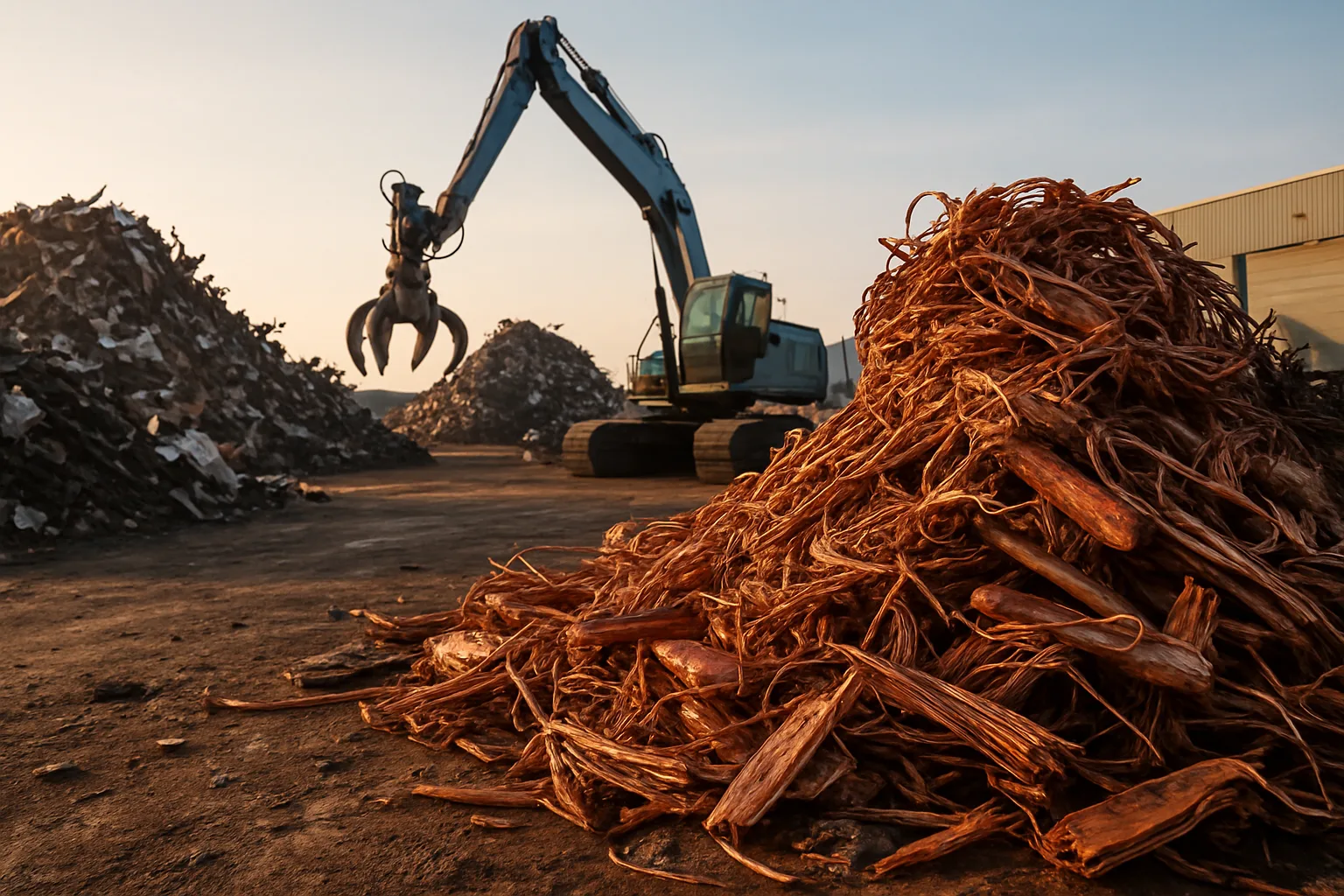
One Yard. One Buyer. One Bad Deal. Here's What Changed.
Most scrap sellers in Spokane have the same story. You load up the truck, drive to the yard, and take whatever price they quote you. No comparison. No competition. Just a number on a slip of paper and a handshake. If you've ever walked away wondering whether you left money on the table — you probably did.
That's not a knock on any single buyer. It's just how a one-buyer system works. When there's no competition, there's no pressure to offer you more. Understanding copper scrap prices Spokane — and how to get the best of them — starts with understanding that you have more leverage than you think. You just need the right tools to use it.
This article walks through how sellers in Washington are changing the way they move scrap. No more guessing. No more single-buyer dependency. Just smarter selling backed by real market data and competitive bids.
Why Copper Scrap Prices in Spokane Vary More Than You'd Expect
Copper isn't copper in the eyes of every buyer. Bare bright wire, #1 copper, #2 copper, insulated wire — each grade commands a different price, and buyers don't always make that distinction clear upfront. In Spokane's market, the spread between what one yard offers and what another pays can be meaningful, especially when you're moving volume.
Prices also shift fast. Copper trades on global commodity markets, and scrap metal prices Spokane reflect those swings in near real-time. A load you priced on Monday might be worth more — or less — by Friday. That's why it matters to check current scrap metal prices before you commit to a sale, not after you've already loaded the trailer.
Here are the key factors that move copper scrap prices in any local market:
- Grade and cleanliness — Stripped wire versus insulated wire can differ by $0.50/lb or more
- Volume — Larger loads often unlock better per-pound rates
- Buyer competition — More buyers bidding means better price discovery
- Documentation — Detailed inventory with photos gives buyers confidence to bid higher
- Timing — Commodity market conditions on the day of sale matter
Understanding these levers doesn't require a finance degree. It requires knowing who's buying, what they're paying, and how to put your load in front of more than one of them at the same time.
The Old Way of Selling Scrap — And Why It Costs You
Here's the standard playbook most Spokane yards and individual sellers follow: call one buyer, get a quote, load up, deliver, get paid. It's simple. It's also leaving money on the table consistently.
When you have one buyer, that buyer controls the conversation. They know you're not shopping around. They know the friction of finding another buyer is real. So there's no urgency for them to sharpen their pencil. The price you get reflects their margin, not your metal's full market value.
Compare that to a system where three, five, or eight vetted buyers are competing for your load. Suddenly the dynamic flips. Buyers who want your copper have to actually fight for it. That's not a theory — that's basic economics. More buyers means better price discovery, full stop.
The old way also has a documentation problem. A handshake deal with a single buyer rarely involves detailed inventory records, grade breakdowns, or photo documentation. That might feel efficient in the moment, but it exposes you to disputes, short-weights, and no data trail if something goes sideways. For anyone moving consistent volume across Washington state, that's a real operational risk.
How Smarter Scrap Metal Inventory Management Changes the Equation
Before you can get competitive bids on your scrap, buyers need to know what they're bidding on. Vague descriptions don't win top dollar. "A bunch of copper wire" is not a listing — it's a guessing game, and buyers price guessing games conservatively.
Strong scrap metal inventory management means showing up to the conversation with specifics: weight estimates, grades, photos, condition notes, and any serial tracking relevant to regulated materials. When a buyer can see exactly what they're getting, they bid with more confidence. And confident buyers bid higher.
Platforms like SMASH make it easy to get competitive bids for your scrap metal by giving sellers the tools to document inventory properly before the auction runs. Photo documentation, grade tagging, and structured listings aren't just administrative busywork — they're the difference between a buyer lowballing a mystery load and a buyer bidding aggressively on a well-documented one.
For sellers in Spokane handling mixed loads — copper, aluminum, steel, maybe some catalytic converter cores — this documentation layer also helps separate materials clearly so each gets priced on its own merits. Aluminum price and copper price are different conversations. Bundling them sloppily into one vague load hurts your return on both.
What Competitive Bidding Actually Looks Like for a Spokane Seller
Let's walk through a real scenario. A contractor in eastern Washington cleans out a commercial job site. The haul includes:
- 400 lbs of #1 copper tubing
- 200 lbs of insulated wire
- 600 lbs of aluminum extrusion
- 1,200 lbs of mixed steel
Under the old model, he calls one local buyer, takes their quote, and drops it off. Under a competitive auction model, that same load gets documented with photos and grade notes, then put in front of multiple vetted buyers simultaneously. Those buyers know they're competing. They know the seller isn't locked in.
The result isn't guaranteed to be higher every single time — markets move, and no platform can promise a specific outcome. But competition can help reveal the market. That's the core difference. The seller isn't guessing anymore. They're seeing what real buyers are actually willing to pay right now, in current market conditions.
SMASH operates on exactly this model. Vetted buyers, structured auctions, and no subscription fees — the platform only wins when the seller wins. For anyone in Spokane or across Washington who moves scrap regularly, that alignment of incentives matters. You're not paying to list. You're sharing in the upside when competition does its job.
Want to see how this works in your market? Spokane scrap metal services are available through the platform — start by documenting your load and let the bids come to you.
Reading the Market: Aluminum, Steel, and Catalytic Converter Prices
Copper gets the most attention, but a smart seller treats every material in their yard as a separate market to understand. Aluminum price, steel price, and catalytic converter price all move on different cycles and respond to different pressures. Treating them as one undifferentiated pile is a pricing mistake.
Aluminum — Extrusion, cast, and sheet aluminum each trade differently. Contamination (paint, rubber, plastic) knocks down the grade fast. Clean, sorted aluminum almost always commands a better per-pound rate than mixed aluminum, sometimes significantly.
Steel — Scrap steel prices are heavily influenced by mill demand, which fluctuates regionally. In Washington state, proximity to Pacific ports adds a logistics dimension some buyers factor into their bids. Structural steel, shredded steel, and HMS (heavy melting steel) are all separate grades with separate pricing.
Catalytic converters — Cats are their own market entirely. PGM (platinum group metal) content drives value, and that content varies by make, model, and year. VIN lookup and serial tracking tools help identify what you actually have before you sell — guessing on cats is an expensive habit. SMASH's inventory tools support serial tracking specifically because of how much variance exists in catalytic converter pricing.
To stay current on all of these, find the best scrap metal prices today and compare what your local market is offering against broader benchmarks. If your single local buyer is consistently below market, that data gives you the leverage to have a different conversation — or find a different buyer.
Building a Smarter Selling Habit — Starting Now
The sellers who consistently get the best scrap prices aren't lucky. They're systematic. They document their loads before they sell. They check market rates regularly. They use platforms that put their inventory in front of multiple buyers instead of one. And they treat scrap selling like the business it actually is.
If you're in Spokane and you're still calling one buyer out of habit, the habit is costing you. Not because that buyer is dishonest — but because a single-buyer system structurally undervalues your metal. That's just how it works.
The fix isn't complicated. Start with better inventory documentation. Separate your grades. Take photos. Know your weights. Then read the latest scrap metal pricing guides to understand where the market is before you pick up the phone. And when you're ready to run a competitive auction on your load, SMASH is built for exactly that — no subscription, no guesswork, just vetted buyers competing for what you have.
Whether you're moving a single truckload or running a full recycling operation across Washington, the approach is the same: more information, more competition, better outcomes. Get the best scrap metal prices — check rates at best-scrap-prices.com and stop settling for the first number someone hands you.
Disclaimer: Scrap metal prices fluctuate daily based on commodity markets, buyer demand, and material grade. Always verify current rates before finalizing a sale. Prices referenced in general terms are illustrative only and do not represent guaranteed offer prices.
Frequently Asked Questions
Q: What are the current copper scrap prices in Spokane?
Copper scrap prices in Spokane fluctuate based on commodity markets, material grade, and local buyer demand. Prices vary between grades like #1 copper, #2 copper, bare bright wire, and insulated wire. Always check current rates through a live pricing resource before selling — what was accurate last week may not reflect today's market.
Q: How do I find the best scrap metal buyer near me in Spokane?
The best buyer isn't always the closest one — it's the one offering the most competitive price for your specific materials. Platforms that put your load in front of multiple vetted buyers simultaneously give you far more pricing visibility than calling one yard. Document your load well, know your grades, and let competition do the work.
Q: Does scrap metal inventory management really affect what I get paid?
Yes, significantly. Buyers price uncertainty conservatively. When your load is well-documented with photos, grade separations, and accurate weight estimates, buyers bid with more confidence — and confident buyers tend to bid higher. Vague listings invite low bids as a hedge against the unknown.
Q: How are catalytic converter prices determined in Washington state?
Catalytic converter prices are driven by the platinum group metal (PGM) content inside each converter — platinum, palladium, and rhodium. Content varies widely by vehicle make, model, and year. Using serial tracking and VIN lookup tools before selling helps you understand what you actually have, rather than accepting a generic bulk price that may undervalue your specific cats.
Q: Is there a platform that handles competitive scrap auctions without a monthly fee?
Yes. SMASH operates on a no-subscription model — there are no monthly fees to list your scrap. The platform connects sellers with vetted buyers through a competitive auction format, and costs are aligned with successful sales rather than upfront charges. It's designed for sellers who want price transparency without overhead.
Follow SMASH on LinkedIn for ongoing scrap metal market updates, pricing insights, and industry news: linkedin.com/company/scrap-metal-auction-sales-hub.
```