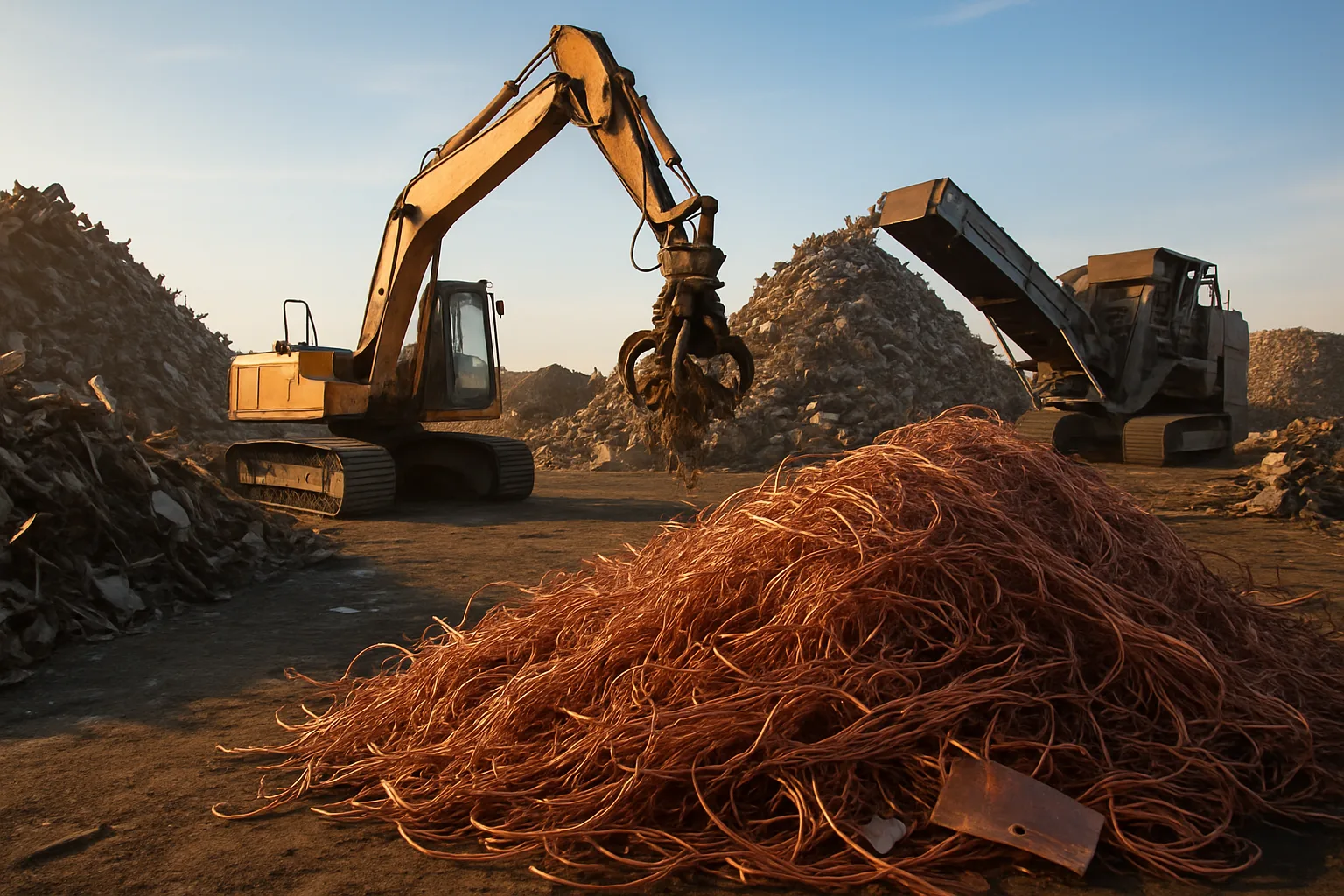
What Construction Sites Are Throwing Away Could Be Worth More Than You Think
Most people driving past a demolition site see rubble and dust. Experienced scrap operators see copper wiring, structural steel, aluminum framing, and non-ferrous material walking out the door at pennies on the dollar — or worse, getting dumpster-hauled away. If you're connected to construction or demolition work in Illinois, you're sitting on recurring scrap volume that most recyclers never fully monetize.
The copper scrap price today makes this especially relevant. Copper remains one of the highest-value metals per pound in the recycling market, and construction tear-outs generate it in bulk — electrical wire, plumbing lines, HVAC components, and more. If you're not tracking what's coming off your jobs and selling it strategically, you're leaving real money behind.
This case study breaks down how construction and demolition (C&D) sites generate scrap, what metals matter most, and how platforms like get competitive bids for your scrap metal are helping operators turn job-site material into actual market value.
The Scrap Metal Goldmine Hidden Inside Every C&D Job
A single mid-size commercial demolition — say, a 1970s office building in a Chicago suburb — can yield tens of thousands of pounds of recyclable metal. The breakdown varies by building type and age, but the categories are consistent across virtually every C&D project.
Here's what typically comes off a demolition or renovation job:
- Copper wire and pipe: Electrical systems, plumbing, HVAC lines. Older buildings pre-dating aluminum wiring are especially copper-rich.
- Structural steel: I-beams, rebar, plate steel from foundations and frameworks.
- Aluminum: Window frames, curtain walls, roofing panels, ductwork.
- Cast iron and steel pipe: Older mechanical systems, especially in pre-1980s builds.
- Stainless steel: Commercial kitchen equipment, lab fixtures, medical or industrial interior components.
- Brass: Fittings, valves, fixtures — often overlooked but high value per pound.
The mistake most contractors and site managers make is treating all of this as one undifferentiated pile. Separation pays. A load of clean #1 copper wire sells at a completely different price than a mixed load of wire still attached to conduit and scrap steel. If you want to find the best scrap metal prices today, separation and documentation at the source is where it starts.
Why the Copper Scrap Price Today Should Drive Your Job-Site Strategy
Copper is the benchmark metal for anyone involved in C&D scrap. Its price per pound moves with global demand — particularly driven by construction activity, electric vehicle manufacturing, and infrastructure spending. In 2026, copper demand continues to track upward due to grid modernization and electrification projects across North America. That makes copper pulled from demolition sites more valuable, not less.
The difference between grades is significant. Bare bright copper (the cleanest, highest-purity wire) commands the top price. #1 copper — clean pipe and wire with no solder or insulation — comes in just below it. #2 copper includes material with minor oxidation, coatings, or attachments. Mixed loads drop further. Knowing this before your crew starts pulling wire off a job changes how they handle the material.
Beyond copper, aluminum prices have remained strong in 2026, driven by demand from the automotive and aerospace sectors. Steel prices fluctuate more, but structural steel from demolition in volume remains a solid revenue stream. If you want to check current scrap metal prices before you haul, understanding what grade you have determines what price tier applies to your load.
How Chicago Construction Sites Are Maximizing Scrap Revenue
Chicago is one of the most active construction and demolition markets in the Midwest. Between ongoing infrastructure work, commercial redevelopment in neighborhoods like the South Loop and West Loop, and public transit expansion, there's consistent C&D scrap volume flowing through the region. Illinois as a whole generates significant demolition tonnage from aging industrial buildings — factories, warehouses, and municipal facilities built mid-last-century that are now coming down.
The operators doing this well in Chicago aren't just calling one yard and taking whatever price they're offered. They're treating scrap recovery as a line item on the project — budgeted, tracked, and sold strategically. Here's what that looks like in practice:
- Pre-demolition audits: Before demo begins, experienced operators walk the site and estimate metal yields by category. This sets the expectation for recovery value.
- On-site segregation: Crews separate copper, aluminum, and ferrous material as they go — not after everything hits the dumpster.
- Documentation: Photos of loads, weight estimates, and grade assessments before leaving the site. This matters when you go to sell.
- Competitive selling: Getting multiple bids instead of defaulting to one local yard. A yard in Chicago's downtown scrap metal market isn't the only buyer — and often isn't the best price.
That last point is where most C&D operators leave money on the table. The old way — one call, one buyer, accept the price — ignores market competition entirely. SMASH changes that equation by putting your load in front of vetted buyers who compete for it. More buyers means better price discovery. It's that direct.
If you're running Chicago scrap metal services or sourcing material off job sites in the metro area, the auction model makes sense. You're not at the mercy of what one yard is willing to offer on a given Tuesday morning.
Documentation and Load Quality: The Two Factors Buyers Actually Care About
Buyers on any platform — including SMASH — bid with more confidence when they know exactly what they're buying. This is where C&D operators have an edge if they do the work upfront. A photographed, described, separated load of #1 copper pipe from a Chicago commercial plumbing tear-out is a completely different proposition than a mystery bin of mixed metal hauled off-site without documentation.
SMASH's platform supports photo documentation and detailed inventory listings — which means your work on-site directly affects what buyers are willing to pay. Serial tracking and load documentation aren't just administrative — they're pricing tools. Documented loads attract serious, vetted buyers. Undocumented mixed loads attract lowball bids or no bids at all.
Think about it from the buyer's side. A recycling operation bidding on a load sight-unseen has to price in risk. The more information you give them upfront — photos, weights, grades, separation quality — the less risk they're pricing in. That risk reduction shows up in your final price. To read the latest scrap metal pricing guides and understand what documentation practices affect price, the data is consistent: clean, verified loads sell better.
Turning C&D Scrap Into a Repeatable Revenue Stream
The real opportunity for contractors and demolition crews isn't one-off loads. It's building a repeatable process that treats scrap recovery as part of every job. If you're doing multiple projects per year in Illinois — or anywhere in North America — the cumulative value of properly recovered and competitively sold scrap metal adds up fast.
Here's the shift in thinking that separates operators who do this well from those who don't: scrap isn't a nuisance byproduct to dispose of. It's a recoverable asset on every job. Treat it that way — segregate it, document it, and sell it competitively — and it becomes a line item that improves project margins.
SMASH is built for exactly this use case. No subscription fees. No lock-in to a single buyer. You list your load, vetted buyers bid, and you choose the offer that works. The platform handles auto-invoicing and documentation so the back-end paperwork doesn't slow you down between jobs. Whether you're pulling loads off a Chicago high-rise teardown or a warehouse demo in downstate Illinois, the process is the same.
If you're serious about recovering full market value from your C&D material, don't leave the pricing up to whoever picks up the phone first. Competition reveals the market. That's the whole point.
Ready to stop guessing what your scrap is worth? Get the best scrap metal prices for your next load — check rates at best-scrap-prices.com and see what competitive bidding actually looks like for your material.
Frequently Asked Questions
Q: What is the copper scrap price today for material pulled from construction sites?
Copper scrap prices fluctuate daily based on commodity markets, global demand, and local buyer conditions. The grade of your copper — bare bright, #1, or #2 — significantly affects the per-pound price you'll receive. Always check current rates before hauling. Disclaimer: prices change frequently and the figures you see today may differ tomorrow.
Q: How do I get the best scrap metal prices for a mixed C&D load in Chicago?
Separation is the first step — segregate copper, aluminum, and ferrous material before hauling. Then, instead of calling one yard, put your load in front of multiple vetted buyers through a platform like SMASH. Competition between buyers is the most reliable way to discover what your load is actually worth in the current market.
Q: What metals are most valuable in a typical demolition job in Illinois?
Copper consistently tops the list — electrical wire, plumbing, and HVAC components are all copper-rich in older buildings. Aluminum from window systems and ductwork runs second. Brass fittings and stainless steel fixtures are high value per pound but lower volume. Structural steel and rebar are high volume but lower per-pound value.
Q: Does it matter how I document a scrap load before selling it?
Yes — significantly. Buyers price in risk when they can't verify what they're bidding on. Photo documentation, weight estimates, and grade descriptions reduce that uncertainty, which typically results in stronger bids. Platforms like SMASH support inventory documentation and photo uploads specifically for this reason.
Q: Can I sell scrap metal from a single demo job, or do I need consistent volume to use an auction platform?
Single loads are viable. The key is that your load meets minimum weight thresholds and is documented clearly enough for buyers to bid with confidence. Whether you're a contractor doing one job or a demolition crew running multiple projects across Chicago and Illinois, the auction format works the same way — more buyers competing for your material, no subscription required.
Stay current on scrap metal market trends and pricing insights by following SMASH on LinkedIn: linkedin.com/company/scrap-metal-auction-sales-hub
```