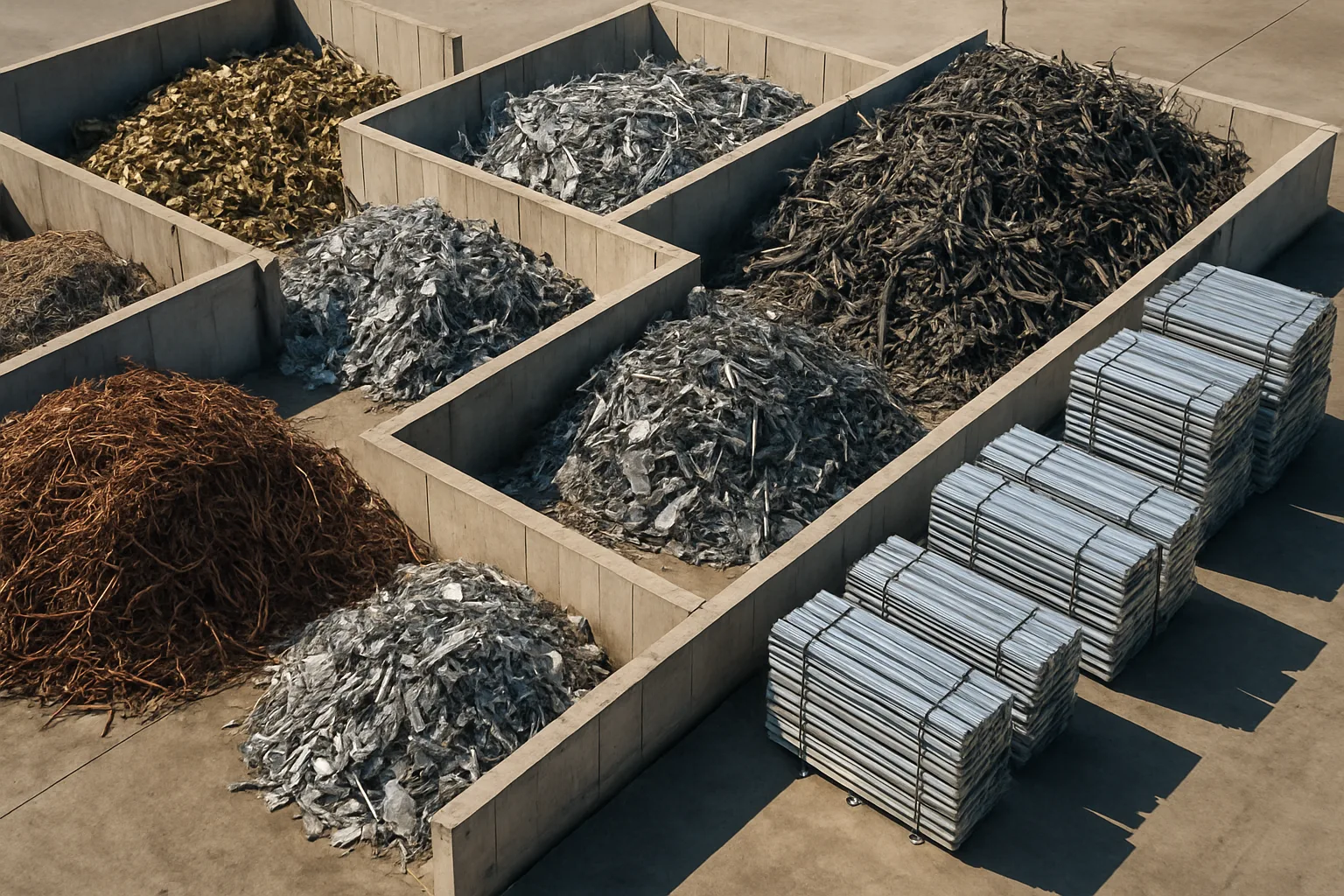
Most scrap yards will pay you more for brass and bronze than you might expect — but only if you know what you're bringing in. These copper alloys sit well above steel and aluminum on the price ladder, and in a B2B scrap metal marketplace, they attract serious buyer competition. If you're sitting on a pile of mixed metals and haven't separated your brass and bronze yet, you're leaving money on the table.
This guide breaks down what brass and bronze actually are, where to find them, what they're worth in 2026, and how platforms like SMASH are changing the way recycling yards and commercial sellers move non-ferrous loads.
---What Are Brass and Bronze — and Why Does the Difference Matter?
Brass and bronze look similar. Both are copper alloys. Both have a warm, yellowish-to-reddish tone. But they're not the same material, and scrap buyers price them differently. Knowing which one you have directly affects what you get paid.
Brass is an alloy of copper and zinc. You'll find it in plumbing fixtures, valves, fittings, door hardware, ammunition casings, musical instruments, and decorative items. It's the more common of the two in commercial demolition and plumbing tearouts. Brass tends to have a brighter, more golden color.
Bronze is an alloy of copper and tin, sometimes with small amounts of aluminum, phosphorus, or lead added. It shows up in industrial bushings, bearings, marine hardware, pump components, and statuary. Bronze typically has a darker, more reddish-brown tone. Because bronze often contains a higher percentage of copper, it can command a slight premium over standard brass — but this depends heavily on the grade and buyer.
When you bring a mixed load to a yard or list it on a B2B scrap metal marketplace, separation matters. A load correctly identified and sorted as #1 yellow brass gets a better price than a "mixed brass" lot. Buyers pay for confidence, and documented, sorted material gives them that.
---Common Grades of Brass and Bronze Scrap — and What Buyers Look For
Not all brass is equal. The scrap industry uses standardized grades, and understanding them helps you negotiate from a position of knowledge rather than guessing.
Here are the grades you'll encounter most often:
- #1 Yellow Brass: Clean, uncoated, unalloyed yellow brass. No iron attachments, no rubber, no paint. This is the top-paying brass grade. Think clean plumbing valves and new production offcuts.
- Red Brass (Ounce Metal): Higher copper content than yellow brass. Often found in old plumbing fixtures, fire hydrant components, and pump housings. Pays close to or above yellow brass depending on the market.
- Yellow Brass with Iron: Brass fixtures with steel bolts, flanges, or fittings attached. Buyers discount this because it takes processing time to separate the iron. Strip it before you sell.
- Bronze Bushings and Bearings: Industrial components, usually containing 85–90% copper. High value, but buyers want them clean — no steel backing plates, no grease-soaked housings.
- Leaded Brass: Contains lead, which complicates processing. Still has value, but expect a lower price per pound than clean brass.
- Mixed Brass/Bronze: Unsorted, unidentified material. Yards will buy it, but they'll price in the uncertainty. Sort your material and you'll always come out ahead.
The fastest way to lose value on a non-ferrous load is to hand over a mixed pile and let the buyer sort it for you. Their labor, their margin. Do the work upfront, or use a platform that documents material condition so buyers bid on what's actually there.
---Where to Find Brass and Bronze Scrap — Sources That Actually Pay Off
If you run a recycling yard in Denver or anywhere across Colorado, you already know that brass and bronze come from specific industries. But commercial sellers and demolition operators often overlook high-value sources hiding in plain sight.
Here's where brass and bronze actually come from:
- Plumbing demolition and renovation: Old residential and commercial buildings are loaded with brass valves, fittings, and supply lines. Denver's construction activity — particularly in older neighborhoods undergoing renovation — generates consistent brass tearout material.
- Industrial equipment: Pumps, compressors, and hydraulic systems use bronze bushings and bearings. Manufacturing facilities, oil and gas operations, and heavy equipment shops are prime sources.
- Electrical components: Brass terminal blocks, connectors, and bus bars come out of electrical panel upgrades and industrial retrofits.
- Ammunition casings: Spent brass casings from shooting ranges are a consistent source of clean #1 yellow brass. Range operators often sell in bulk.
- Marine and aerospace surplus: Bronze propellers, fittings, and components from marine decommissioning carry significant value.
- HVAC equipment: Older HVAC systems use brass valves and copper-brass heat exchanger components.
- Auto parts and radiators: Older vehicles (pre-2000s) often have brass/copper radiators. Newer ones are typically aluminum — but it's worth checking before you assume.
If you're actively sourcing in the Denver metro area, building relationships with licensed demolition contractors and commercial plumbing companies gives you a consistent supply pipeline. The best find the best scrap metal prices today results come from yards and sellers who know their sources and can document what they're selling.
---What Is Brass and Bronze Worth in 2026? Understanding Price Discovery
Here's the honest answer: brass and bronze prices move with the copper market, and copper has been volatile. Giving you a fixed price per pound would be misleading — by the time you read this, the number could be off by 10–15%.
What we can tell you is how the pricing structure works:
- Brass pricing is typically expressed as a percentage of the COMEX copper price, adjusted for zinc content and grade.
- Red brass and bronze typically price higher than yellow brass due to copper content.
- Mixed or contaminated material discounts range from 10–30% below clean material prices.
- Lot size matters. Larger, well-documented loads attract more buyer interest and better price discovery.
The single biggest variable isn't the market — it's how many buyers see your material. One buyer gives you one price. Ten vetted buyers competing for your load gives you the market. That's not a sales pitch; it's arithmetic. Platforms like SMASH operate on this exact principle. More buyers means better price discovery, and that's especially true for non-ferrous loads like brass and bronze where grades and values vary significantly.
To check current scrap metal prices before you sell, use a resource that pulls live market data — not a cached rate from last month. Prices in Colorado can also vary by region, so what a Denver yard pays and what a rural Colorado yard pays on the same day may differ.
---How a B2B Scrap Metal Marketplace Changes the Game for Non-Ferrous Sellers
The old way: call your regular buyer, take whatever price they quote, load the truck, get a check. Simple. But simple doesn't mean you got the best price. It means you got a price — from one buyer with every incentive to keep it low.
A B2B scrap metal marketplace like SMASH changes the dynamic completely. You list your material — brass valve lots, bronze bearing packages, mixed non-ferrous loads — with photos, weights, and grade documentation. Vetted buyers across North America see it and bid. The auction format creates competition. Competition reveals the actual market price, not a buyer's preferred margin.
For Denver scrap operations looking to move significant non-ferrous volume, this matters. You can compare scrap metal bids from verified buyers instead of taking the first number offered. SMASH also handles inventory documentation, photo records, and auto-invoicing — which reduces back-and-forth and protects both sides of the transaction.
There are no subscription fees. SMASH only earns when the seller sells. That alignment of incentives is exactly what the old single-buyer model lacks. For Denver scrap metal services that give you real market access — not just a local quote — the auction model is worth understanding.
To go deeper on how the market works and what drives non-ferrous prices week to week, read the latest scrap metal pricing guides and stay ahead of the curve.
---Tips for Getting the Best Price on Your Brass and Bronze Loads
Whether you're selling through a local yard or a B2B scrap metal marketplace, the fundamentals of maximizing your payout don't change. Here's what consistently separates top-dollar sellers from average ones:
- Sort before you sell. Clean #1 yellow brass, red brass, and bronze bushings should never hit the scale mixed together. Sort by grade and you'll price by grade.
- Strip iron and attachments. Steel bolts, fittings, and iron backings drop your lot into a lower-value category. Five minutes of prep work per item can translate to meaningful price per-pound improvements.
- Document your material. Photos, weight estimates, grade identification, and source information give buyers confidence. Confidence equals competitive bids.
- Know the copper market direction. Brass prices track copper. If copper is trending up, timing your sale matters. If it's falling, moving material quickly may make sense.
- Get multiple quotes. This sounds obvious, but most sellers don't do it consistently. A B2B scrap metal marketplace does this automatically — your lot goes to multiple buyers simultaneously.
- Watch for seasonal demand shifts. Construction activity in Colorado peaks in warmer months, which can drive higher demand for brass plumbing and HVAC tearout material.
Disclaimer: Brass, bronze, and all non-ferrous scrap metal prices fluctuate daily based on commodity markets, regional demand, and material grade. Always verify current rates before committing to a sale. The information in this article reflects general market structure as of August 2026 and is not a guaranteed price quote.
---Frequently Asked Questions
Q: What is the difference between brass and bronze scrap, and does it affect price?
Yes, it absolutely affects price. Brass is a copper-zinc alloy; bronze is a copper-tin alloy, often with a higher copper content. Bronze bushings and bearings frequently command a premium over yellow brass. Always identify your material correctly before selling — misidentification costs you money.
Q: Where can I sell brass and bronze scrap in Denver, Colorado?
Denver has multiple recycling yards that accept non-ferrous material. For larger commercial loads, a B2B scrap metal marketplace like SMASH gives you access to vetted buyers across North America, which means competitive bids rather than a single local quote. For local pricing benchmarks, check best-scrap-prices.com before you call around.
Q: How do I know what grade my brass scrap is?
Start with color and composition: bright golden yellow suggests #1 yellow brass; darker reddish tones indicate red brass or bronze. Check for iron attachments, coatings, or contamination — all of which affect grade. When in doubt, ask your buyer to grade it on arrival, but get that expectation documented before you commit to a price.
Q: Is it worth separating brass and bronze from mixed scrap loads?
Every time. Mixed non-ferrous loads are priced at the lowest common denominator. Separating brass, bronze, copper, and aluminum — and selling each grade clean — consistently returns more per pound. The sorting time is almost always worth it, especially on larger commercial loads.
Q: How does a B2B scrap metal marketplace work for non-ferrous material like brass?
You list your material with photos, weights, and grade documentation. The platform (like SMASH) shares it with vetted buyers who submit competitive bids. You review the bids, accept the best offer, and the platform handles invoicing and documentation. No subscription fees — the platform earns when the transaction closes. It's a straightforward alternative to the single-buyer, single-quote model most sellers are used to.
---Brass and bronze are high-value, high-competition non-ferrous categories. You've already done the hard part — sourcing the material. Don't shortchange yourself on the sell side. Whether you run a Denver recycling operation or source non-ferrous across Colorado, knowing your grades and getting your material in front of multiple buyers is how you maximize every load. Get the best scrap metal prices for your brass and bronze — check rates at best-scrap-prices.com and see what the market is actually paying today.
Stay current on non-ferrous pricing trends and market moves by following SMASH on LinkedIn — practical scrap metal market insights, no filler.